


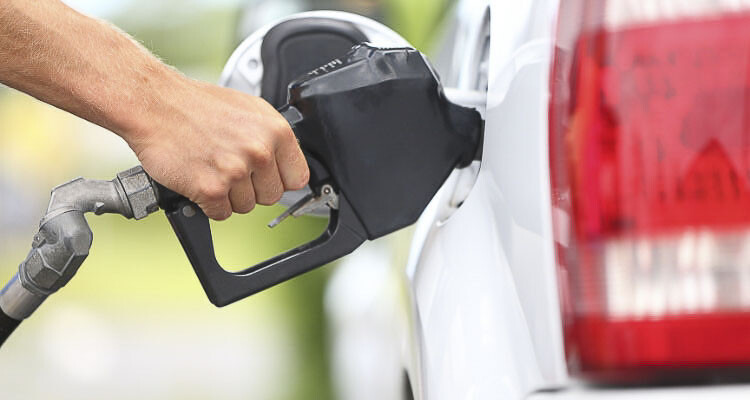
On top of these higher prices, as of Jan. 1 of this year, Washingtonians also have a new cap-and-trade system to pay for at the pump
Timothy Schumann
The Center Square Washington
The average price of a gallon of regular unleaded was sitting at $4.30 statewide on Monday, up from $4.25 a week prior, according to AAA data. This marks the 11th week this year of price increases at the pump for Washingtonians since the new carbon tax was implemented earlier this year.
This 5 cents per gallon increase moved with the national average, albeit at a slower pace, which rose from $3.43 per gallon to $3.50 per gallon, a 7-cents per gallon increase over the same period.
“Oil prices finally crested and have now settled above the $70 per barrel mark after weeks of hovering just below it, and gas demand is very robust. These two factors will cause drivers to see prices increase for now,” said AAA spokesperson Andrew Gross in a statement.
Residents of the Evergreen State have to dig deeper into their wallets than most. Washington’s pump prices increased to the third most expensive nationally, with only Hawaii and California being more expensive.
Washington’s $4.30 per gallon is 80 cents per gallon higher than the national average of $3.50. It is also $1.28 per gallon above the nation’s least expensive fuel cost of $3.02 per gallon, currently paid by Mississippi residents.
In Washington, intra-state variance remains high at $1.29 per gallon, up 5 cents per gallon from the week prior. This week’s outliers, again San Juan and Asotin counties, represent the most and least expensive gas prices statewide at $4.96 and $3.67 per gallon, respectively.
This price variance still largely follows the Cascade Range, with residents to the west paying a higher premium at the pump than residents to the east.
On top of these higher prices, as of Jan. 1 of this year, Washingtonians also have a new cap-and-trade system to pay for at the pump.
“The first auction of CO2 allowances [averaged] $48.50 per metric ton of CO2. This equates to about 39 cents per gallon of gasoline and 47 cents per gallon of diesel,” announced a report by the Washington Policy Center based on recently released Washington State Department of Ecology data.
WPC environmental analyst Todd Meyers added, “It doesn’t have to be like this. There are ways we can effectively cut CO2 emissions at much lower cost but those options have largely been ruled out in favor of raising tax revenue for the state.”
This report was first published by The Center Square Washington.
Also read:
- Opinion: Portland’s War on Cars Part 4 – A smarter automobile strategy to end gridlock
 O’Toole argues fuel wasted in Portland-area congestion has sextupled since 1982, generating 250,000 tons of extra greenhouse gases annually.
 - Opinion: Transit ridership trends are dismal but regional plans are oblivious
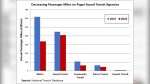 Puget Sound transit passenger-miles fell 31% from 2015 to 2024 despite a half-million-resident population increase.
 - Interstate Bridge Replacement Program seeks qualified firms for bridge replacement contract
 The CRBR project is backed by $5.7 billion from state funds, federal grants, and future tolling.
 - Opinion: Bankrupt – A $3.5 billion Rose Quarter Freeway widening project
 Joe Cortright argues ODOT’s Rose Quarter project has grown from a $450M approval to a $3.5B estimate, with a $2B funding gap.
 - Opinion: Portland’s War on Cars 3 – Ending the war on automobiles
 O’Toole argues Portland should add toll lanes, fix safety hazards, and redesign TriMet routes to end its anti-auto policies.
 wpDiscuz