


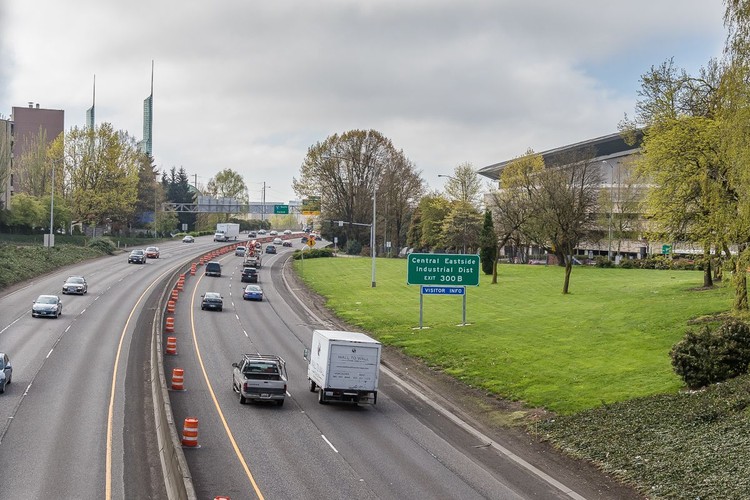
🎧 Portland’s War on Cars: How to End the Anti-Auto Era
Randal O’Toole says automobiles are wonderful tools that greatly improve people’s lives
Randal O’Toole
Cascade Policy Institute
Editor’s note: This is part 3 in a series “Portland’s War on Cars” from a new report by the Cascade Policy Institute, The Portland Transportation Disaster: The High Cost of Anti Auto Planning in Portland. Read part 1 titled, “Portland’s War on Cars 1: Losing the War on the Automobile;” and part 2 titled, “Portland’s War on Cars 2: Ignoring the Benefits of Automobiles.”
In 1970, traffic accidents killed close to 55,000 people per year. The average car got only 13 miles per gallon. Motor vehicles spewed so much pollution that Mount Hood was often invisible from Portland on sunny days.
Today, many of these problems have been greatly reduced. Automotive air pollution has declined by nearly 90 percent. Fuel economies have nearly doubled. Highway fatalities in 2025 were 30 percent lower than 1970.
None of these improvements resulted from efforts to reduce driving. Instead, Americans drive three times as many miles today as they did in 1970. In fact, attempts by cities to reduce driving by not building more roads made solving these problems even more difficult as cars waste fuel, pollute more, and are involved in more accidents in congested traffic.
If Portland and Metro truly care about the future of the region, they will end the war on the automobile and adopt policies that increase mobility and allow people to safely, efficiently, and quickly reach their economic, social, and other destinations. Here are four ways to do so:
1. Add high-occupancy toll lanes to all the region’s freeways and manage them so that they will never get congested. Uncongested freeway lanes can move twice as many vehicles per hour as congested ones, so keeping the new lanes uncongested will give people more economic opportunities and reduce congestion on the existing lanes as well by attracting vehicles off those lanes.
2. Develop a data-driven safety program that fixes actual traffic safety hazards rather than relies on slogans and generic policies such as reduced speed limits.
3. Improve regional equity by creating a low-interest loan program to help low-income people buy electric or otherwise fuel-efficient automobiles.
4. Redesign TriMet’s route map. TriMet works for people who are going to or from downtown Portland but completely fails people going anywhere else. Without increasing current transit operating costs, TriMet could design a system that serves other important economic centers such as the airport, Beaverton, and Hillsboro as well as it currently serves downtown.
Automobiles are wonderful tools that greatly improve people’s lives. If there are problems associated with them, the solution is not to try to discourage driving but to promote automobiles and roads that are cleaner, safer, and more fuel efficient. That should be Portland and Metro’s goal.
Read the full report, The Portland Transportation Disaster.
All numbers cited in this commentary are from or calculated from the U.S. Department of Transportation, Department of Energy, or Census Bureau data. For more information, see O’Toole’s full report, The Portland Transportation Disaster.
Randal O’Toole is an Adjunct Scholar at Cascade Policy Institute, Oregon’s free market public policy research organization. He is a transportation and land-use policy analyst and the author of several books, including American Nightmare: How Government Undermines the Dream of Homeownership and Romance of the Rails: Why the Passenger Trains We Love Are Not the Transportation We Need. He writes from Central Oregon.

Also read:
- Opinion: Were Republican voters just sleeping during the August primary election?
 CCRP Chairman Matt Bumala says 60% of primary no-shows in the 17th and 18th districts were Republicans.
 - Opinion: WA Cares’ launch showcased care WA Cares did not provide
 Gov. Ferguson showcased a caregiving arrangement at the WA Cares launch that the program had not paid for a single day of.
 - Opinion: Portland’s War on Cars Part 4 – A smarter automobile strategy to end gridlock
 O’Toole argues fuel wasted in Portland-area congestion has sextupled since 1982, generating 250,000 tons of extra greenhouse gases annually.
 - Opinion: The Tooth Fairy’s secrets to making brushing & flossing magical
 Delta Dental of Washington’s Tooth Fairy Experience offers free resources to help children build lifelong brushing and flossing habits.
 - Opinion: Transit ridership trends are dismal but regional plans are oblivious
 Puget Sound transit passenger-miles fell 31% from 2015 to 2024 despite a half-million-resident population increase.