



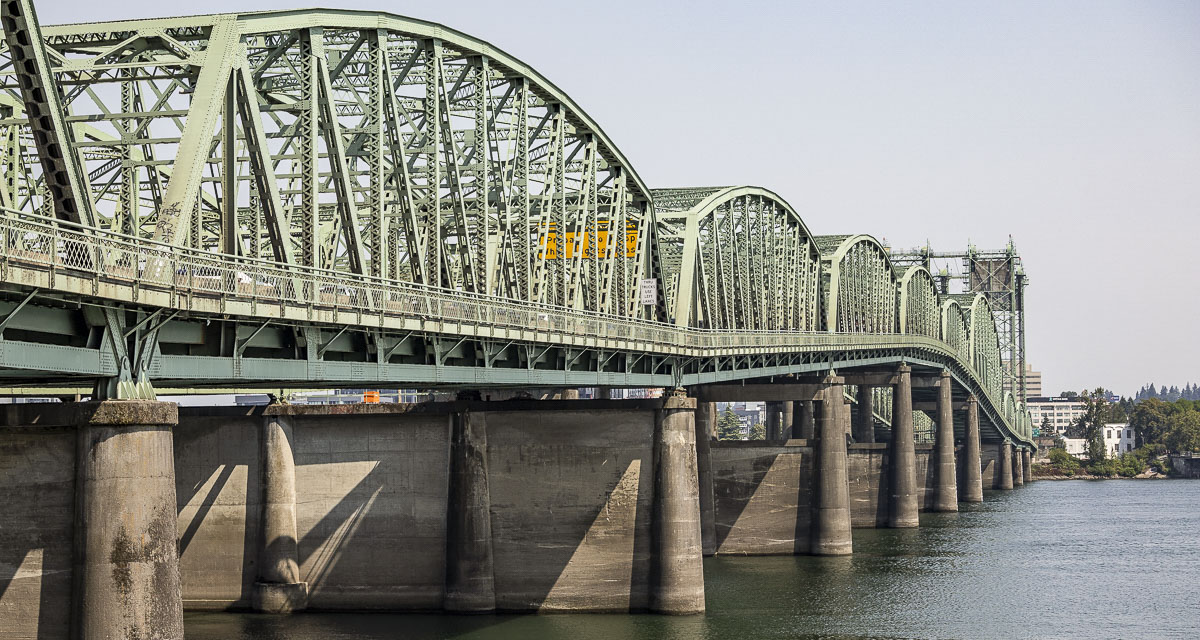
Hybrid in-person/virtual meeting takes place Oct. 1 in Vancouver
VANCOUVER – Toll rates and policies on the Interstate 5 bridge over the Columbia River will be discussed during a joint meeting of the Washington State Transportation Commission and the Oregon Transportation Commission. The meeting is Tuesday, Oct. 1, and the public is invited to attend.
The two commissions will meet at the Interstate Bridge Replacement Program Office, 500 Broadway, Suite 200, in Vancouver, from 10 a.m. to 1 p.m. People can attend either in person or virtually. Those wishing to attend virtually via Zoom may register for the meeting on the Washington State Transportation Commission’s website. The meeting will also be streamed live on TVW and YouTube.
Virtual and in-person public comment are scheduled at 10:30 a.m. Written comments can be submitted by email to transc@wstc.wa.gov or through a comment form on the Oregon Transportation Commission’s website.
At the meeting, the two commissions will hear about:
- Options for potential toll rates and policies for further analysis. This will help set the stage for the two commissions to set the bridge toll rates in 2025.
- An update on the Interstate Bridge Replacement Program and work underway to prepare for tolling.
- Engagement efforts with federally recognized tribes in Washington and Oregon about tolling.
The two state commissions signed an agreement in January 2024 for the joint setting of toll rates on the bridge. A bi-state tolling subcommittee, made up of two members from each state commission, has been meeting since February to advise the full commission membership on toll rates and policies.
Construction of the Interstate 5 bridge over the Columbia River is expected to begin in early 2026, and tolling on the existing bridge is expected to begin in spring 2026. Toll rates and policies are required to manage traffic and generate funding for the project as well as cover ongoing maintenance costs for the bridge and tolling operations.
For more information about the two commissions’ roles in tolling the Interstate 5 bridge and a meeting agenda, visit the WSTC and OTC websites.
Americans with Disabilities Act Information
Individuals requesting accommodations may request written materials in alternate formats, sign language interpreters, physical accessibility accommodations, or other reasonable accommodations by contacting the Washington State Transportation Commission at (360) 705-7070 or by emailing transc@wstc.wa.gov. In Oregon, please contact the Oregon Transportation Commission Assistant at (503) 986-3450 or email OTCAdmin@odot.state.or.us at least 72 hours prior to the meeting to make your request. Persons who are deaf or hard of hearing may contact the event sponsor through statewide relay at 7-1-1.
Also read:
- Opinion: Half the road, full stop – Understanding pedestrian right-of-way
 Doug Dahl explains how Washington’s law requires drivers to stop when a pedestrian is within one lane of their half of the road, not just when directly in front.
 - Opinion: What is the cost of a bridge?
 John Ley argues the I-5 Bridge replacement’s soaring cost stems from costly extras like light rail, noting other states deliver larger, toll-free bridges for much less.
 - Letter: Vancouver Mayor Anne McEnerny-Ogle makes several serious and incorrect engineering statements
 Bob Ortblad critiques engineering claims by Vancouver Mayor Anne McEnerny-Ogle, highlighting cost and safety advantages of an immersed tunnel for the I-5 crossing.
 - Washington’s studded tire deadline is March 31
 Drivers must remove studded tires by March 31 or face a $137 fine, with WSDOT urging early action due to busy service centers and no planned deadline extension.
 - VIDEO: WA diesel hits record $6.53, crushing truckers and school budgets
 With diesel nearing $6.53 per gallon in Washington, trucking businesses and school districts now confront sharply higher fuel expenses affecting budgets and workers.
