



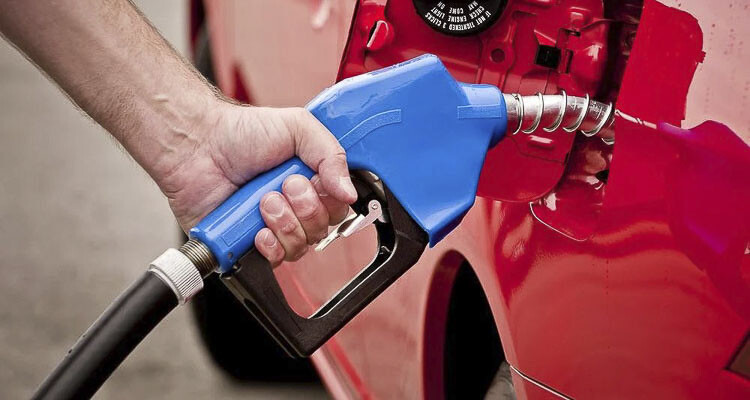
This holiday weekend price hike marks the 17th week this year of rising fuel prices for Washingtonians, following the implementation of the new carbon tax earlier this year
Timothy Schumann
The Center Square Washington
The average price of a gallon of regular unleaded was sitting at $4.68 statewide on Monday, up from $4.60 the week prior according to AAA data.
This holiday weekend price hike marks the 17th week this year of rising fuel prices for Washingtonians, following the implementation of the new carbon tax earlier this year.
This eight cent per gallon increase moved with the national average – albeit at a faster pace – which increased from $3.54 to $3.58 per gallon over the same time period.
“The rise in demand for gasoline is helping to push pump prices higher for now, but the increase is mitigated by the low cost of oil, which is wobbling around in the low $70s per barrel. Pump prices could stabilize or fall once this long weekend is in the rearview mirror,” said AAA spokesperson Andrew Gross in a statement.
Residents of the Evergreen State have to dig deeper into their wallets than most. Washington’s pump prices currently stand at third most expensive nationally, with only California and Hawaii being more expensive filling out first and second on the list.
This change from the week prior knocks Arizona off the top three most expensive markets nationally, where fuel prices fell from $4.62 to $4.53 per gallon over the previous week.
Washington’s $4.68 per gallon places it $1.10 per gallon higher than the national average of $3.58 per gallon. It is also $1.69 per gallon above the nation’s least expensive fuel costs of $2.99 per gallon, currently paid by Mississippi residents.
In Washington intra-state variance remains high at $1.09 per gallon, though down 10 cents per gallon from the week prior. The outliers this week, again San Juan and Asotin counties, represent the most and least expensive gas prices statewide at $5.16 and $4.07 per gallon respectively.
This price variance still largely follows the Cascade Range, with residents to the west paying a higher premium at the pump than residents to the east.
Some state policy experts think there’s a legislative component to the relatively high cost of Washingtonians fuel, as previously reported by The Center Square, citing the state’s new cap-and-trade carbon tax program implemented Jan 1st of this year.
However, the full effect of this program has yet to be seen, as there has only been one carbon auction to date.
With the registration closed for the second auction as of May 1st, and all bids due in by May 19th, we should be seeing the results of the May 31st auction on fuel pricing soon.
Results from this auction will be announced on June 7th.
This report was first published by The Center Square Washington.
Also read:
- Opinion: New study – Washington’s homelessness problem is worse than you think (and avoidable)
 New data reveals Washington ranks first in chronic homelessness and per-capita overdose deaths nationwide.
 - Records reveal WA millionaire’s tax is meant to legalize progressive income tax
 Nearly 1,000 pages of records reveal coordinated effort between attorney general’s office and Democratic leaders to overturn constitutional ban.
 - Drivers may experience traffic delays and closures during summer road preservation work in Clark County
 Multiple preservation methods including slurry seal, chip seal and hot mix asphalt will impact county roadways.
 - Vancouver Police investigate collision involving a pedestrian
 Driver remained cooperative while traffic unit investigates serious injury collision at Mill Plain and Lincoln.
 - Friends and family invited to pair of Friday services for Lucille Erma Madore and Francis Eugene Madore
 Francis Eugene Madore flew 103 combat missions in WWII and earned the Distinguished Flying Cross with 17 Oak Leaf Clusters.
 - Opinion: Tax day is painful enough without Washington adding its own
 Washington’s new 9.9% income tax mirrors federal pattern: start narrow, expand to hit everyone within years.
 - Letter: ‘Public trust in elections isn’t maintained by repeating talking points’
 Camas resident demands answers after ballots discovered next to trash can, endorses Quiring O’Brien for auditor.
 wpDiscuz
