



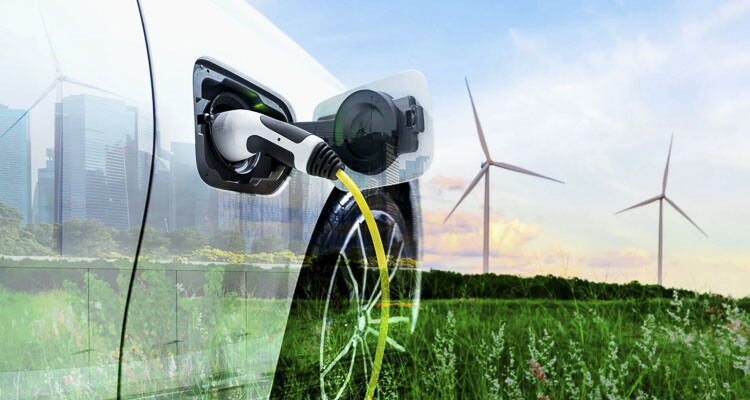
Residents of Washington already pay the third highest fuel excise taxes in the nation at 49.4 cents per gallon
Timothy Schumann
The Center Square Washington
In a report submitted to Gov. Jay Inslee and the Washington Legislature, the Washington State Transportation Commission projected a $600 million decline in taxation related to road usage over the next 28 years.
Since 2012, to address falling fuel tax revenues, the report notes Washington has “increased the rate of motor fuel taxes twice, imposed an annual registration surcharge on hybrid vehicles, and added three registration surcharges on electric vehicles totaling $225 per year–the nation’s highest.”
On top of that, residents of Washington already pay the third highest fuel excise taxes in the nation at 49.4 cents per gallon, behind only Pennsylvania and California at 57.6 and 51.1 cents per gallon respectively.
Despite all these measures, and according to the WSTC projections, the Washington State Department of Transportation is still looking at a $21.4 million decline in revenue year over year for the next 28 years.
All of this comes in the midst of record high inflation, rising materials costs, and increased labor costs – all indicators WSDOT’s budget is likely to increase, not shrink along with falling fuel tax revenues.
What is the cause of this shortfall? The report, which was submitted last week, notes two things that happened in 2022 which contributed to WSTC’s financial models looking dire for tax revenue. The first was the federal government implementing stricter Corporate Average Fuel Economy standards, pushing auto makers to increase the fuel economy on vehicles sold within the U.S.
The second was California’s Air Resource Board adopting a zero-emission vehicle mandate, also known as Advanced Clean Cars II. This mandate bans the sale of new internal combustion engine light-duty vehicles in 2035. This is a mandate, the report notes, that Washington state lawmakers are keen to follow, already having a goal in place to follow California’s mandate by 2030.
“Collectively, these actions accelerate the decline of motor fuel consumption, putting more pressure on higher fuel tax rates and higher vehicle registration fees to provide vital transportation funding,” the report summarizes.
All of these factors, along with the rise of electric vehicles, add up to a $21.4 million decrease in tax revenue, year over year.
This report was first published by The Center Square Washington.
Also read:
- Opinion: Half the road, full stop – Understanding pedestrian right-of-way
 Doug Dahl explains how Washington’s law requires drivers to stop when a pedestrian is within one lane of their half of the road, not just when directly in front.
 - Opinion: What is the cost of a bridge?
 John Ley argues the I-5 Bridge replacement’s soaring cost stems from costly extras like light rail, noting other states deliver larger, toll-free bridges for much less.
 - Letter: Vancouver Mayor Anne McEnerny-Ogle makes several serious and incorrect engineering statements
 Bob Ortblad critiques engineering claims by Vancouver Mayor Anne McEnerny-Ogle, highlighting cost and safety advantages of an immersed tunnel for the I-5 crossing.
 - Washington’s studded tire deadline is March 31
 Drivers must remove studded tires by March 31 or face a $137 fine, with WSDOT urging early action due to busy service centers and no planned deadline extension.
 - VIDEO: WA diesel hits record $6.53, crushing truckers and school budgets
 With diesel nearing $6.53 per gallon in Washington, trucking businesses and school districts now confront sharply higher fuel expenses affecting budgets and workers.
 wpDiscuz
