



Currently, nine other states have task forces dedicated to combating organized retail crime
Brett Davis
The Center Square Washington
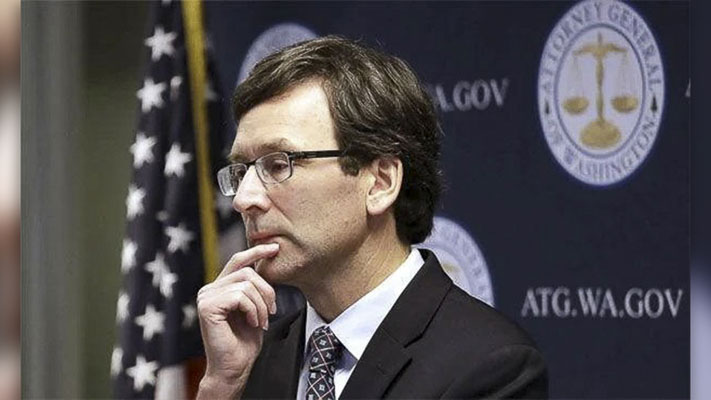
Washington State Attorney General Bob Ferguson is asking the state Legislature for $1.5 million annually to fund the creation of a 10-member organized retail crime unit in his office.
The request follows Ferguson’s convening of an organized retail crime task force earlier this year to improve cooperation between law enforcement agencies in dealing with the matter in Washington. Next year’s 105-day legislative session begins on Jan. 9.
Organized retail crime is the large-scale theft of retail merchandise with the intent to resell the items for financial gain. It typically involves a criminal enterprise employing people to steal large quantities of items from a number of stores and a fencing operation that converts the stolen goods into cash.
An analysis by the Retail Industry Leaders Association estimates organized crime groups stole $2.7 billion from Washington retailers in 2021, the second highest in the nation per capita.
“Washington law enforcement agencies have limited resources to tackle these sophisticated crimes,” Ferguson said in a news release the day before Thanksgiving. “A modest investment in a centralized statewide organized retail crimes unit will hold criminals accountable and deter crimes which cause significant economic harm to our state.”
The day after Thanksgiving, known as Black Friday, marks the traditional beginning of the Christmas shopping season, as well as the start of heightened efforts at preventing organized retail crime.
“As the retail industry continues to recover from the pandemic, there has never been a more critical time in Washington state to address the growing impacts of organized retail crime on public safety and the safety of our customers and retail employees,” Renée Sunde, president and CEO of the Washington Retail Association, said in a statement. “Funding the unit is an important part of a multi-pronged approach to coordinate the efforts of state and local law enforcement, prosecutors, retailers and policymakers at multiple agencies and levels of government.”
In addition to coordinating retail crime investigations across multiple jurisdictions and efficiently deploying resources, the new unit will also be able to prosecute cases referred to the Attorney General’s Office by county prosecutors. Absent such a referral, the office has no jurisdiction over criminal matters.
Organized retail crime, a multibillion dollar per year industry, is a primary driver of retail shrink – the loss of inventory that can be attributed to causes other than sales – across the nation.
According to the National Retail Federation’s latest National Retail Security Survey, shrinkage reached $94.5 billion in 2021, up from $90.8 billion in 2020. The report found that retailers saw an average 26.5% increase in organized retail crime incidents over the previous year, with retailers also noting an uptick in violence and aggression associated with organized retail crime.
Currently, nine other states have task forces dedicated to combating organized retail crime. Arizona and Michigan are among the most recent states to establish similar organized retail crime units in their state attorneys general’s offices.
This story was first published by The Center Square Washington.
Also read:
- High school girls basketball: Union Titans give Brooklynn Haywood a homecoming in Alaska
 Union traveled to Anchorage for two games that allowed Brooklynn Haywood to play in front of her hometown crowd while the Titans bonded through travel, cold weather, and on-court adversity.
 - WATCH – Detransitioner to providers: ‘Please just stop’ gender surgeries on minors
 Detransitioner Soren Aldaco shared her experience and urged providers to stop encouraging gender surgeries on minors as HHS moves to restrict federal funding for such procedures.
 - Without pennies, should retailers round up or down?
 As the penny disappears from circulation, states and retailers are grappling with how cash purchases should be rounded and who should benefit from those decisions.
 - Opinion: IBR promotes ‘giving away’ historic interstate bridges while withholding cost estimate for replacement
 Neighbors for a Better Crossing argues the IBR program is promoting demolition of the historic Interstate Bridges without releasing updated cost estimates or current seismic data to justify replacement.
 - Opinion: Solving Washington’s deficit without tax increases
 Ryan Frost argues Washington’s budget shortfall is driven by rapid spending growth rather than insufficient tax revenue, calling for slower spending and program reductions instead of new taxes.
 - Washington State Patrol loses 34th trooper in the line of duty
 Washington State Patrol Trooper Tara-Marysa Guting was killed while investigating a crash on State Route 509 in Tacoma, marking the 34th line-of-duty death in the agency’s history.
 - Opinion: Bikes in crosswalks
 Doug Dahl explains how Washington law treats bicycles as both vehicles and pedestrians, depending on where and how they are being ridden.
 wpDiscuz
