



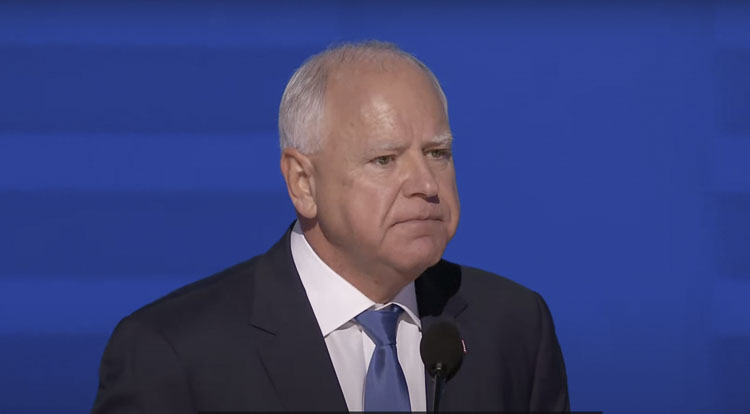
The libertarian Cato Institute released the report, which graded states by spending, revenue and taxes
Casey Harper
The Center Square
A newly released analysis of fiscal policy ranked all 50 states with Iowa Gov. Kim Reynolds’ state coming in first and Democratic Vice Presidential Nominee and Minnesota Gov. Tim Walz in last.
The libertarian Cato Institute released the report, which graded states by spending, revenue and taxes. The top ten states in the rankings starting at the top are Iowa, Nebraska, West Virginia, Arkansas, South Dakota, Montana, Hawaii, Georgia, Idaho, and Vermont.
The bottom ten states, according to the analysis, are New Mexico, Missouri, Oregon, Michigan, Wisconsin, Delaware, Washington, Maine, New York and lastly, Minnesota.
The bottom six states received a grade of “F.”
Walz’ poor rating comes just three weeks before the presidential election where he and his running mate Vice President Kamala Harris are in a nearly tied race with former President Donald Trump and his running mate, Sen. J.D. Vance, R-Ohio.
The report explains the reasoning for Walz’ low score, pointing to a series of tax hikes under his leadership as well as spending increasing by 36% since 2022, from from about $52 billion to nearly $71 billion.
From the report:
In 2019, Walz’s budget would have added ‘$2 billion more in new spending and taxes would increase by $1.3 billion to pay for it, with the rest of the money coming from an existing surplus.’ But he compromised with the legislature, and the final tax increase was about $330 million annually. Walz also pushed for higher gas taxes and higher vehicle fees to raise about $1 billion annually for transportation, but those increases were rejected.
Walz pushed for more tax hikes in 2021. He proposed adding a new individual income tax rate of 10.85 percent above the current top rate of 9.85 percent, a surtax on capital gains and dividends, and a hike to the corporate tax rate from 9.8 percent to 11.25 percent. The proposals—which would have raised about $1.6 billion annually—were rejected by the legislature…
Walz hit the middle class with HF 2887, which raised taxes and fees on vehicles and transportation. The increases included indexing the gas tax for inflation, increasing vehicle registration taxes, raising fees on deliveries, and raising sales taxes in the Twin Cities area.
This report was first published by The Center Square.

Also read:
- VIDEO: WA diesel hits record $6.53, crushing truckers and school budgets
 With diesel nearing $6.53 per gallon in Washington, trucking businesses and school districts now confront sharply higher fuel expenses affecting budgets and workers.
 - WA’s status solidifies as one of the most expensive places in US
 A new study shows Washington outpaces most states on cost of living, with metrics revealing a sharp rise in daily expenses and major metro areas ranking among the nation’s most expensive.
 - Opinion: Someone explain the Democrat Party to me please
 Lars Larson criticizes Democrat politicians for shutdown threats, Homeland Security funding refusals, and positions on election laws, housing, and gun rights.
 - POLL: Do you agree with requiring board members to follow council direction?
 Disagreement among county councilors centers on whether C-TRAN board members should reflect the council’s collective wishes or act independently, highlighting ongoing concerns about public accountability.
 - High-value WA home listings increase by 65% after income tax passage
 After lawmakers approved an income tax targeting millionaires, listings for homes priced at $2 million or more jumped 65 percent compared to last year, with experts urging caution about interpreting the spike.
