



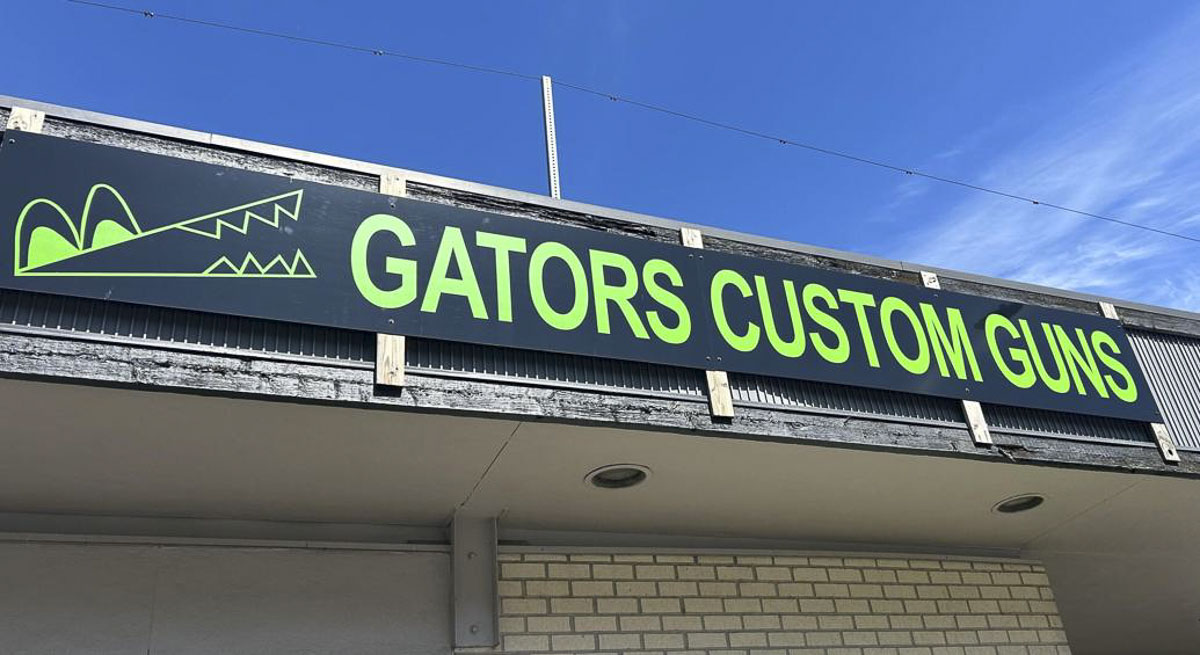
The case of the State of Washington v. Gator’s Custom Guns Inc. will be heard by the Washington Supreme Court on Jan. 14
Carleen Johnson
The Center Square Washington
Both sides are gearing up for the next round in court in the fight over Washington state’s law prohibiting the sale, attempted sale, manufacture and distribution of high-capacity magazines that hold more than 10 rounds.
The case of the State of Washington v. Gator’s Custom Guns Inc. will be heard by the Washington Supreme Court on Jan. 14.
As previously reported by The Center Square, Gator’s Guns in Kelso refused to comply with a ban on the sale of new high-capacity magazines of more than 10 rounds, arguing the ban is unconstitutional.
The high-capacity magazine law went into effect on July 1, 2022. The law does not prohibit the possession of high-capacity magazines.
Gator’s Custom Guns was slapped with a civil investigative demand from the Office of the Washington State Attorney General. The AG uses CIDs to conduct investigations into business practices that violate the Consumer Protection Act.
Silent Majority Foundation general counsel Pete Serrano defended Gator’s Custom Gun’s challenge to the CID. At that point, the AGO filed suit alleging that the sale of so-called “large capacity magazines” was illegal after Senate Bill 5078, passed in 2021, went into effect.
Washingtonians’ right to purchase high-capacity magazines was briefly restored last year, when on April 8 a Cowlitz County Superior Court judge ruled that the state’s ban on sales of high-capacity magazines is unconstitutional.
Soon after the motion was filed, Attorney General and now Gov.- elect Bob Ferguson announced that the Washington State Supreme Court agreed to stay the ruling.
But, for the 88 minutes the ban was lifted, Gator’s Guns opened its doors to long lines of customers anxious to swoop up the ammunition in question.
“I don’t know what we sold quantity-wise, but it was a lot, and it was all magazines,” owner Walter Wentz told The Center Square. “I just told customers I don’t know what the limits are on your gold cards but make yourself happy.”
Wentz says he’s prepared for this fight to go all the way to the U.S. Supreme Court if necessary.
But for now, the next stop is the Washington Supreme Court.
“If we can win on high-capacity magazines in Washington that’s going to send a huge ripple effect. That’s a brick in the pond, not a rock,” Serrano said, referring to other high-profile gun rights cases across the nation, which include federal courts considering rulings on AR-15 bans, gun-free parks and ghost guns.
“There are several briefs, and most of them filed in our favor with the courts,” said Serrano, who pointed to amicus briefs filed with the Washington Supreme Court.
The Second Amendment Foundation and the National Rifle Association are among the organizations supporting Gator’s Customs Guns.
On the other side, the Alliance for Gun Responsibility has filed briefs with the state’s highest court, arguing the ban on high-capacity magazines prevents mass shootings.
“SB 5078 has saved, and will continue to save Washingtonians’ lives,” the Alliance for Gun Responsibility wrote in its brief. “The danger posed by mass shootings is real, as is the fear of parents sending their children to school, worshippers attending their mosque or synagogue, and ordinary people going to concerts, malls, and political rallies.”
The Silent Majority Foundation pushed back on that argument in a news release emailed to The Center Square.
“Research indicates that 90% of mass shootings occur in so-called ‘gun-free zones,’” the news release said. “While proponents of gun control often argue that the United States’ mass shooting problem stems directly from Second Amendment protections, they claim stricter gun laws modeled after other countries are the solution. However, this narrative overlooks historical precedence and does not hold up under closer scrutiny of the data.”
The news release cites data from the Crime Prevention Research Center between 1998 and 2015 that reports of the 97 countries with identified mass public shootings, “The U.S. ranks 64th per capita in its rate of attacks and 65th in fatalities. Major European countries, such as Norway, Finland, France, Switzerland and Russia, all have at least 25 percent higher per capita murder rates from mass public shootings.”
Wentz believes he is on solid legal footing for the battle ahead.
“Every single day our customers come in and tell me to keep up the fight,” he said. “And they donate for the legal fight, so I’m not giving up.”
This report was first published by The Center Square Washington.
Also read:
- Former WA Supreme Court justice joins legal effort against income tax
 Phil Talmadge and Rob McKenna have joined forces with the Citizens Action Defense Fund to oppose Washington’s new tax on high-income earners, raising legal and constitutional questions.
 - Makeover in store for Congress with flood of lawmakers headed for the exits
 A wave of exits from Congress—over 65 lawmakers—will usher in unfamiliar faces and decrease veteran expertise, shifting the political landscape in Washington.
 - Opinion: Sheriffs fight back
 Four county sheriffs are suing to block a new law giving a governor-appointed board power to decertify and remove sheriffs, bypassing voter oversight in Washington.
 - Obituary for Lucille ‘Erma’ Christenson Madore – April 22,1924-March 13, 2026
 Known for her love of music and family, Lucille ‘Erma’ Christenson Madore lived through nearly 102 years and leaves a large, grateful legacy in Vancouver.
 - Fiscal fallout: $375 million bond debt indirectly funding operating budget
 Shifting $375 million from a loan fund impacts local infrastructure as Washington state covers operating costs with bond debt, prompting concern among officials and advocacy groups.
 - Lawsuit aims to block new eligibility requirements for WA sheriffs
 Four sheriffs are suing over a state law that sets new eligibility rules, arguing it undermines voter authority by allowing removal for certification issues.
 - Opinion: The growing gap between public voice and political power
 Todd Myers describes how large-scale protest and sign-ins often fail to sway state leaders, and argues authentic influence is most likely found through local action.
 wpDiscuz
