



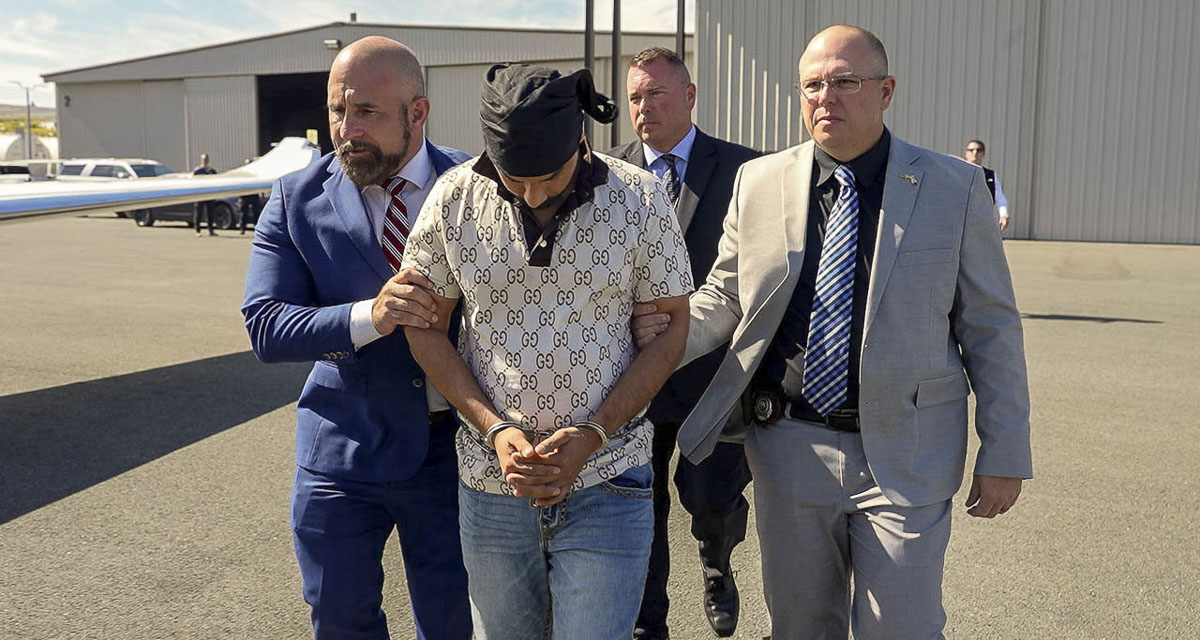
The issue has flared up after a fatal truck crash in Florida earlier this year
Jake Goldstein-Street
Washington State Standard
 See Grok’s analysis of this story
Washington state mistakenly issued nearly 700 licenses to drive trucks and buses to noncitizens who don’t qualify over the past seven years.
This issue has drawn heavy criticism from the Trump administration and others after a semitruck driver, Harjinder Singh, allegedly made an illegal U-turn and killed three people in Florida. Singh wrongfully received a standard commercial driver’s license from Washington state, the state Department of Licensing concluded.
U.S. Transportation Secretary Sean Duffy has since threatened to withhold federal highway funding from states that issue these licenses to immigrants who don’t qualify. He has also tried to restrict who qualifies for commercial licenses, a move that is being litigated.
The growing attention led Washington’s licensing department to discover 685 other errors of the same kind over the course of seven years. All of those licenses were active when the mistakes were found. That figure doesn’t account for errors with credentials that had already lapsed.
A U.S. Department of Transportation spokesperson said Washington’s “failure to follow federal law is a blatant breakdown in its responsibility to protect the public.”
“By handing out standard CDLs to drivers who were never eligible, Washington sent unsafe foreign drivers onto highways across America and put countless families in danger,” the spokesperson said in an email. “This is exactly the kind of negligence Secretary Duffy is working to eliminate. Following the law is not optional.”
Washington Department of Licensing spokesperson Nathan Olson said in an email that the “Errors have been addressed, and DOL is working to make changes in our system, process, procedures, and training to prevent mis-issuances in the future.”
Singh and others should have received what is called a non-domiciled commercial driver’s license, meant for noncitizens with valid work authorization. Citizens and lawful permanent residents get standard licenses, which is what Singh received.
Standard licenses expire at the same time as the driver’s regular driving credential, while non-domiciled ones lapse when their work authorization expires. It’s unclear how many of the 685 drivers in Washington were issued commercial licenses that went beyond their work authorization due to the mistake, Olson said.
The state submitted its investigation into its mistakes to the federal government last month.
Before the Florida crash, Singh also allegedly wrongfully received a credential from California. Because of this, his Washington license was invalid at the time of the crash this year, Olson said.
Earlier this year, Duffy launched a nationwide audit of the states that issue these non-domiciled licenses to immigrants. President Donald Trump also signed an executive order that says truckers without English proficiency should be kept off the roads.
Duffy has pushed new rules limiting the types of visas that allow noncitizens to qualify for trucking licenses. Only those with H-2A, H-2B or E-2 visas would be allowed to get credentials. These visas make up just 10,000 of the 200,000 noncitizen license holders.
King County, where Seattle is located, asked a Washington, D.C., appeals court to review the policy shift, noting it would cost the county’s bus fleet some drivers. In response, the court last month temporarily halted these restrictions.
Also last month, California Gov. Gavin Newsom, a Democrat, announced the state was revoking 17,000 commercial driver’s licenses issued to immigrants because the licenses had expiration dates later than the drivers were allowed to remain in the country.
In Washington, the 685 license holders at issue have been given a chance to update their legal status if, for example, they’ve since received their green cards. It’s unclear how many credentials the state has revoked.
The state licensing department has stopped processing all non-domiciled commercial driver’s licenses and learner permits.
Last week, Duffy said one-third of non-domiciled commercial driver’s licenses issued in Minnesota were illegal. He gave Minnesota an ultimatum: Get in compliance within 30 days or risk losing $30 million in federal highway funding. In November, Duffy threatened nearly $75 million earmarked for Pennsylvania for similar problems.
Washington faces ire from another direction. After the fatal crash in August, Florida’s attorney general moved to sue Washington and California at the U.S. Supreme Court, seeking a permanent ban on both states issuing commercial driver’s licenses to noncitizens. Washington has until Jan. 27 to respond to Florida’s filing.
This report was first published by The Washington State Standard.

This independent analysis was created with Grok, an AI model from xAI. It is not written or edited by ClarkCountyToday.com and is provided to help readers evaluate the article’s sourcing and context.
Quick summary
Washington state mistakenly issued nearly 700 standard commercial driver’s licenses to noncitizens ineligible for them over the past seven years, a problem uncovered after a fatal Florida truck crash involving a driver who received one such license. The errors have prompted federal threats to withhold highway funding, led to state process changes, and spurred legal challenges from Florida seeking to block these licenses for noncitizens.
What Grok notices
- Explains the difference between standard and non‑domiciled CDLs and summarizes federal rules, helping readers understand why the misissuances matter.
- Includes comments from state and federal officials describing audits, corrective actions, and potential funding consequences.
- Provides a timeline from the August Florida crash through recent court actions and license revocations in multiple states.
- Highlights how Washington’s Department of Licensing and the U.S. Department of Transportation describe their compliance efforts and oversight roles.
- Does not go into detail about possible long‑term effects on driver supply; readers may wish to explore workforce implications separately.
Questions worth asking
- How might stricter CDL rules for noncitizens affect ongoing driver shortages in interstate trucking?
- What verification and data‑sharing processes could states adopt to prevent similar licensing errors in the future?
- In what ways has the Florida crash influenced national debates about immigrant labor and safety standards in transportation?
- How do safety records for non‑domiciled CDL holders compare with those of U.S.‑domiciled commercial drivers?
- What alternatives exist for assessing English proficiency and rule comprehension among commercial drivers beyond current testing methods?
Research this topic more
- Washington State Department of Licensing – CDL issuance policies and corrective action updates
- Federal Motor Carrier Safety Administration – federal rules on non‑domiciled CDLs and safety regulations
- U.S. Department of Transportation – audit reports and federal funding enforcement tools
- American Immigration Lawyers Association – immigration considerations related to professional licensing
- American Trucking Associations – industry perspectives on driver workforce needs and safety
Also read:
- Letter: Freeze the scope and build the bridge
 Vancouver resident calls for project discipline after 22 years of planning and nearly half a billion in costs.
 - Ekklesia Theatre presents ‘Every Brilliant Thing’
 Interactive theatre production donates 50% of ticket sales to local counseling services.
 - Opinion: Public workers’ First Amendment rights are getting attention – in Idaho, not Washington
 Idaho moves to stop public schools from collecting union dues through government payroll while Washington continues favoring unions over worker choice.
 - Opinion: Lawsuit filed against the unconstitutional income tax in Washington state
 Former Attorney General Rob McKenna and Supreme Court Justice Phil Talmadge challenge the 9.9% income tax in Klickitat Superior Court.
 - Vancouver Police investigate domestic violence homicide
 Vancouver Police Major Crimes Unit investigating after woman found dead with knife wounds on NE Oakbrook Circle.
 - Letter: ‘Oregon and Washington aren’t refusing to clean their rolls — they’re contesting federal jurisdiction and timing’
 Camas resident challenges Lars Larson’s fraud claims, explaining legal disputes over federal jurisdiction.
 - County Council to hold hearing on preferred land use alternative for comprehensive plan update
 Clark County Council will select preferred land use alternative from three options studied in environmental review.
 wpDiscuz
