



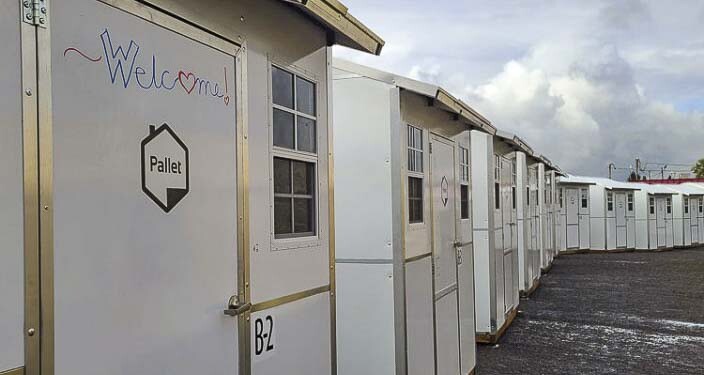
The city laid out its plans for the five Safe Stay modular shelters housing up to 40 people at its Sept. 18 City Council meeting
Shirleen Guerra
The Center Square Washington
The city of Vancouver is planning to open five “Safe Stay” shelters for homeless people, with each site providing up to 40 homeless people with their own private units that offer community spaces, restroom and sanitation units, storage facilities and garbage services.
The city laid out its plans for the five Safe Stay modular shelters housing up to 40 people at its Sept. 18 City Council meeting. The modular shelters are fenced and staffed 24 hours a day, seven days a week by the onsite nonprofit operator, Outsiders Inn.
The city opened its first Safe Stay site in Dec. 2023. Currently, there are two Safe Stay sites, and a third was approved for construction in August. The fourth site is in the final stages of planning, and the fifth site, included in the budget, has no location determined.
City Electric Co. bid the lowest at $708,307.68 for construction cost on the third site last month. The city stated it is spending an additional $225,000 on improvements for the existing Safe Stay sites.
Safe Stay is a program that helps homeless individuals with temporary housing while waiting for more permanent housing while trying to reduce the negative impacts of unsheltered homelessness.
According to documents, there are an estimated 500 to 600 homeless persons in tents or vehicles in Vancouver, posing a significantly large health and safety risk for those experiencing homelessness. The risk of physical danger also impacts single women and families with children.
As previously reported by The Center Square, in states like Colorado, Arizona, California, and Washington, cities are spending millions buying hotels to shelter people experiencing homelessness.
The contract with the Outsiders Inn will last from October 2023 to September 2024.
According to documents, since the beginning of the program for Safe Stay, 41% of those served have moved into permanent housing.
This report was first published by The Center Square Washington.
Also read:
- VIDEO: WA income tax signed into law with legal challenge right behind
 A 9.9% income tax affecting high earners in Washington faces swift legal opposition and a proposed citizen initiative seeking repeal.
 - Income tax signed in Washington with a legal challenge close behind
 A new law will tax households earning over $1 million, with funds aimed at expanding credits for lower-income residents. Lawsuits and challenges are already underway.
 - Peter Silliman announces candidacy for Clark County Council
 Peter Silliman, small business owner and Charter Review Commissioner, is seeking the District 5 seat and promises action on transparency, housing, and park development.
 - Opinion: Defend bail now or face more chaos on our streets
 A proposed Washington court rule would cap bail for most misdemeanors and allow defendants to bypass bondsmen, raising concerns about accountability and public safety.
 - County seeking young people to fill 10 volunteer positions on Youth Commission
 Young people ages 12-19 from across Clark County can now apply for at least 10 open seats on the Youth Commission, providing input on community decisions.
 - State Representatives McClintock and Ley answer questions at town hall in Battle Ground
 Residents voiced rising concerns about property taxes, school funding debates, the impact of new income tax legislation, and major costs tied to the Interstate Bridge plan.
 - As Washington gets an income tax, the fight to overturn it begins
 Opponents are organizing lawsuits and potential ballot measures to challenge the new 9.9% income tax on Washington households earning over $1 million.
 wpDiscuz
