



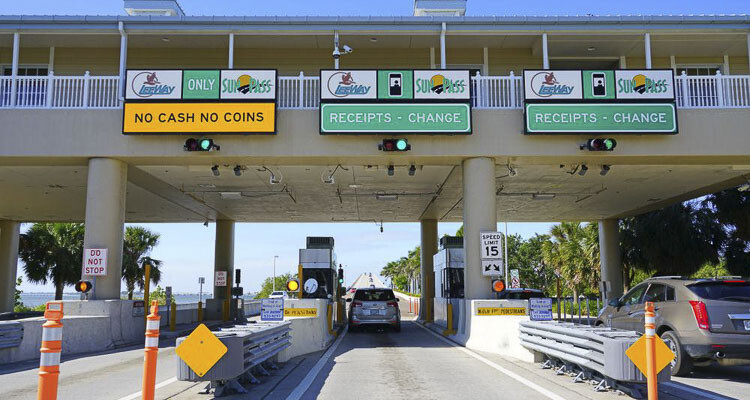
Fuel tax revenues are projected to fall by $600 million, or roughly $21.4 million per year, over the next 28 years
Timothy Schumann
The Center Square Washington
In a report submitted to Gov. Jay Inslee and the Washington Legislature, the Washington State Transportation Commission proposed a new tax scheme to replace falling fuel tax revenues.
Fuel tax revenues are projected to fall by $600 million, or roughly $21.4 million per year, over the next 28 years, as previously reported by The Center Square.
Citing declining fuel tax revenue due to increased efficiency of engines and adoption of electric and hybrid vehicles, the report highlights the need to find alternate sources of revenue for the Washington State Department of Transportation to maintain Washington’s roads.
The WSTC recommends continuation of an exploratory program that began in 2012 researching the viability of a Road Usage Charge, or a per mile tax on all miles driven by residents of the Evergreen State – a gasless gas tax, if you will.
“As an alternative to higher motor fuel taxes and vehicle fees, RUC offers the potential to fund Washington’s transportation needs while preserving the user-pay principle previously embodied by fuel taxes,” the report states.
The report admits there are many decisions left to be made “including how to measure and report distance traveled in a manner that protects privacy, offers user convenience, and is reasonably cost-effective to collect.”
The pilot, or test, phase of the RUC program launched in November of 2022 and had three simulated options for payment: FlexPay, Exempt, and AutoPilot.
FlexPay would enable lump sum- or installment-based self reporting. Exempt was for out of state or off-road miles with documentation needed to back up the claims.
The third option, AutoPilot, would allow “motorists to report road usage directly from their vehicles using on-board telematics. Eligible participants who opt in for this experience will be asked to activate their in-vehicle telematics program, which will then allow the project team to access data describing the number of miles driven in Washington provided by project partner Via.”
In other words, it would mean a third party private company collecting data in real time from your vehicle on behalf of Washington State.
If the report’s recommendations are followed, the initial RUC tax would be 2.5 cents per mile driven in Washington state on government maintained roads and would require annual odometer readings.
It’s unclear at this time how odometer readings would be implemented or enforced, and how this would affect people’s privacy.
The report notes that its odometer regime may require the “WSTC and DOL to collaborate with other states, other nations, and automakers to advance long-term solutions for mileage reporting and payment across borders.”
This report was first published by The Center Square Washington.
Also read:
- Opinion: IBR administrator receives generous Christmas gift on his way out the door
 Ken Vance argues that IBR leadership avoided accountability on rising project costs as Administrator Greg Johnson announced his departure without providing updated estimates.
 - Update: Belkot’s legal team submits sheriff’s report to its case against Clark County Council
 Michelle Belkot’s legal challenge against the Clark County Council advanced after a sheriff’s report alleging rule violations was accepted into evidence.
 - Opinion: ‘If you tolerate lies and dishonesty from the government, you’re guaranteed more’
 Lars Larson criticizes state officials for refusing to disclose updated cost estimates for the Interstate Bridge Replacement project, arguing that a lack of transparency guarantees further government dishonesty.
 - Maneuver to shore up WA’s transportation budget could be reversed
 Washington lawmakers are weighing whether to reverse a planned sales tax transfer to transportation as they confront a looming operating budget shortfall.
 - Rep. John Ley issues statement after I-5 Bridge replacement meeting yields few answers
 Rep. John Ley criticized the IBR Program for failing to provide updated cost estimates or key design decisions following a recent legislative oversight committee meeting.
 wpDiscuz
