


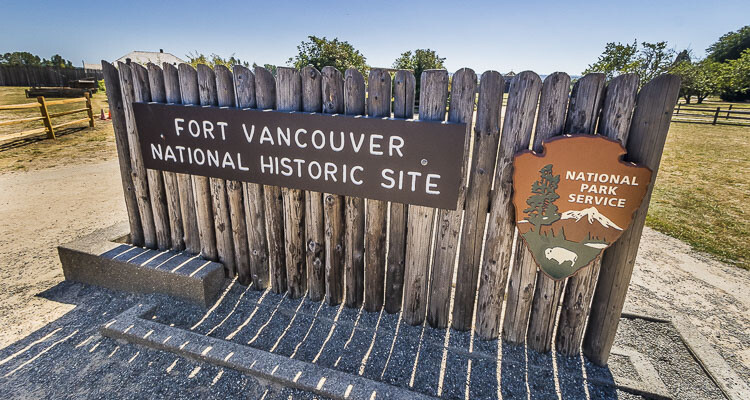
That spending supported 873 jobs in the local area and had a cumulative benefit to the local economy of $97.4 million
VANCOUVER – A new National Park Service (NPS) report shows that 964 thousand visitors to Fort Vancouver National Historic Site in 2022 spent $63.7 million in communities near the park. That spending supported 873 jobs in the local area and had a cumulative benefit to the local economy of $97.4 million.
“Since 1916, the National Park Service has been entrusted with the care of our national parks. With the help of volunteers and partners, we safeguard these special places and share their stories with more than 300 million visitors every year. The impact of tourism to national parks is undeniable: bringing jobs and revenue to communities in every state in the country and making national parks an essential driver to the national economy,” said National Park Service Director Chuck Sams.
“People come to Fort Vancouver National Historic Site to discover the important history of the Pacific Northwest, to spend time on our trails, green spaces, and waterfront, and to gather with friends and family,” said Superintendent Tracy Fortmann. “We recognize that this tourism is a critical driver to the local economy, bringing 873 jobs and $97.4 million in revenue to communities within 60 miles of the park. This data shows that in 2022 Fort Vancouver National Historic Site had its largest economic benefit since data has been recorded, and it reflects a steady recovery in economic benefit since the start of the COVID-19 pandemic in 2020. We are proud to serve as a destination for visitors from around the country and around the world, as well as a resource for our local community.”
The peer-reviewed visitor spending analysis was conducted by economists at the National Park Service. The report shows $23.9 billion of direct spending by nearly 312 million park visitors in communities within 60 miles of a national park. This spending supported 378,400 jobs nationally; 314,600 of those jobs are found in these gateway communities. The cumulative benefit to the U.S. economy was $50.3 billion.
As for the economics of visitor spending, the lodging sector had the highest direct effects, with $9 billion in economic output nationally. The restaurants sector had the second greatest effects, with $4.6 billion in economic output nationally.
Report authors also produce an interactive tool that enables users to explore visitor spending, jobs, labor income, value added, and output effects by sector for national, state and local economies. Users can also view year-by-year trend data. The interactive tool and report are available at the NPS Social Science Program webpage.
To learn more about national parks in Washington and Oregon and how the National Park Service works with Washington and Oregon communities to help preserve local history, conserve the environment, and provide outdoor recreation, go to www.nps.gov/Washington and www.nps.gov/Oregon.
Also read:
- Opinion: Were Republican voters just sleeping during the August primary election?
 CCRP Chairman Matt Bumala says 60% of primary no-shows in the 17th and 18th districts were Republicans.
 - High school football: New coach prepares for long-term success at Prairie High School
 James Young-Lewis, a Clark County native who graduated from Evergreen in 2009, became Prairie’s head coach in May after working as an assistant coach across various programs since 2015, joining Prairie’s staff in 2024.
 - Cost to battle 20 wildfires in WA has topped $200M
 Twenty wildfires have cost Washington $207M in one month, more than two-thirds of what DNR spent all last fiscal year.
 - Opinion: WA Cares’ launch showcased care WA Cares did not provide
 Gov. Ferguson showcased a caregiving arrangement at the WA Cares launch that the program had not paid for a single day of.
 - Former State Rep. Liz Pike provides update on husband Neil Cahoon
 Neil Cahoon, a Camas resident, has undergone multiple surgeries including five on Aug. 15 after the Aug. 10 crash near La Center’s Daybreak Airport.
 - Opinion: Portland’s War on Cars Part 4 – A smarter automobile strategy to end gridlock
 O’Toole argues fuel wasted in Portland-area congestion has sextupled since 1982, generating 250,000 tons of extra greenhouse gases annually.
 - $1,000 first prize for Camas Plein Air Art Event honoring Marquita Call on Sept. 26
 Plein air artists compete Sept. 26 in Camas for $1,000 first prize honoring gallery founder Marquita Call.
 wpDiscuz