



That spending supported 873 jobs in the local area and had a cumulative benefit to the local economy of $97.4 million
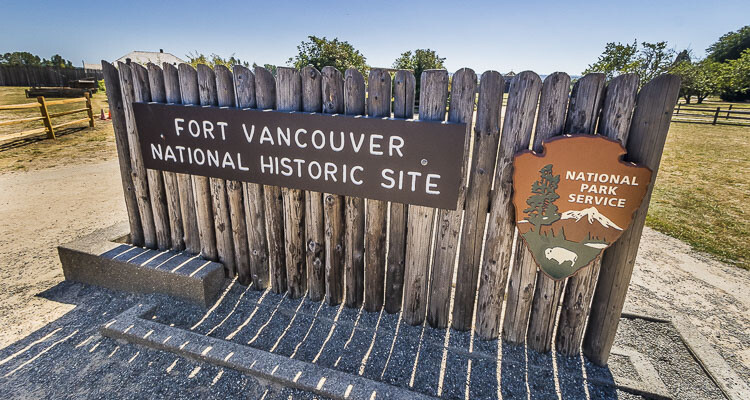
VANCOUVER – A new National Park Service (NPS) report shows that 964 thousand visitors to Fort Vancouver National Historic Site in 2022 spent $63.7 million in communities near the park. That spending supported 873 jobs in the local area and had a cumulative benefit to the local economy of $97.4 million.
“Since 1916, the National Park Service has been entrusted with the care of our national parks. With the help of volunteers and partners, we safeguard these special places and share their stories with more than 300 million visitors every year. The impact of tourism to national parks is undeniable: bringing jobs and revenue to communities in every state in the country and making national parks an essential driver to the national economy,” said National Park Service Director Chuck Sams.
“People come to Fort Vancouver National Historic Site to discover the important history of the Pacific Northwest, to spend time on our trails, green spaces, and waterfront, and to gather with friends and family,” said Superintendent Tracy Fortmann. “We recognize that this tourism is a critical driver to the local economy, bringing 873 jobs and $97.4 million in revenue to communities within 60 miles of the park. This data shows that in 2022 Fort Vancouver National Historic Site had its largest economic benefit since data has been recorded, and it reflects a steady recovery in economic benefit since the start of the COVID-19 pandemic in 2020. We are proud to serve as a destination for visitors from around the country and around the world, as well as a resource for our local community.”
The peer-reviewed visitor spending analysis was conducted by economists at the National Park Service. The report shows $23.9 billion of direct spending by nearly 312 million park visitors in communities within 60 miles of a national park. This spending supported 378,400 jobs nationally; 314,600 of those jobs are found in these gateway communities. The cumulative benefit to the U.S. economy was $50.3 billion.
As for the economics of visitor spending, the lodging sector had the highest direct effects, with $9 billion in economic output nationally. The restaurants sector had the second greatest effects, with $4.6 billion in economic output nationally.
Report authors also produce an interactive tool that enables users to explore visitor spending, jobs, labor income, value added, and output effects by sector for national, state and local economies. Users can also view year-by-year trend data. The interactive tool and report are available at the NPS Social Science Program webpage.
To learn more about national parks in Washington and Oregon and how the National Park Service works with Washington and Oregon communities to help preserve local history, conserve the environment, and provide outdoor recreation, go to www.nps.gov/Washington and www.nps.gov/Oregon.
Also read:
- White House govt. Funding request for 2027 cuts $73 billion
 President Trump’s budget seeks to boost defense funding while cutting $73 billion from agencies like the EPA, NASA, and Agriculture, prompting sharp criticism from Democratic leaders.
 - Heywood asks WA Supreme Court to allow referendum effort on income tax
 Brian Heywood is petitioning the state Supreme Court after the Secretary of State rejected a referendum to repeal Washington’s new 9.9% tax on income over $1 million.
 - Opinion: Half the road, full stop – Understanding pedestrian right-of-way
 Doug Dahl explains how Washington’s law requires drivers to stop when a pedestrian is within one lane of their half of the road, not just when directly in front.
 - Clark County seeks volunteer for Law and Justice Council
 Applicants with experience in mental health services are encouraged to help guide Clark County’s coordination of local criminal justice and corrections planning.
 - VIDEO: Families at center of WA transgender sports debate face-to-face with OSPI
 Two Washington high school students and their parents met with Superintendent Chris Reykdal to discuss concerns about sports policies after one student faced an investigation for harassment.
 - As Washington lawmakers punt on school cellphone ban, some want more action
 At Robert Eagle Staff Middle School, all-day phone removal led to fewer conflicts and more student engagement, but some parents and lawmakers argue a ban should not be imposed statewide.
 - Opinion: The state’s RFK-proofing bill comes with a cost
 Mandates like HB 2242 can lead to higher premiums as insurance companies absorb costs for new preventive services, affecting affordability statewide.
 wpDiscuz
