



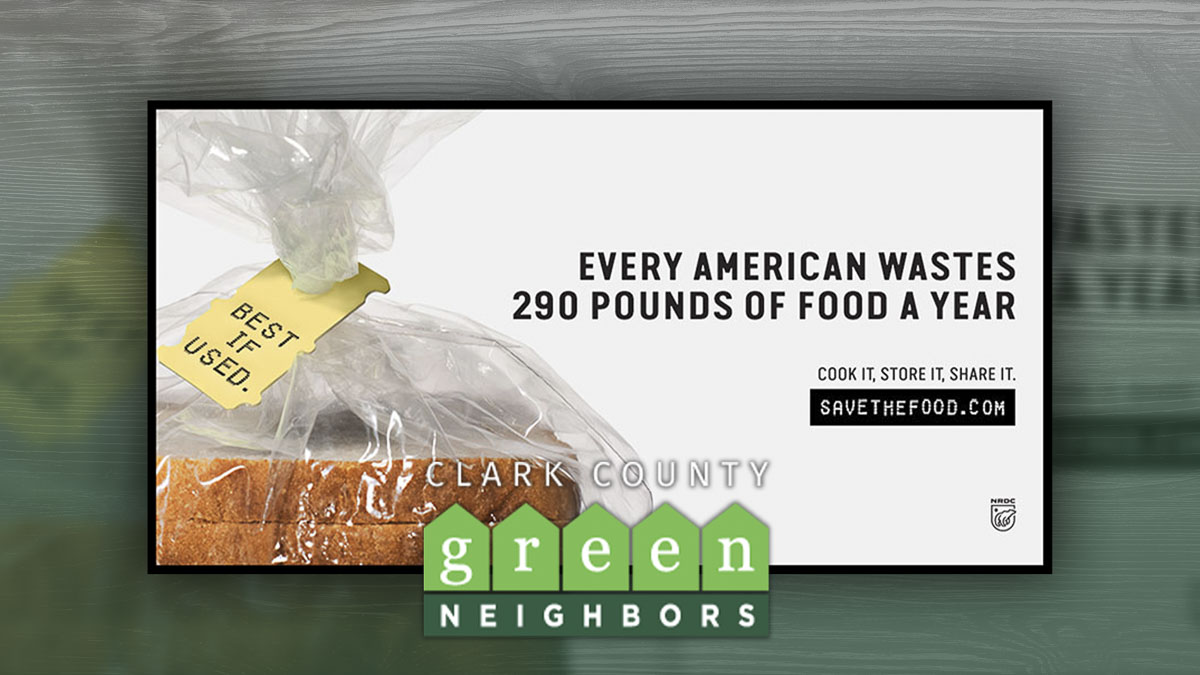
By taking simple steps before and after holiday meals, residents can save money at the grocery store and reduce the consequences of wasted food
VANCOUVER – When preparing to gather for a holiday meal consider this: Clark County generates an average 35,000 tons of edible food waste each year. Tossing food in the garbage not only wastes money, but when food reaches landfills, it contributes to greenhouse gas emissions that intensify climate change.
Small changes can have a big impact. By taking simple steps before and after holiday meals, residents can save money at the grocery store and reduce the consequences of wasted food.
- Simplify shopping: Food waste prevention starts at the grocery store. Avoid overbuying food by taking stock of what’s already available in the cupboards and using an online tool like “Guest-imator” to determine how much food is needed based on the number of expected guests.
- Celebrate leftovers: Send guests home with leftovers in reusable containers. Use leftovers to create new culinary combinations, such as using mashed potatoes to make shepherd’s pie, adopting cranberry sauce as a festive topping for oatmeal, or boiling bones to create nutrient-rich bone broth for winter soups and stews. Freezing leftovers in air-tight containers can preserve the flavors of the holiday season for months.
- Store properly: Properly store groceries to minimize spoilage. Store dry goods in labeled air-tight containers. Store onions and apples separate from other foods (they emit a gas that makes other foods spoil faster). And whenever possible, purchase local and in-season produce which often lasts longer since it requires less transportation time.
- Compost scraps: Composting food scraps prevents bad odors and messes in kitchen garbage, returns beneficial nutrients to the soil, replaces the use of synthetic fertilizers, and reduces greenhouse gas emissions.
- Compost at the curb: Waste Connections customers in the cities of Vancouver and Ridgefield who have curbside organics service can put food scraps into their carts.
- Compost drop-offs: All residents can drop off food waste for free at a We Compost Community Hub location. Find locations on the We Compost Community Hubs webpage.
For more food waste prevention tips, visit the Clark County Green Neighbors website.
Information provided by Clark Co. WA Communications.
Also read:
- Former WA Supreme Court justice joins legal effort against income tax
 Phil Talmadge and Rob McKenna have joined forces with the Citizens Action Defense Fund to oppose Washington’s new tax on high-income earners, raising legal and constitutional questions.
 - Makeover in store for Congress with flood of lawmakers headed for the exits
 A wave of exits from Congress—over 65 lawmakers—will usher in unfamiliar faces and decrease veteran expertise, shifting the political landscape in Washington.
 - Opinion: Sheriffs fight back
 Four county sheriffs are suing to block a new law giving a governor-appointed board power to decertify and remove sheriffs, bypassing voter oversight in Washington.
 - Obituary for Lucille ‘Erma’ Christenson Madore – April 22,1924-March 13, 2026
 Known for her love of music and family, Lucille ‘Erma’ Christenson Madore lived through nearly 102 years and leaves a large, grateful legacy in Vancouver.
 - Fiscal fallout: $375 million bond debt indirectly funding operating budget
 Shifting $375 million from a loan fund impacts local infrastructure as Washington state covers operating costs with bond debt, prompting concern among officials and advocacy groups.
 - Lawsuit aims to block new eligibility requirements for WA sheriffs
 Four sheriffs are suing over a state law that sets new eligibility rules, arguing it undermines voter authority by allowing removal for certification issues.
 - Opinion: The growing gap between public voice and political power
 Todd Myers describes how large-scale protest and sign-ins often fail to sway state leaders, and argues authentic influence is most likely found through local action.
