


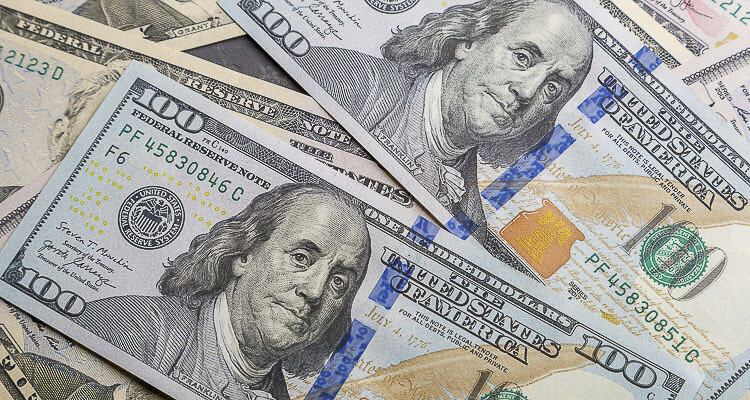
Washington residents must bring in more than $804,000 annually to be considered a top 1% earner in the state
Logan Washburn
The Center Square Washington
The top 1% of earners in Washington state make more than $800,000, the fifth-highest amount in America, according to a recent study.
Washington residents must bring in more than $804,000 annually to be considered a top 1% earner in the state, per the study by SmartAsset, a financial technology company based in New York City. In determining the concentration of wealth in American, SmartAsset looked at 2020 data from the Internal Revenue Service and Bureau of Labor Statistics, adjusted to May 2023 dollars.
Washington is home to some of the most moneyed people in the world, including Amazon founder Jeff Bezos and Microsoft co-founder Bill Gates, among others.
The state’s highest earners are taxed at an average rate of more than 25.9%, according to the study, partially because the state has no income tax.
The more money one earns, the more one stands to gain from avoiding higher taxes, according to Jaclyn DeJohn, SmartAsset’s managing editor of economic analysis.
“The lack of state income tax can act as an incentive for high earners to move to Washington, or to stay in it,” she said.
In March, the Washington State Supreme Court ruled the state’s controversial capital gains tax is constitutional. As of May, the new tax had brought in $849 million, far exceeding expectations.
DeJohn said the capital gains tax only applies to eligible and profitable asset sales.
“Capital gains tax won’t affect any income from salary, commissions or any earned wages,” she explained. “While in general, higher capital gains taxes may deter those with a lot of assets, there are ways to avoid capital gains taxes.”
DeJohn noted young high earners – those age 26 to 35 – are migrating to Washington, citing 2021 IRS data.
Americans on average need to make more than $652,000 to be considered among the top 1%, according to the study. These earners bring in more than eight times as much as the median household, which brings in close to $75,000.
The study found Northeastern states like Massachusetts, New Jersey and Connecticut have the highest thresholds for their top 1% of earners. Connecticut, which has the highest threshold of more than $952,000, taxes its top earners more than any other state at 28.4%.
But the study also found Southern states have the lowest thresholds for their top 1% of earners, as six of the 10 states with the lowest thresholds are in the Southeast. For example, West Virginia has the lowest threshold in the country at just more than $367,000. Arkansas also taxes its top earners less than any other state, at more than 21.1%.
This report was first published by The Center Square Washington.
Also read:
- Opinion: Were Republican voters just sleeping during the August primary election?
 CCRP Chairman Matt Bumala says 60% of primary no-shows in the 17th and 18th districts were Republicans.
 - High school football: New coach prepares for long-term success at Prairie High School
 James Young-Lewis, a Clark County native who graduated from Evergreen in 2009, became Prairie’s head coach in May after working as an assistant coach across various programs since 2015, joining Prairie’s staff in 2024.
 - Cost to battle 20 wildfires in WA has topped $200M
 Twenty wildfires have cost Washington $207M in one month, more than two-thirds of what DNR spent all last fiscal year.
 - Opinion: WA Cares’ launch showcased care WA Cares did not provide
 Gov. Ferguson showcased a caregiving arrangement at the WA Cares launch that the program had not paid for a single day of.
 - Former State Rep. Liz Pike provides update on husband Neil Cahoon
 Neil Cahoon, a Camas resident, has undergone multiple surgeries including five on Aug. 15 after the Aug. 10 crash near La Center’s Daybreak Airport.
 - Opinion: Portland’s War on Cars Part 4 – A smarter automobile strategy to end gridlock
 O’Toole argues fuel wasted in Portland-area congestion has sextupled since 1982, generating 250,000 tons of extra greenhouse gases annually.
 - $1,000 first prize for Camas Plein Air Art Event honoring Marquita Call on Sept. 26
 Plein air artists compete Sept. 26 in Camas for $1,000 first prize honoring gallery founder Marquita Call.