



The State Department of Ecology announced Thursday it will seek an agreement to link the state’s cap-and-trade program with the California-Quebec market
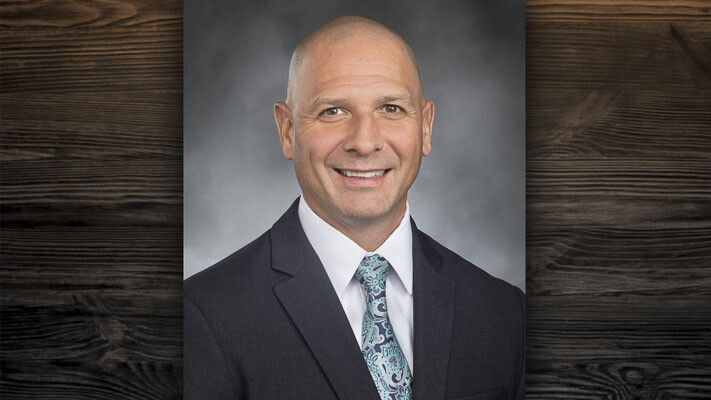
Rep. Peter Abbarno, R-Centralia, expressed concerns today about Washington state linking its carbon market to California and Quebec, saying it could mean even higher prices for Washington families.
The Washington State Department of Ecology (DOE) announced today (Thursday) it will seek an agreement to link the state’s cap-and-trade program with the California-Quebec market. Abbarno, who serves on the House Environment and Energy Committee, responded with this statement:
“Washington should not be trying to emulate California. California has the highest gas prices in the nation, with Washington close on their heels. I recently visited California and experienced firsthand their sky-high gasoline prices. That’s what will continue to happen to Washington under this linkage plan.
“California has some of the highest energy prices, the highest housing prices, and some of the most regressive taxes and regulations in the nation. Other states, including Washington, have been the recipient of the mass exodus of California residents moving to escape the disastrous policies of that state. It makes no sense that we would link up with California and replicate their outrageous costs of food, energy, and daily living. This also sends us further down a rabbit hole in which we lose control of our own policies by tying ourselves to other states. Do we really want California dictating policy for Washington state?
“People in my district are already worried about everyday kitchen table issues, such as how they are going to pay their bills, feed their families, and purchase gasoline to get to work. The Department of Ecology wildly understated the cost of these carbon auctions, which are more than three times higher than the DOE predicted. Now this state agency wants us to trust them and their predictions of linking up with the highest-cost state in the nation? This will only cost Washington working families more in the long run.”
Abbarno noted he had predicted higher consumer prices, including increased gasoline prices, after majority Democrats in the Legislature passed the Climate Commitment Act (CCA) in 2021. On April 23, 2021, Abbarno offered an amendment to create a “Taxpayer Fairness Account” to return taxpayer money from passage of the CCA legislation. Unfortunately, the amendment was rejected and gasoline prices rose in January 2023 when the CCA took effect.
Background
Washington’s cap-and-trade program (CCA) puts a price on carbon dioxide emissions by setting a declining annual cap on the emissions of covered businesses (such as utilities, refineries, etc.) and forcing them to buy state-issued allowances at quarterly auctions for any emissions above the cap.
When the CCA was pushed through the Washington State Legislature in 2021 by Democrats, Gov. Jay Inslee and other supporters claimed it would cost only “pennies” for Washington consumers. However, the three quarterly carbon auctions and two Allowance Price Containment Reserve auctions held so far this year, have brought in more than $1.4 billion – about three times more revenue than expected. As a result, Washington gasoline prices rose sharply relative to Oregon, whose gas prices have historically aligned with Washington state. In addition, Washington fuel prices climbed to more than $5 a gallon, and for a short time this summer, surpassed California for the highest gas prices in the nation.
The California-Quebec market, established in 2014, is approximately six times the size of Washington’s total emissions allowance market. DOE officials claim that linking Washington’s program with the California-Quebec market would increase the number of allowances available and result in lower prices for carbon allowances. However, DOE is seeking legislative changes to the CCA in 2024 to align Washington’s emissions reduction policies with California, which is evidence that tying our programs together requires a loss of sovereignty for Washington. DOE’s forecast of 2023 auction market prices were wildly inaccurate, understating compliance costs by 75%, and doubts exist about the accuracy of DOE’s new prediction that linkage to California and Quebec would lower prices.
Information provided by Washington State House Republicans, houserepublicans.wa.gov
Also read:
- ‘Our new normal’: WA confronts another year of drought
 Casey Sixkiller says every watershed in Washington has dropped below 75% of normal water supply.
 - Schools expect minimal impact with Title IX pacts rescinded
 Federal officials rescinded agreements with six school districts, saying previous administrations misapplied Title IX protections.
 - Area Agency on Aging & Disabilities in Southwest Washington announces the Senior Farmers Market Nutrition Program
 AAADSW opens applications for $80 benefit cards to help eligible seniors buy fresh produce at farmers markets.
 - Free in-person workshops promote composting and sustainable living
 Clark County’s free workshops teach residents worm composting, green cleaning, and smart recycling through April and May.
 - Keeping afloat: A bittersweet chronicle of two women who endured the sinking of the Titanic
 Local historian Peri Muchich shares the story of Pacific Northwest Titanic survivor Anna Warren at Sunday’s museum event.
 - Letter: ‘This is the worst thing that ever happened to the region’
 A Hayden Island resident Sam Churchill is criticized in a letter calling the $14 billion Interstate Bridge Replacement project a “boondoggle” that destroys local businesses.
 - Washougal ramps up efforts to support small businesses
 Washougal launches Gateway to Success Series with free workshops starting April 15 at Best Western Plus Convention Center.
