



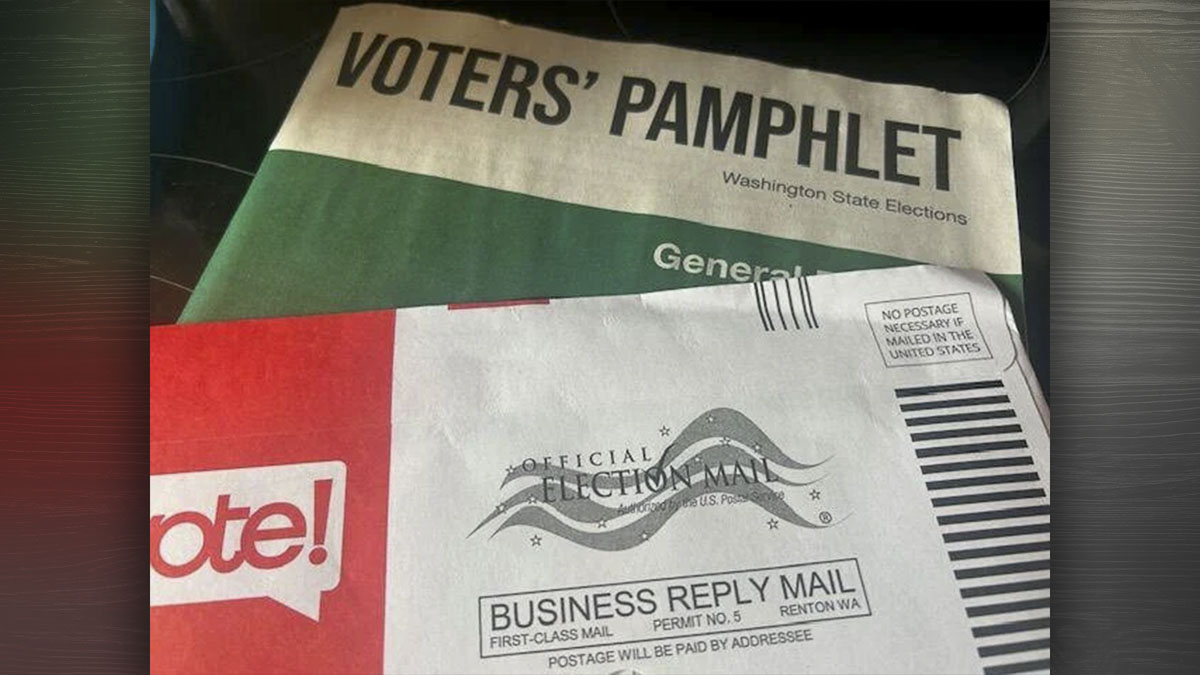
Under state election laws, all voters are required to sign their ballot attesting that they are the person whom the ballot was mailed to and that they are legally able to participate in the election
TJ Martinell
The Center Square Washington
As Election Day approaches, a case heard on Halloween before the Washington Supreme Court filed by a Portland-based nonprofit could legally ghost the voter signature verification used by county election officials, under the argument that it infringes on the rights of voters.
Under Washington state election laws, all voters are required to sign their ballot attesting that they are the person whom the ballot was mailed to and that they are legally able to participate in the election.
When received by county election officials, that signature is compared to the signature on file. If a signature doesn’t match, it is not counted and the voter is notified and given the opportunity to “cure” the issue.
However, the Vet Voice Foundation in its lawsuit filed in 2022 in King County Superior Court against the Secretary of State’s Office claims that this process invalidates legal voters, to the tune of 170,000 since 2016.
The VVF’s mission “is to empower Veterans across the country to become civic leaders and policy advocates by providing the support, training, and tools they need to continue their service and find new missions at home,” according to its website.
Also listed among the plaintiffs was The Washington Bus, El Centro De La Raza, and several individual voters. Among the defendants were also the King County Elections Director Julie Wise, and members of the King County Canvassing Board.
The plaintiff’s legal argument is that the high court should apply “strict scrutiny” to the ballot signature verification process on the basis that it places a burden on voting; if so, the state would need to provide a compelling reason to do so before enacting such a policy.
During an oral argument in front of the Washington State Supreme Court on Oct. 31, VVF’s attorney Kevin J. Hamilton told the justices that “signature matching is extraordinarily ineffective in identifying ineligible ballots.”
When asked by justices if there was an alternative way to verify a ballot, Hamilton noted that other states have verification processes, but “what they don’t do is compare the signatures to a signature that’s on file,” a process he said that’s conducted by “election officials who have limited training.”
Acting as legal counsel for SOS, Karl David Smith told the court that VVF’s legal argument is “wrong as a matter of common sense and wrong as a matter of law. We want everyone’s vote to be counted.”
He said that the verification process “ensures that the ballot election official receives is from a registered voter” that every voter whose ballot is deemed invalid are given ample opportunity to cure the issue.”
Smith added that “Any alternative is going to be more burdensome to voters. Without signature verification, there are two possibilities. Either we have no way to verify that the ballot came from a registered voter…or we turn to some more burdensome method.”
Although both parties agreed that younger voters and non-white voters were more likely to have their ballot invalidated, a 2022 audit of ballot rejection rates noted that the State Auditor’s Office “found few discernable patterns that helped explain differences in rejection rates. We also found no evidence of bias when counties accepted or rejected ballots.”
Republican candidate for Secretary of State Dale Whitaker wrote in a statement that “signature verification is the bare minimum requirement that helps ensure that the voters name on the ballot is the person casting their ballot. As we have seen recently in the case where a tenant received 16 ballots all in different names, this is a safeguard against nefarious actors potentially casting ballots that aren’t their own. If this requirement is not upheld, it would be a disaster for election integrity in Washington State.”
Earlier this year, a separate lawsuit against SOS ultimately led to a consent decree overturning the state constitution’s 30-day voter residency requirement that had been in place since 1889.
This report was first published by The Center Square Washington.

Also read:
- VIDEO: WA diesel hits record $6.53, crushing truckers and school budgets
 With diesel nearing $6.53 per gallon in Washington, trucking businesses and school districts now confront sharply higher fuel expenses affecting budgets and workers.
 - WA’s status solidifies as one of the most expensive places in US
 A new study shows Washington outpaces most states on cost of living, with metrics revealing a sharp rise in daily expenses and major metro areas ranking among the nation’s most expensive.
 - Opinion: Someone explain the Democrat Party to me please
 Lars Larson criticizes Democrat politicians for shutdown threats, Homeland Security funding refusals, and positions on election laws, housing, and gun rights.
 - POLL: Do you agree with requiring board members to follow council direction?
 Disagreement among county councilors centers on whether C-TRAN board members should reflect the council’s collective wishes or act independently, highlighting ongoing concerns about public accountability.
 - High-value WA home listings increase by 65% after income tax passage
 After lawmakers approved an income tax targeting millionaires, listings for homes priced at $2 million or more jumped 65 percent compared to last year, with experts urging caution about interpreting the spike.
