



On Tuesday, the DNR announced that more than 10,000 acres of older forests will be conserved permanently
When the newly elected Commissioner of Public Lands Dave Upthegrove took office earlier this year, one of his first actions was to halt roughly two dozen pending timber sales as part of an effort to conserve 77,000 acres of state forests. That ‘pause’ lasted eight months and reduced the Department of Natural Resources’ (DNR) timber output to its lowest level in two decades.
On Tuesday, the DNR announced that more than 10,000 acres of older forests will be conserved permanently – effectively eliminating all remaining older forest harvests on state lands-dealing a serious setback to rural Washington.
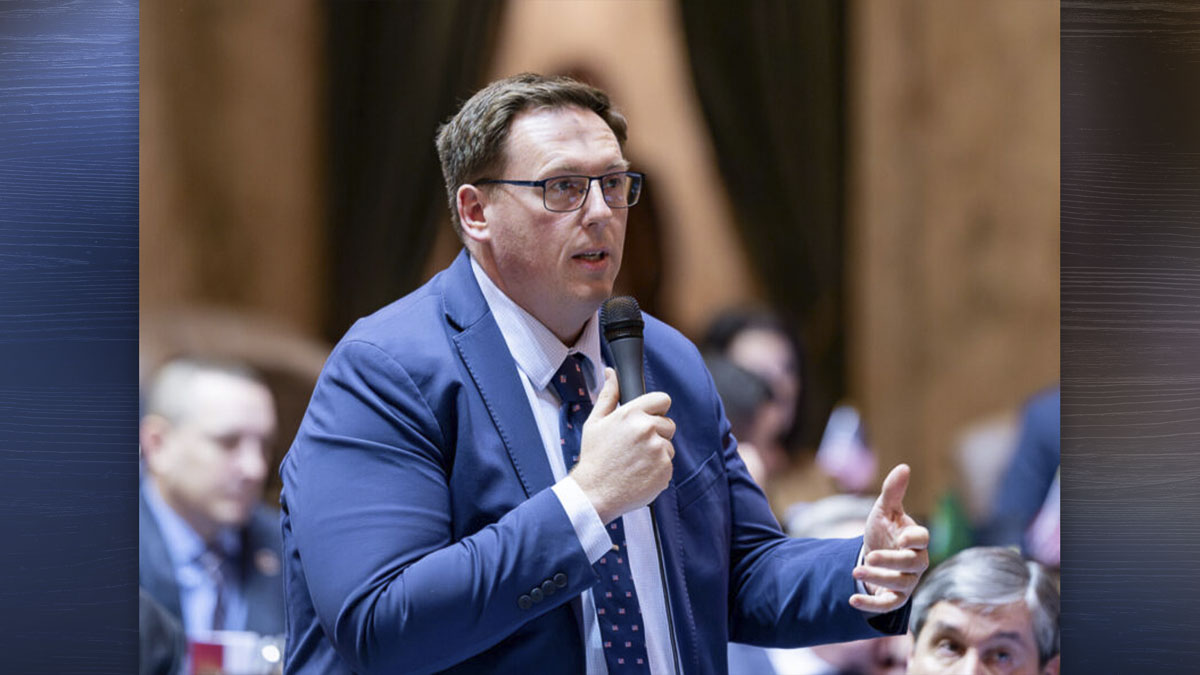
Rep. Kevin Waters, R-Stevenson, issued the following statement in response to the commissioner’s decision.
“For communities like Skamania, Pacific, and Wahkiakum counties, this decision does not occur in isolation. For over 30 years, timber-dependent counties have lived with the consequences of federal timber harvest reductions, which cut off a reliable revenue stream for schools, county services, and infrastructure. Federal shortfalls, once promised to be temporary, have instead become the norm, forcing rural counties to scrape by on less funding year after year.
“Tuesday’s action by the DNR compounds that problem. It trades financial certainty for untested markets. The agency’s own Ecosystem Services Report acknowledges that revenue sources such as water leasing, carbon offsets, and wildfire emission credits are years away from being viable – and in many cases may not equal the revenues timber harvest provides today.
“When timber policies are made, they may ‘save’ a forest, but they rarely account for the lives, schools, and counties that are directly affected. This latest decision will further limit school funding, reduce county budgets, and restrict log supply to local mills at a time when Washington is already facing a housing shortage and a strained state budget.
“We need a balanced approach that considers both environmental stewardship and economic stability. Rural communities are projected to lose hundreds of millions of dollars because of this decision. This is just death by a thousand cuts. That is not how we support the people who live in these counties who are already working with far fewer resources.
“I will continue working with colleagues in the Legislature to pursue solutions that restore balance, ensure predictable funding for schools and local governments, and keep Washington’s timber economy strong.”
Waters represents the 17th Legislative District.
Information provided by Washington State House Republicans, houserepublicans.wa.gov

Also read:
- White House govt. Funding request for 2027 cuts $73 billion
 President Trump’s budget seeks to boost defense funding while cutting $73 billion from agencies like the EPA, NASA, and Agriculture, prompting sharp criticism from Democratic leaders.
 - Heywood asks WA Supreme Court to allow referendum effort on income tax
 Brian Heywood is petitioning the state Supreme Court after the Secretary of State rejected a referendum to repeal Washington’s new 9.9% tax on income over $1 million.
 - VIDEO: Families at center of WA transgender sports debate face-to-face with OSPI
 Two Washington high school students and their parents met with Superintendent Chris Reykdal to discuss concerns about sports policies after one student faced an investigation for harassment.
 - As Washington lawmakers punt on school cellphone ban, some want more action
 At Robert Eagle Staff Middle School, all-day phone removal led to fewer conflicts and more student engagement, but some parents and lawmakers argue a ban should not be imposed statewide.
 - POLL: Do you agree with giving a state commission the power to remove an elected sheriff?
 A new poll asks if a state commission—not voters—should have the power to remove an elected sheriff, following concerns raised by Clark County Sheriff John Horch.
 wpDiscuz
