


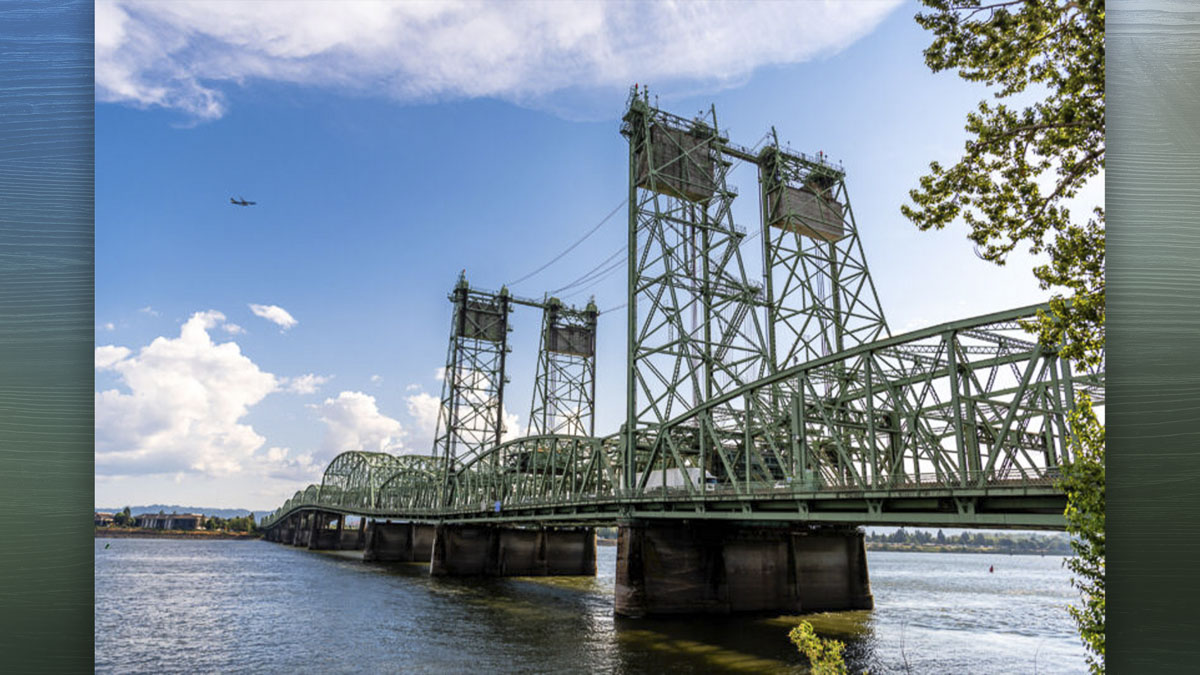
House Bill 2030 would mandate the joint legislative audit and review committee to conduct a study analyzing the financial oversight of the IBR project
To promote transparency and accountability in the I-5 Interstate Bridge Replacement Project, Rep. John Ley has introduced legislation that would allow an audit of project spending.
House Bill 2030 would mandate the joint legislative audit and review committee to conduct a study analyzing the financial oversight of the IBR project.
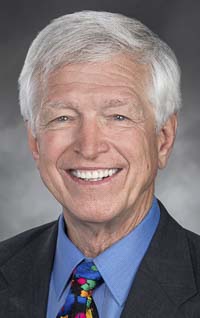
“I introduced this bill because we need to know where the money for this project is going,” said Ley, R-Vancouver. “Based on reports from a privately hired forensic accountant, the previous bridge replacement effort-the failed Columbia River Crossing project-was full of waste, fraud, and abuse of the taxpayer trust.
“For example, some employees quit on a Friday and were hired back the following Monday as independent contractors at often double or triple the amount of their previous salary. There were also factual inaccuracies regarding transit ridership projections, cost allocations, and money planned for expenditures outside the five-mile ‘bridge-influence-area’ of the project.”
The analysis outlined in HB 2030 would have to include the following components:
- Financial transparency and reporting by assessing whether project financial reporting complies with state and federal reporting requirements.
- Expenditure review and accountability including analyzing how funding has been allocated and spent since the project restarted in 2019, comparing actual expenditures against initial funding plans and subsequent legislative approvals.
- Forecasting, data use, and decision-making by assessing the reliability of traffic, ridership, and potential toll revenue projection, and reviewing the forecasting process against industry best practices and similar projects.
- Oversight and internal controls, including reviewing the Washington State Department of Transportation’s financial oversight and auditing mechanisms for the project and comparing them to best practices in financial accountability and risk management.
“In the current IBR proposal, project leaders want to buy Portland’s TriMet 19 new light rail vehicles for a 1.83-mile extension of an existing MAX line,” said Ley. “Furthermore, they want to charge between $10 and $15 million for each new light rail vehicle for $190 to $290 million, when they allegedly paid $4.5 million each, for four new light rail vehicles for a 10-mile extension.
“They also want to do a significant ‘upgrade’ to TriMet’s Gresham maintenance facility, which would likely include taking private property. This facility is 10 miles from the project and has nothing to do with replacing the bridge.
“Lastly, the current IBR project is grossly overestimating the number of projected transit riders trying to justify the inclusion of the $2 billion light rail in the project. Currently, less than 1,000 people use mass transit over the Columbia River on both the I-5 and I-205 bridges. However, IBR project leaders claim that by 2045, there will be between 26,000 and 33,000 daily riders on the I-5 bridge corridor alone. That’s not realistic. Nobody believes there will be a 30-to-50-fold increase in transit ridership over the next 20 years.”
Ley concluded: “This audit is also extremely relevant because House Bill 1958 would potentially put 100 percent of the financial obligation for $1.6 billion in tolling bonds on Washington state. Both states should jointly bear this obligation, yet no Oregon obligation is mentioned in the bill’s original language.”
Under HB 2030, the joint legislative audit and review committee may contract for expertise in transportation infrastructure, financial management, or project auditing and shall submit a final report on its findings to the appropriate committees of the legislature by December 1, 2027.
The 2025 legislative session began Jan. 13 and is scheduled to end on Apr. 27.
Information provided by the Washington State House Republicans, houserepublicans.wa.gov
Also read:
- Opinion: Portland’s War on Cars Part 4 – A smarter automobile strategy to end gridlock
 O’Toole argues fuel wasted in Portland-area congestion has sextupled since 1982, generating 250,000 tons of extra greenhouse gases annually.
 - Opinion: Transit ridership trends are dismal but regional plans are oblivious
 Puget Sound transit passenger-miles fell 31% from 2015 to 2024 despite a half-million-resident population increase.
 - Interstate Bridge Replacement Program seeks qualified firms for bridge replacement contract
 The CRBR project is backed by $5.7 billion from state funds, federal grants, and future tolling.
 - Opinion: Bankrupt – A $3.5 billion Rose Quarter Freeway widening project
 Joe Cortright argues ODOT’s Rose Quarter project has grown from a $450M approval to a $3.5B estimate, with a $2B funding gap.
 - Opinion: Portland’s War on Cars 3 – Ending the war on automobiles
 O’Toole argues Portland should add toll lanes, fix safety hazards, and redesign TriMet routes to end its anti-auto policies.