



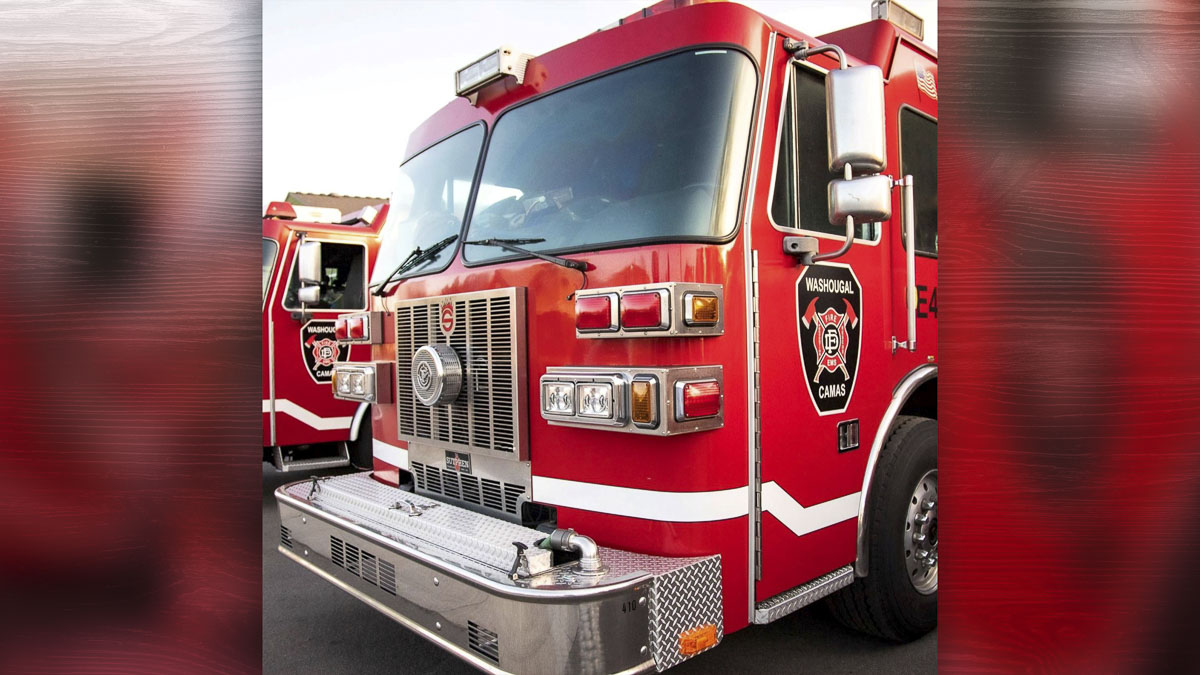
Concerns are emerging about the actual cost to residents in both incorporated and unincorporated areas and whether the financial burden outweighs the promised benefits
As residents in Camas and Washougal prepare to vote on the proposed Proposition 1 Regional Fire Authority (RFA) in a special election on April 22, growing concerns are emerging about the actual cost to residents in both incorporated and unincorporated areas and whether the financial burden outweighs the promised benefits.

City leaders are touting the RFA model as a more “equitable and fair” path to replace the current interlocal agreement that delivers a shared services model to Camas and Washougal. The RFA proposal would create a new taxing district, establishing a new flat property tax levy of $1.05 per $1,000 assessed value in both cities. Both cities are promising a reduction in the general fund property tax levies currently applied to fire services but will keep other recently voter-approved tax levies for ambulance service and new fire station construction in play.
City leaders appear to be downplaying how this tax adds to a collection of taxes residents already pay for fire and emergency medical services (EMS). Gary Perman, Camas resident and city-appointed chair of the opposition committee for Proposition 1, performed a detailed analysis of the proposal, revealing that the average Camas homeowner would likely face an annual increase of $329.29 in property taxes, amounting to a 17.58% jump in fire-related costs in the first year alone.
“The math simply doesn’t add up for residents,” said Perman. “The resident cost of an RFA is significantly more without demonstrating proportional service improvement.”
Some residents are questioning the timing and urgency of the RFA proposal, calling it “a solution in search of a problem.” Recent city surveys show 87% resident satisfaction with the Camas-Washougal Fire Department and 90% approval of emergency response times – ranking among Washington’s best.
The RFA proposal combines Camas and Washougal fire services into a new taxing district. While city officials have promised a general fund property tax levy reduction, this is guaranteed only for the first year.
Current fire-related costs for the average Camas home valued at $731,772 run approximately $156.11 monthly. Under the RFA, that same homeowner would pay $183.55 monthly — a $27.44 increase of nearly $330 annually. “The increase to the annual taxpayer bill is approximately $2,202.63 for Camas homeowners. We’re still getting validation on the numbers for Washougal residents, but it’s looking like the impact will be around a collective 51% increase for fire services,” added Perman.
At recent open house events hosted by each city, residents’ questions centered around specific problems the RFA would solve that couldn’t be addressed through amendments to the current arrangement.
Advocates for the RFA maintain it would create a more sustainable funding structure for fire and emergency services across both communities. Opponents counter that the proposal shifts too much financial burden to homeowners without demonstrating why the current Interlocal agreement couldn’t be modified to address any legitimate concerns.
The proposal includes several other financial considerations that have raised the alarm for some residents. The RFA requires interim “start-up” funding of $4.6 million by the city of Camas. New construction would face impact fees ranging from $0.38 to $0.92 per square foot, potentially affecting development in the growing region. The levy rate supporting the RFA could also increase after the first year without requiring voter approval.
In an open house presentation, local fire chief Cliff Free defended the proposal, citing the need for improved governance and operational efficiencies, including shifting from two-man to three-man crews. However, Free has struggled to articulate specific deficiencies in the current system’s service levels that would justify the additional cost to taxpayers.
Both cities would transfer fire stations and equipment without compensation to the RFA governing body yet would have to pay market value plus improvements to reclaim them – meaning “the RFA owns the assets, Camas and Washougal residents own the debt.” Both the City and the RFA would have authority to raise property taxes, EMS levies, and various fees, creating dual taxing districts that compound residents’ financial burden.
Critics point out that the RFA’s funding structure relies heavily on property tax levies and service fees that will fluctuate yearly. When these revenue sources fall short – as they typically do – RFAs often demand additional funding, creating a cycle of less predictable costs with decreasing local oversight. Camas and Washougal residents already pay the highest property tax rate in Clark County, plus recent increases in sales tax, business license fees, utility taxes, and transportation district assessments.
Small business owners in both communities have expressed concern about the rushed timeline for the proposal and the lack of a detailed third-party analysis comparing the current system’s performance with projected improvements under an RFA. Additionally, both cities’ handling of recent fire station bonds has raised serious concerns about transparency and governance – issues that would be exacerbated by transferring control to a less accountable RFA board.
As the April 22 vote approaches, the citizens’ group “Fiscal Responsibility First” has organized a series of informational sessions focused on analyzing call volume data and the effectiveness of the current Interlocal agreement. Their message is clear: “Let’s keep our critical services under local control without additional taxes.”
Editor’s note: Clark County Today welcomes reader comments on this issue. Send us your thoughts.
Also read:
- He Is Risen: An Easter Message from Clark County Today
 Families and congregations throughout Clark County observe Easter in unique ways, highlighting moments of renewal and togetherness for the community.
 - White House govt. Funding request for 2027 cuts $73 billion
 President Trump’s budget seeks to boost defense funding while cutting $73 billion from agencies like the EPA, NASA, and Agriculture, prompting sharp criticism from Democratic leaders.
 - Heywood asks WA Supreme Court to allow referendum effort on income tax
 Brian Heywood is petitioning the state Supreme Court after the Secretary of State rejected a referendum to repeal Washington’s new 9.9% tax on income over $1 million.
 - Opinion: Half the road, full stop – Understanding pedestrian right-of-way
 Doug Dahl explains how Washington’s law requires drivers to stop when a pedestrian is within one lane of their half of the road, not just when directly in front.
 - Clark County seeks volunteer for Law and Justice Council
 Applicants with experience in mental health services are encouraged to help guide Clark County’s coordination of local criminal justice and corrections planning.
 - VIDEO: Families at center of WA transgender sports debate face-to-face with OSPI
 Two Washington high school students and their parents met with Superintendent Chris Reykdal to discuss concerns about sports policies after one student faced an investigation for harassment.
 - As Washington lawmakers punt on school cellphone ban, some want more action
 At Robert Eagle Staff Middle School, all-day phone removal led to fewer conflicts and more student engagement, but some parents and lawmakers argue a ban should not be imposed statewide.
 wpDiscuz
