



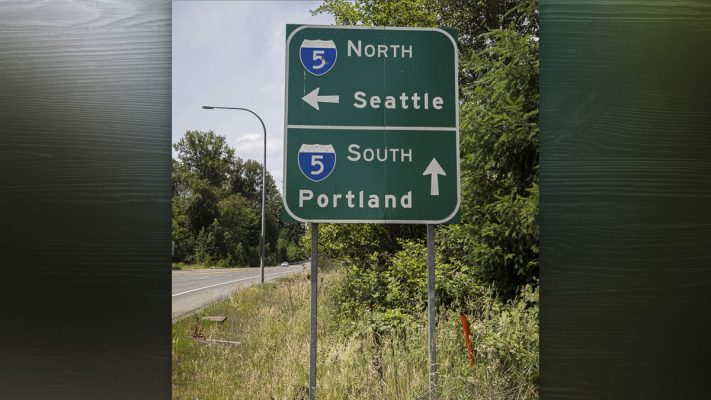
Catch basins collect rainwater and keep it from pooling on the road. Fixing them now helps keep travelers safe during heavy rain
VANCOUVER – Travelers who use northbound Interstate 5 in Clark County should plan for a lane closure and delays.
On Wednesday, Sept. 24, the Washington State Department of Transportation maintenance crews will repair the catch basin along northbound I-5, near the Northeast 134th Street interchange. Catch basins collect rainwater and keep it from pooling on the road. Fixing them now helps keep travelers safe during heavy rain.
What to expect
- Wednesday, Sept. 24: The left lane of northbound I-5 will be closed near the Northeast 134th Street interchange at milepost 7.30, from 9 a.m. to 3:30 p.m.
- All traffic will shift into the right lane.
For everyone’s safety, please slow down, stay focused and expect delays when traveling through the work zone.
Know before you go
Get real-time travel information via the WSDOT mobile app, the real-time travel map, or by signing up for email updates and alerts.
Also read:
- Expect delays on SR 14 in Vancouver for guardrail repairs Wednesday
 State Route 14 travelers in Vancouver should plan for morning delays as WSDOT will close two eastbound lanes for guardrail repairs, affecting mileposts 6.0 to 7.0.
 - Overnight closure planned on westbound SR 14 Camas Slough Bridge Tuesday
 WSDOT crews will close westbound SR 14 at Exit 14 in Camas to collect bridge deck samples and plan future repairs; detours will be in effect.
 - Opinion: Stay in your lane – seriously, it’s the law
 Drivers must choose the nearest lane when turning in Washington, and left turns bring added risk. Even with signals, every driver must help prevent crashes by following law.
 - POLL: After hearing state leaders describe the I-5 Bridge as vulnerable in an earthquake, what is your reaction?
 State and local leaders describe the I-5 Bridge as structurally at risk but recommend drivers continue crossing it while complex replacement plans unfold.
 - WA and OR scale back I-5 Bridge ambitions as cost balloons
 A $14.4 billion price tag prompts Washington and Oregon leaders to delay portions of the I-5 bridge project and prioritize just the main spans.
