



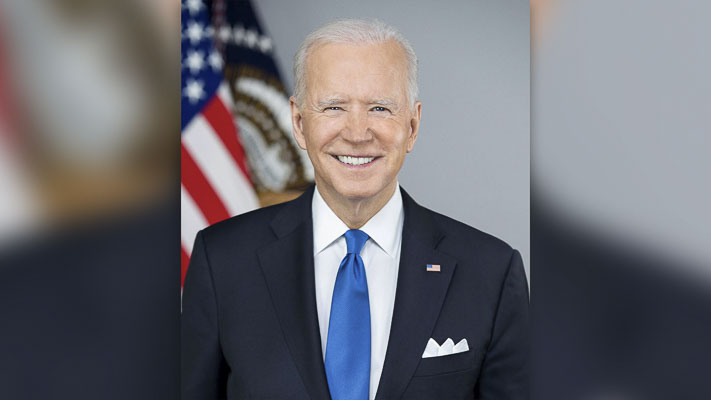
The group said that “costly legislative and executive actions” have worsened the debt to GDP ratio since CBO’s May estimate
Casey Harper
The Center Square
New budget estimates show that the growth of the national debt is worse than previously thought.
The U.S. Congressional Budget Office released projections in May that the national debt will hit 110% of U.S. Gross Domestic Product by 2032. Now, with interest rates higher and GDP growing more slowly, a leading budget group has released more dire projections.
The Committee for a Responsible Federal Budget raised the alarm, saying that the federal debt will be 116% of GDP in 2032 but could even reach as high as 138% of GDP in 10 years. The group said that “costly legislative and executive actions” have worsened the debt to GDP ratio since CBO’s May estimate.
“Under our updated baseline scenario, which incorporates these factors and also subtracts about $920 billion of borrowing for baseline adjustments related to the infrastructure bill, we find debt would reach a massive 116 percent of GDP by 2032,” the group said in its analysis.
The U.S. Federal Reserve has hiked interest rates to deal with soaring inflation, making all debt more costly, including that held by the federal government.
“Under a more pessimistic (and in many ways realistic) scenario, debt in 2032 would reach 138 percent of GDP, deficits would reach 10.1 percent, and interest would total 4.4 percent of GDP,” the group said. “These projections suggest an unsustainable fiscal trajectory”
The U.S. national debt surpassed $31 trillion last month after surpassing $30 trillion earlier this year. Lawmakers are reportedly mulling new tax breaks at the end of this year as well.
“We are asking lawmakers to take one small step towards fiscal responsibility and agree there should be no new borrowing for the remainder of 2022,” said Maya MacGuineas, president of the Committee for a Responsible Federal Budget. “There is not one single economic justification to borrow rather than pay for any new priorities … it will be good practice for politicians to break their addiction to debt.”
This story was first published by The Center Square.
Also read:
- ‘Our new normal’: WA confronts another year of drought
 Casey Sixkiller says every watershed in Washington has dropped below 75% of normal water supply.
 - Schools expect minimal impact with Title IX pacts rescinded
 Federal officials rescinded agreements with six school districts, saying previous administrations misapplied Title IX protections.
 - Area Agency on Aging & Disabilities in Southwest Washington announces the Senior Farmers Market Nutrition Program
 AAADSW opens applications for $80 benefit cards to help eligible seniors buy fresh produce at farmers markets.
 - Free in-person workshops promote composting and sustainable living
 Clark County’s free workshops teach residents worm composting, green cleaning, and smart recycling through April and May.
 - Keeping afloat: A bittersweet chronicle of two women who endured the sinking of the Titanic
 Local historian Peri Muchich shares the story of Pacific Northwest Titanic survivor Anna Warren at Sunday’s museum event.
 - Letter: ‘This is the worst thing that ever happened to the region’
 A Hayden Island resident Sam Churchill is criticized in a letter calling the $14 billion Interstate Bridge Replacement project a “boondoggle” that destroys local businesses.
 - Washougal ramps up efforts to support small businesses
 Washougal launches Gateway to Success Series with free workshops starting April 15 at Best Western Plus Convention Center.
 wpDiscuz
