



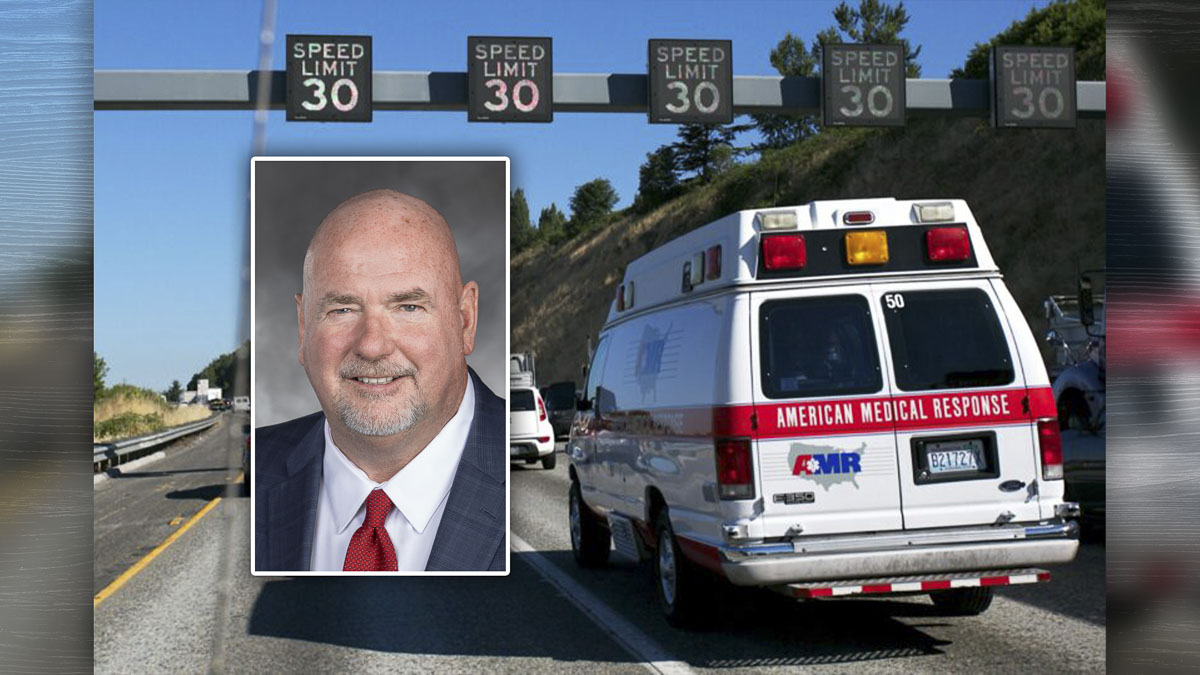
House Bill 2531 would modernize how the state calculates and adjusts Medicaid reimbursement rates for emergency ambulance transports
On Wednesday, the House Appropriations Committee held a public hearing on legislation sponsored by Rep. David Stuebe that would update Washington’s ambulance quality assurance fee program to ensure long-term stability for emergency medical providers while keeping the state in compliance with federal Medicaid regulations.
House Bill 2531 would modernize how the state calculates and adjusts Medicaid reimbursement rates for emergency ambulance transports. The program would allow Washington to collect a quality assurance fee from private, nongovernmental ambulance providers, deposit those funds into a dedicated account, and leverage federal Medicaid matching dollars to increase reimbursement rates for emergency transports.
“Our emergency ambulance providers are a critical part of the health care system, especially in rural and underserved areas,” said Stuebe, R-Washougal. “This bill would ensure the funding structure that supports them remains stable, transparent, and aligned with federal rules, so we don’t risk losing federal dollars.”
Under HB 2531, the Health Care Authority would be required to calculate and adjust the Medicaid “add-on” payment for emergency ambulance transports annually. Current law allows those calculations to be locked in for multiple years, even as transport volumes and revenues change. Annual adjustments would ensure reimbursement rates more accurately reflect real-world conditions and available federal funding.
The legislation would also refine how the annual quality assurance fee rate is managed. Beginning July 1, 2026, the fee rate would be frozen at its July 2025 level, providing predictability for ambulance providers. After that date, the state would adjust the reimbursement add-on rate, rather than the fee itself to ensure funding remains aligned.
“Predictability matters for providers who are trying to budget, hire staff, and keep ambulances on the road,” Stuebe said. “This approach gives them more certainty while still protecting taxpayers and meeting federal requirements.”
HB 2531 would also clarify key definitions used in the program to ensure consistent calculations and continued federal compliance. The bill would maintain existing safeguards, and the program would remain revenue-neutral to the state.
“This is an important update that would strengthen an important program without raising taxes or tapping the general fund,” Stuebe said. “It’s about keeping emergency services available when Washingtonians need them most.”
HB 2531 now awaits a vote from the Appropriations Committee before it can come to the House floor.
Information provided by the Washington State House Republicans, houserepublicans.wa.gov

Also read:
- State Representatives McClintock and Ley answer questions at town hall in Battle Ground
 Residents voiced rising concerns about property taxes, school funding debates, the impact of new income tax legislation, and major costs tied to the Interstate Bridge plan.
 - As Washington gets an income tax, the fight to overturn it begins
 Opponents are organizing lawsuits and potential ballot measures to challenge the new 9.9% income tax on Washington households earning over $1 million.
 - VIDEO: WA diesel hits record $6.53, crushing truckers and school budgets
 With diesel nearing $6.53 per gallon in Washington, trucking businesses and school districts now confront sharply higher fuel expenses affecting budgets and workers.
 - WA’s status solidifies as one of the most expensive places in US
 A new study shows Washington outpaces most states on cost of living, with metrics revealing a sharp rise in daily expenses and major metro areas ranking among the nation’s most expensive.
 - Opinion: Someone explain the Democrat Party to me please
 Lars Larson criticizes Democrat politicians for shutdown threats, Homeland Security funding refusals, and positions on election laws, housing, and gun rights.
