



City of Camas and Clark County will be forced to verify the signatures collected on petition to put a utility tax on the ballot for a vote
Leah Anaya
For Clark County Today
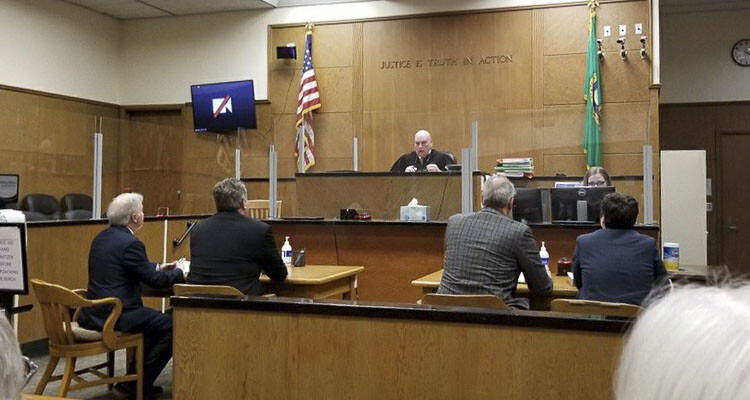
On Thursday (March 2), the group Fix Camas was in front of Judge Randall Krog at the Skamania Superior Court regarding the first ever referendum in Camas, aptly dubbed Referendum 1. This is the petition that collected signatures from Camas residents to put a utility tax, which was narrowly passed by Camas City Council in November of 2022, on the ballot for a vote. Fix Camas filed Referendum 1 and then spent 30 days collecting signatures, ultimately surpassing the necessary amount of 2,730 and garnering 3,160.
The city of Camas and Clark County refused to verify the signatures, because, the clerk’s office said, the seven-page ordinance wasn’t attached to every petition sheet, which would have meant turning in an additional 2,100 pages. This, despite the same office having approved the receipt of the petition sheets when they were first turned in. Additionally, a Dec. 9 email to advocates with Fix Camas said that the signature sheets needed to be turned in by the required date but did not mention the need for each sheet to also have the ordinance attached to it at the time of submission.
Those 3,160 people who signed the petition received good news in the Skamania courthouse on Thursday, when the judge sided with Fix Camas. This means that the city and County will be forced to verify the signatures.
“The petitioner has shown by clear, cogent and convincing evidence that the city clerk statements in its December 9, 2022 email that petitioners signature pages are due is inconsistent with the city clerk’s statement dated January 11, 2023 letter that the petition with ordinance attached needed to be submitted,” Judge Krog said in his decision. “The petitioner would be injured if the submission required the ordinance to be attached as that statement did not even occur until after the time for submission had passed and the 30 days has now elapsed.”
The judge pointed out that it appears the city changed the requirements for submission, to include the ordinance attached to each signature page, after the signature sheets were submitted. Further, he said, “The city clerk’s duty is to verify the sufficiency of the signatures. The attachment of the ordinance to the petition signature pages at the time of the filing does not affect the ability of the city clerk to verify the sufficiency of the signatures presented.”
One of the lawyers who assisted in the case, Richard Stephens, said he was pleased with the outcome. “The Court protected the free speech rights of the people of Camas, which the city tried to silence,” Stephens said. “As a result of the case, Camas voters’ voices may be heard.”
Judge Krog clearly agreed with Stephens’ assessment that the case boiled down to freedom of speech. “We must be mindful that the referendum petition process involves a person’s first amendment right,” he said. “A signature on a referendum petition is an expression of a person’s political views and therefore implicates election process and his or her first amendment rights.”
The paperwork was originally turned in to the city and received a stamp of approval by Camas clerk and public records officer, Bernie Bacon on January 9. However, on January 13, signers of the petition received a letter from Bacon saying the petition was rejected by Clark County due to the aforementioned clerical issues. “The vote to approve this tax was not a consensus vote by our City Council,” reads the Fix Camas website. “The 4-3 split vote [in November] was made after many Camasonians from all walks of life came to the table, unified in opposition and delivering testimony about the impact this tax will have on them.” Bacon has since unexpectedly resigned from her position.
The Camas City Council also voted at the Jan. 17, 2023 Council meeting to revisit the issue of the tax after overwhelming opposition. Now that Jennifer Senescu has been appointed as a replacement for former Councilman Greg Anderson, who also unexpectedly resigned after his vote in favor of the utility tax, that subject can once again be brought up.
In addition to the added utility tax, which is projected to bring about $1 million for the city, a $30 million capital bond will also be on the August ballot to replace firehouses. At the January meeting, Councilmember Leslie Lewallen said, ”We are talking about a million dollars over the course of two years. Is that where we want to hang our hat…when we have a thirty-million-dollar bond coming up and some other big-ticket items?”
Also read:
- VIDEO: WA income tax signed into law with legal challenge right behind
 A 9.9% income tax affecting high earners in Washington faces swift legal opposition and a proposed citizen initiative seeking repeal.
 - Income tax signed in Washington with a legal challenge close behind
 A new law will tax households earning over $1 million, with funds aimed at expanding credits for lower-income residents. Lawsuits and challenges are already underway.
 - Peter Silliman announces candidacy for Clark County Council
 Peter Silliman, small business owner and Charter Review Commissioner, is seeking the District 5 seat and promises action on transparency, housing, and park development.
 - Opinion: Defend bail now or face more chaos on our streets
 A proposed Washington court rule would cap bail for most misdemeanors and allow defendants to bypass bondsmen, raising concerns about accountability and public safety.
 - County seeking young people to fill 10 volunteer positions on Youth Commission
 Young people ages 12-19 from across Clark County can now apply for at least 10 open seats on the Youth Commission, providing input on community decisions.
 - State Representatives McClintock and Ley answer questions at town hall in Battle Ground
 Residents voiced rising concerns about property taxes, school funding debates, the impact of new income tax legislation, and major costs tied to the Interstate Bridge plan.
 - As Washington gets an income tax, the fight to overturn it begins
 Opponents are organizing lawsuits and potential ballot measures to challenge the new 9.9% income tax on Washington households earning over $1 million.
 wpDiscuz
