



Rep. John Ley opposed the bill in committee on Monday; He said he’ll propose changes when it reaches the House floor for a vote
Jerry Cornfield
Washington State Standard
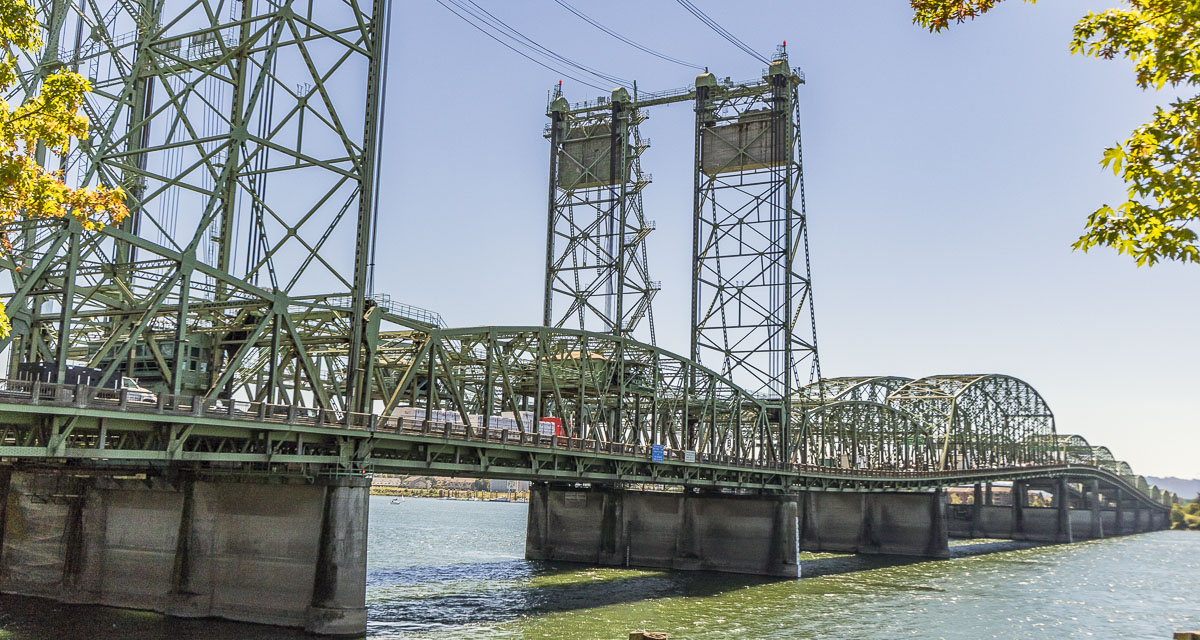
Washington state lawmakers on Monday backed a huge increase in the amount of toll revenues they’ll count on to help pay for construction of a replacement bridge on Interstate 5 across the Columbia River.
The House Transportation Committee amended then approved House Bill 1958, authorizing the sale of $2.5 billion in general obligation bonds. That’s $900 million more than assumed in the original bill. The legislation now goes to the Rules Committee and a likely floor vote in the coming days.
With significant cost increases on major highway and bridge projects in recent years, it made sense to recalibrate to a higher bonding capacity to avoid getting into a pinch, backers said.
“The idea is that we have to have enough resources for construction. We think we have enough, but we want to make sure,” said Rep. Jake Fey, D-Tacoma, chair of the House Transportation Committee and the bill’s sponsor.
Sen. Marko Liias, D-Edmonds, chair of the Senate Transportation Committee, said, “We need to make sure this project is well-positioned to stay on schedule and get built as soon as possible.”
Project planners have estimated the price tag for replacing the bridge will range from $5 billion to $7.5 billion, with a likely figure of around $6 billion. Permits are anticipated by 2026. Once rolling, construction is expected to last until 2032.
Washington and Oregon have committed about $1 billion each and the states have snagged federal grants totaling $2.1 billion.
Tolls were counted on to raise at least $1.2 billion of the current projected cost. They’ll be imposed in both directions on the existing bridge as early as spring of 2026.
Because Washington will be administering the tolling program, it is the one that needs to issue the bonds.
Bonds, a long-assumed source of financing for the new span linking Washington and Oregon, would pay for design and construction, as well as future maintenance and operation.
The borrowed money would be repaid with toll proceeds, gas taxes, and vehicle fees. Because the bonds would be backed by “the full faith and credit of the state,” the general fund could be tapped as a last-resort source of repayment.
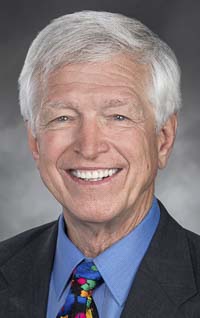
Rep. John Ley, R-Vancouver, a vocal opponent of tolling, opposed the bill in committee on Monday. He said he’ll propose changes when it reaches the House floor for a vote.
Ley said he’ll offer an amendment to ensure Washington and Oregon share equally in the liability if there are not enough proceeds to repay the bonds. As written, responsibility would fall solely upon Washington, he argued.
More importantly, he said, with a new project cost estimate due out in summer, it’s too soon for this conversation.
“We shouldn’t be talking about bonding tolls until we have a price tag,” he said.
This report was first published by the Washington State Standard.
Also read:
- Letter: ‘This is the worst thing that ever happened to the region’
 A Hayden Island resident Sam Churchill is criticized in a letter calling the $14 billion Interstate Bridge Replacement project a “boondoggle” that destroys local businesses.
 - Opinion: Half the road, full stop – Understanding pedestrian right-of-way
 Doug Dahl explains how Washington’s law requires drivers to stop when a pedestrian is within one lane of their half of the road, not just when directly in front.
 - Opinion: What is the cost of a bridge?
 John Ley argues the I-5 Bridge replacement’s soaring cost stems from costly extras like light rail, noting other states deliver larger, toll-free bridges for much less.
 - Letter: Vancouver Mayor Anne McEnerny-Ogle makes several serious and incorrect engineering statements
 Bob Ortblad critiques engineering claims by Vancouver Mayor Anne McEnerny-Ogle, highlighting cost and safety advantages of an immersed tunnel for the I-5 crossing.
 - Washington’s studded tire deadline is March 31
 Drivers must remove studded tires by March 31 or face a $137 fine, with WSDOT urging early action due to busy service centers and no planned deadline extension.
 wpDiscuz
