


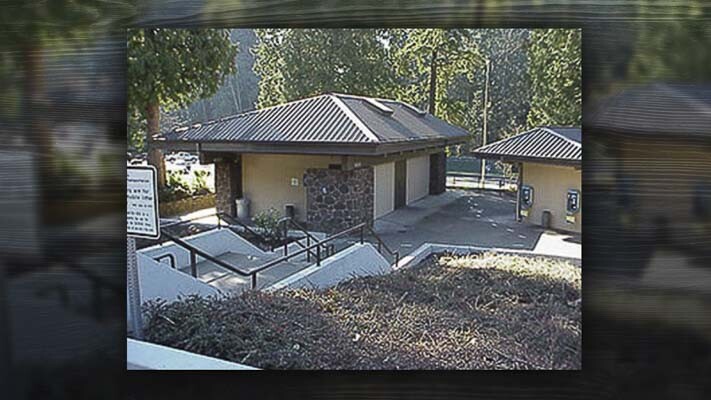
During the closure, WSDOT maintenance crews will conduct annual facility repairs
RIDGEFIELD – Travelers on Interstate 5 who need to take a break from the road should plan ahead next week.
Beginning Monday, Oct. 23, the Washington State Department of Transportation maintenance crews will close the Gee Creek rest areas located on both directions of I-5 near Battle Ground and the State Route 502 interchange (Exit 11) to perform annual maintenance and repair work.
During the closure, WSDOT maintenance crews will conduct annual facility repairs, which includes a deep clean of each location, pavement repairs, grounds maintenance and routine safety inspections.
Closure details
- Monday, Oct. 23 until Friday, Oct. 27: The northbound and southbound I-5 Gee Creek rest areas at milepost 12 will close at 6 a.m. on Monday, Oct. 23 for annual maintenance work and will reopen at 4:30 p.m. on Friday, Oct. 27.
Know before you go
Get real-time travel information via the WSDOT mobile app, the real-time travel map or by signing up for email updates and alerts.
Also read:
- Opinion: Portland’s War on Cars Part 4 – A smarter automobile strategy to end gridlock
 O’Toole argues fuel wasted in Portland-area congestion has sextupled since 1982, generating 250,000 tons of extra greenhouse gases annually.
 - Opinion: Transit ridership trends are dismal but regional plans are oblivious
 Puget Sound transit passenger-miles fell 31% from 2015 to 2024 despite a half-million-resident population increase.
 - Interstate Bridge Replacement Program seeks qualified firms for bridge replacement contract
 The CRBR project is backed by $5.7 billion from state funds, federal grants, and future tolling.
 - Opinion: Bankrupt – A $3.5 billion Rose Quarter Freeway widening project
 Joe Cortright argues ODOT’s Rose Quarter project has grown from a $450M approval to a $3.5B estimate, with a $2B funding gap.
 - Opinion: Portland’s War on Cars 3 – Ending the war on automobiles
 O’Toole argues Portland should add toll lanes, fix safety hazards, and redesign TriMet routes to end its anti-auto policies.