



Two Clark County men among those arrested in Portland
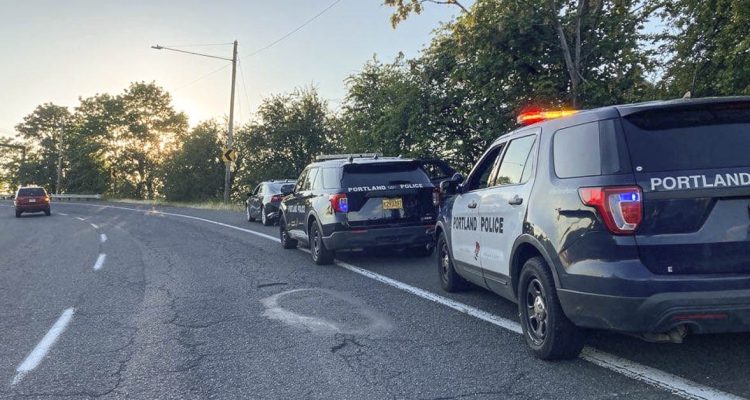
During the last week of June, Portland Police Bureau’s Human Trafficking Unit (HTU) conducted proactive anti-trafficking initiatives through directed patrol along 82nd Avenue. Personnel from East, North, and Central Precincts, PPB’s Specialized Resources Division and Victim Services Unit, as well as the Federal Bureau of Investigations, and the Multnomah County District Attorney’s Office also assisted in the mission.
The following individuals were arrested or cited for ORS 167.008 Commercial Sexual Solicitation (CSS) and/or Portland City Code 14A.40.50 Unlawful Prostitution Procurement Activities (UPPA):
– Elijah Grant, 38, Vancouver, WA
– Dominick Iaderaia, 49, Camas, WA
– Nicholas McGuffin, 42, Oregon City, OR
– Terry Sanborn, 43, Portland, OR
– Douglas Stoker, 43, Maricopa, AZ
– Brandon Weaver, 35, Portland, OR
The following individual was also contacted and arrested for the following crime:
– Kenny Christensen, 30, Portland, OR, probation violation detainer
During the mission, four vehicles were towed, and eight providers were contacted. Providers were offered assistance with resources and/or other advocacy efforts were made available. Several other potential buyers and providers were also identified in the area.
PPB and HTU continue to receive several livability complaints from community members, organizations, and business partners regarding illegal activity rampant along this stretch of 82nd Avenue. HTU cases are complex with several identified barriers such as repeated traumatic exposures, trauma bonds with traffickers, and fear of retaliation. The victims in these cases are often reluctant to come forward, make a report, and/or continue through the criminal justice process. HTU continues to offer trauma-informed, victim-centered services, in conjunction with PPB Victim Services Unit advocates and community-based partnerships.
If you or someone you know is being labor or sex trafficked, please call 9-1-1 or the National Human Trafficking Hotline at 1-888-373-7888 or report tips to humantrafficking@police.portlandoregon.gov.
Earlier this year, PPB released a podcast on efforts to combat sex trafficking in Portland. You can listen to it here: https://www.portland.gov/police/news/2024/5/8/talking-beat-sex-trafficking-portland
And last September, PPB debuted a video on the problem and devastating impacts of sex trafficking: https://www.youtube.com/watch?v=DoNshXUDAJw
Information provided by the Portland Police Bureau.
Also read:
- ‘Our new normal’: WA confronts another year of drought
 Casey Sixkiller says every watershed in Washington has dropped below 75% of normal water supply.
 - Schools expect minimal impact with Title IX pacts rescinded
 Federal officials rescinded agreements with six school districts, saying previous administrations misapplied Title IX protections.
 - Area Agency on Aging & Disabilities in Southwest Washington announces the Senior Farmers Market Nutrition Program
 AAADSW opens applications for $80 benefit cards to help eligible seniors buy fresh produce at farmers markets.
 - Free in-person workshops promote composting and sustainable living
 Clark County’s free workshops teach residents worm composting, green cleaning, and smart recycling through April and May.
 - Keeping afloat: A bittersweet chronicle of two women who endured the sinking of the Titanic
 Local historian Peri Muchich shares the story of Pacific Northwest Titanic survivor Anna Warren at Sunday’s museum event.
 - Letter: ‘This is the worst thing that ever happened to the region’
 A Hayden Island resident Sam Churchill is criticized in a letter calling the $14 billion Interstate Bridge Replacement project a “boondoggle” that destroys local businesses.
 - Washougal ramps up efforts to support small businesses
 Washougal launches Gateway to Success Series with free workshops starting April 15 at Best Western Plus Convention Center.
