



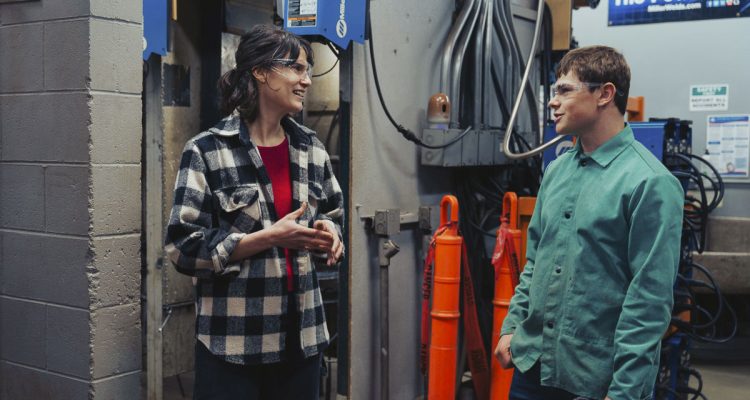
The CONSTRUCTS Act would create a grant program to fund and develop residential construction education and certification programs at community colleges, junior colleges, trade schools, and opportunity youth programs
Rep. Marie Gluesenkamp Perez (WA-03), along with Reps. Juan Ciscomani (AZ-06), Don Davis (NC-01), and Ryan Zinke (MT-01), recently introduced the bipartisan Creating Opportunities for New Skills Training at Rural and Underserved Colleges and Trade Schools (CONSTRUCTS) Act. The legislation will expand training in the construction trades in order to increase the supply of housing units and lower costs.
The CONSTRUCTS Act would create a grant program to fund and develop residential construction education and certification programs at community colleges, junior colleges, trade schools, and opportunity youth programs. This would expand access to good-paying, high-demand jobs for students, address the shortage of skilled construction workers, and allow developers to build more homes, ultimately lowering housing costs.
“Many communities are facing acute labor shortages in construction trades, but in order to bring down the cost of housing we need to build more housing. By investing in fulfilling career pathways for our young people in the trades, we will be able to pick up the pace of residential construction and help hardworking families breathe easier,” said Rep. Gluesenkamp Perez. “It’s how we invest in our next generation, bring back prestige for the skilled trades, and support our rural timber economies.”
“Owning a home is an integral part of the American Dream, but unfortunately, it has become out of reach for too many,” said Rep. Ciscomani. “In southern Arizona, and across the United States, there is a critical need for additional housing. The current shortage of skilled construction workers is driving costs higher and causing project delays, limiting the supply and leading to even higher prices. My bill will expand access to training programs at community colleges, junior colleges, and trade schools in the most in need parts of our country, to bolster the workforce of skilled construction workers, support high-demand, well-paying jobs for students, and increase the supply of housing units in order to make housing more affordable for everyone.”
“The housing crisis is putting a lot of strain on Montana families,” said Rep. Zinke. “Put simply, not enough new housing is being built due to a nationwide skilled labor shortage, which is raising the prices on homes already on the market. This legislation will train students to fill those gaps in the market and get laborers on job sites across the country.”
“By investing in construction education and related skills training programs, Congress can create a robust talent pipeline,” said Rep. Don Davis. “We must leave no stone unturned as we develop the workforce of tomorrow.”
“NAHB commends Reps. Juan Ciscomani, Don Davis, Ryan Zinke and Marie Gluesenkamp Perez for championing bipartisan legislation that will help ease the nation’s housing affordability crisis by addressing the severe labor shortage in the construction industry that is delaying home building projects and increasing construction costs,” said Carl Harris, Chairman of the National Association of Home Builders. “The CONSTRUCTS Act provides the nation’s community colleges and trade schools the funding needed to train students in trades that support the residential construction industry.”
Full text of the bill is available here.
The lawmakers previously introduced the legislation in the 118th Congress.

Also read:
- POLL: What do you believe is the biggest reason school districts are facing budget shortfalls?
 Districts across Washington warn of budget gaps as debate grows over rising costs versus inadequate state funding.
 - Lt. Governor shares his ideas on fixing housing shortage to members of BIA of Clark County
 Lt. Gov. Denny Heck told Clark County builders the state needs one million additional homes in 20 years.
 - Opinion: The high cost of hiding – Why IBR’s delayed revenue study is a $15 billion warning sign
 IBR delays critical toll revenue analysis until June 2027, hiding financial details until after project approval.
 - Opinion: The high cost of hiding – Why IBR’s delayed revenue study is a $15 billion warning sign
 IBR delays critical toll revenue analysis until June 2027, hiding financial details until after project approval.
 - Opinion: Washington fails the test for affordability
 Mountain States Policy Center analysis reveals Washington ranks 5th most expensive state as residents migrate to Idaho and Texas.
