



Question ‘I never heard from students’ is now ‘routine’
Bob Unruh
WND News Center
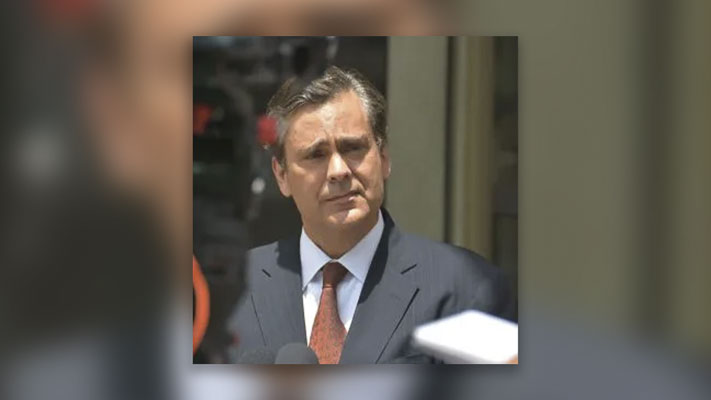
Constitutional law professor and commentator Jonathan Turley is lamenting the fact that students in his law-school classes actually are now asking whether they have freedom of speech.
In America.
Online, he wrote, “With the start of classes at George Washington Law School, I have already had visits to my office of conservative and libertarian students asking if I thought they could speak freely in other classes without being penalized by professors.”
He continued, “Despite teaching for decades, it is a question that I never heard from students until the last few years. It is now routine. It is the widespread fear of conservative students who have faced faculties with overwhelmingly liberal viewpoints and growing intolerance on virtually every campus as undergraduate students.”
He cited a study from North Carolina that also now confirms conservative students routinely “self-censor” because they do not feel able to share their views in classes.
“Not surprisingly given the heavy liberal makeup of faculties, liberal students feel little such fear over retaliation,” he wrote.
That study found “self-identified conservatives express free-expression-related concerns at a far higher rate than … liberals.”
“We find racial issues to be the topic that elicits the most student discomfort. However, we also find that students hold opinions back on a wide range of political topics for a wide range of reasons. Inspecting students’ own accounts of why they held opinions back reveals a mélange of reasons including fear of becoming ostracized from peers, ‘othering’ comments from faculty, and simple imposter syndrome,” the study said.
It said those students who are more likely to be politically involved “have a higher tendency toward closed-mindedneses, toward disliking the outgroup, and toward believing negative stereotypes about the outgroup…”
It also found, alarmingly, that there is a “significant number” of students who see “disruptive actions against people who have opposing viewpoints” as appropriate.
Turley noted that polls show 65% agree that people on campus today “are prevented from speaking freely,” and conservatives are “300 times more likely to self-censor themselves due to the intolerance of opposing views on our campuses.”
Another red flag was that only 7% of liberal students were concerned their teacher’s ideology would affect their grade, while 42% of conservatives expressed that worry.
Turley said, “Universities have failed to push for greater ideological diversity on faculties as hiring committees continue to replicate their own viewpoints and bias. It is not just students but faculty who face this pressure to self-censure. Faculty members risk cancel campaigns that threaten publications, conference invitations, and even their employment if they voice dissenting views.
“It is heartbreaking to meet with students who feel, even in law school, that they must remain silent in class to avoid the ire or retaliation from faculty.”
Also read:
- Opinion: ‘This is not the best and most efficient use of the taxpayers’ funds’
 Ken Vance critiques the announced $14.4 billion I-5 Bridge replacement, questioning funding gaps, the insistence on light rail, unaddressed congestion, and transparency from state officials.
 - Cost for IBR’s total project ‘most likely’ to be $14.4 billion
 Washington’s governor committed to a light rail bridge across the Columbia River, prioritizing the $7.65 billion initial phase while sidestepping the full project’s $14.4 billion price tag.
 - Natural gas leak forces evacuation in restricted area in Vancouver
 Crews closed multiple streets and evacuated about 20 Vancouver homes after a gas line was damaged by workers. C-TRAN provided a bus to shelter residents during the incident.
 - Letter: Don’t leave Longview in the dark
 Longview Mayor Erik Halvorson warns that uncertainty in Washington’s energy policy is deterring manufacturing investment, citing a local project’s move to the Gulf as evidence of this statewide challenge.
 - OnPoint Community Credit Union welcomes Lisa White as CFO
 Finance veteran Lisa White will oversee financial operations at OnPoint, drawing on two decades of leadership and her work with Girls on the Run and Columbia Bank.
 - Ridgefield student to serve as Rotary Club’s youth ambassador to central Mexico
 Ridgefield High’s Zander Earl was chosen as Rotary’s youth ambassador and will spend his junior year studying in central Mexico, immersed in both the language and local culture.
 - Opinion: Hiring someone for jobs around the house?
 Households in Washington that hire caregivers or cleaners will have to keep records, offer contracts, and follow new compliance rules under HB 2355.
