



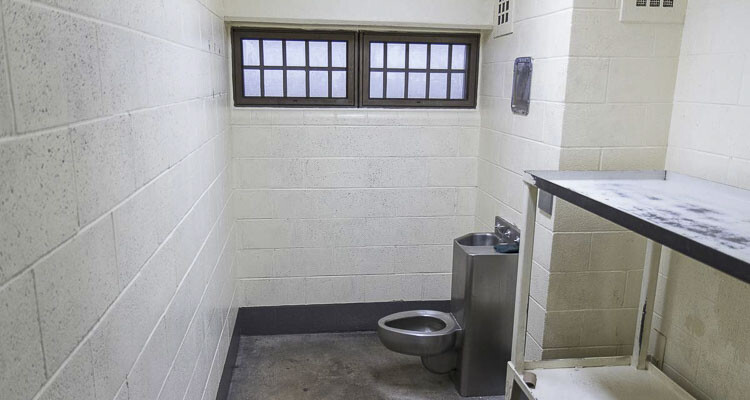
Some critics say that will result in violent felons being released early and further erode public safety
TJ Martinell
The Center Square Washington
Washington is among 14 states that doesn’t have a parole system for releasing convicted felons prior to the end of their sentence. Under House Bill 1189 sponsored Rep. David Hackney, D-Tukwila, that authority to commute sentences would still remain in the hands of the governor, though it would reshape the Clemency and Pardons Board, or CPB, in an effort to make the process more “equitable.”
Some critics say that will result in violent felons being released early and further erode public safety, with Rep. Jenny Graham, R-Spokane, telling colleagues on the House floor on March 4 that “this could very easily be the death of our justice system.”
“Washington state is long overdue for sentencing reform,” Hackney told the Senate Human Services Committee at a March 16 public hearing. “The state of Washington needs a credible process to identify incarcerated individuals who have demonstrated the ability to be successful outside of prison and contribute to society.”
However, Rep. Jim Walsh, R-Aberdeen, told colleagues on the House floor prior to a March 4 vote that “the people in this state are frustrated with public safety, with justice as they see it being administered. This is not the time to strain the mercy that the people of this state show to those who have made felonious mistakes. This is not the time to try to change the clemency and pardon board into a tool of social justice or social reform or social policy.”
Under existing state law, felons can petition the CPB for a commuted sentence or pardon. Upon review, the PCB can then recommend the governor issue a commutation or pardon based on the circumstances of the case. The board consists of five members, all appointed by the governor and confirmed by the Senate, who serve four-year terms.
HB 1189 would change that by adding an additional five members, for a total of 10, and extend the terms to five years with a maximum of two consecutive terms. The additional members would have to have “lived experienced” as one of the following:
- A member of a “community of color”
- An incarcerated individual
- A faith-based organization with “interest or experience” in community reentry
- A person involved in tribal affairs
- A retired superior court judge
- A member of a crime victim representation agency
All CPB members would be required to attend annual training on “race equity, racism and mass incarceration, or restorative justice.” While on the House floor, Rep. Paul Graves, R-Vancouver, proposed an amendment adding a law enforcement official to the PCB, but it was rejected.
“This bill both increases the capacity and the diversity on the Pardons and Clemency Board,” Hackney said. “At the end of the day, the governor has the final decision. These are rather minor changes that could have a huge impact by increasing both the capacity and also the diversity of thought and opinion providing the governor advice.”
The bill also alters existing state law that imposes restrictions on early release. A voter-approved initiative passed in the 1990s imposes a life sentence for repeated felonies. Those sentenced to total confinement for life without possibility of parole cannot be considered for release until they have reached the age of 60.
HB 1189 removes that provision and instead requires they serve at least 20 years in total confinement or 25 years for certain crimes. One House floor amendment would have prohibited those convicted of a “serious violent offense” or aggravated first degree murder from petitioning the PCB, but it was rejected.
The bill also replaces the word “offender” with “incarcerated individual.” Another provision makes the PCB members immune from civil liability for any decisions they make.
Among those opposed to the bill is James McDevitt, a former PCB member. He told the Senate Human Services Committee that there had been “no meaningful consultation” with the current board and pushed back against statements made by Hackney and others inferring racism was affecting board recommendations.
He said the new money spent on expanding the PCB should instead be used on efforts to keep youth out of gangs and fight drug addiction. “Once the individual is before the board, the horse is out of the barn. Your money is better spent ahead of time.”
Also opposed was Washington Association of Sheriffs and Police Chiefs Policy Director James McMahan, who told the committee that “there should be a mechanism for people to demonstrate their rehabilitation. This bill is not consistent with what we think that should be.”
Speaking in opposition to the bill, Thurston County Prosecuting Attorney Jon Tunheim said that while he supported “the overall policies and goals of what we’re trying to do here,” he added that “a sentence imposed in this state…should be strongly presumed to be the appropriate sentence.”
HB 1189 has been referred to the Senate Ways and Means Committee.
This report was first published by The Center Square Washington.
Also read:
- 49th Legislative District Democrats share their reasons for backing state income tax at Town Hall
 Three Democrat legislators defended the new income tax affecting only those earning over $1 million annually.
 - Letter: Freeze the scope and build the bridge
 Vancouver resident calls for project discipline after 22 years of planning and nearly half a billion in costs.
 - Ekklesia Theatre presents ‘Every Brilliant Thing’
 Interactive theatre production donates 50% of ticket sales to local counseling services.
 - Opinion: Public workers’ First Amendment rights are getting attention – in Idaho, not Washington
 Idaho moves to stop public schools from collecting union dues through government payroll while Washington continues favoring unions over worker choice.
 - Opinion: Lawsuit filed against the unconstitutional income tax in Washington state
 Former Attorney General Rob McKenna and Supreme Court Justice Phil Talmadge challenge the 9.9% income tax in Klickitat Superior Court.
 - Vancouver Police investigate domestic violence homicide
 Vancouver Police Major Crimes Unit investigating after woman found dead with knife wounds on NE Oakbrook Circle.
 - Letter: ‘Oregon and Washington aren’t refusing to clean their rolls — they’re contesting federal jurisdiction and timing’
 Camas resident challenges Lars Larson’s fraud claims, explaining legal disputes over federal jurisdiction.
