


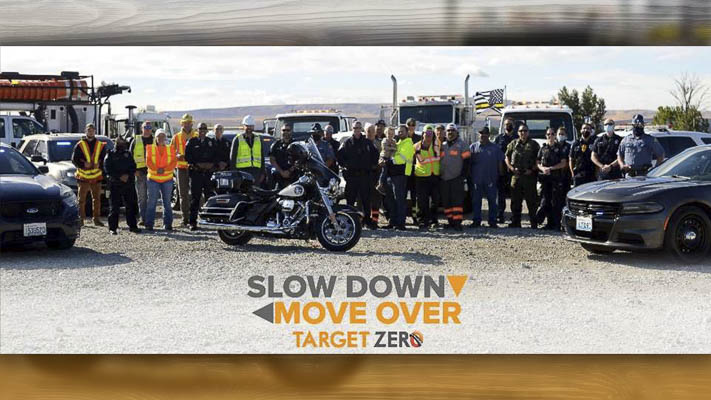
Target Zero Task Force is partnering with Clark County Public Works to add speed patrols in work zones to remind drivers to slow down and move over and away from road workers
VANCOUVER – Washington state has surpassed a 30-year high in traffic fatalities and work zone crashes doubled in 2023. Target Zero Task Force is partnering with Clark County Public Works to add speed patrols in work zones to remind drivers to slow down and move over and away from road workers.
Clark County Deputy County Engineer Jeremy Provenzola, said, “Our road crews are the backbone of our ability to maintain a safe and efficient transportation network. We need drivers to help keep our workers, and themselves, safe by slowing down, paying attention, and being patient in work zones. We are grateful for the support from local law enforcement to help remind drivers of safe driving habits, especially in work zones.”
Participating local agencies include:
Battle Ground Police Department
Clark County Sheriff’s Office
Clark Regional Emergency Services Agency
Ridgefield Police Department
Vancouver Police Department
Washington State Patrol
On average 24 emergency responders, including work zone crew, and tow providers are struck and killed by vehicles while working at the roadside each year – this means someone in this line of work is killed, on average, every other week.
To protect these roadside heroes (our neighbors, friends, coaches, sisters, brothers, sons, daughters, mothers, and fathers) Target Zero reminds us to:
- Slow down, and move over and away from roadcrews, and emergency responders when possible.
- Be observant, avoid distractions, and drive focused – watch and listen for work zone crew, emergency vehicles, tow trucks, utility service vehicles, or disabled vehicles stopped on the side of the road.
- Remain patient in work zones.
IT’S THE LAW – When drivers approach road maintenance crews, red flashing lights of first responders, tow trucks, municipal vehicles, and utility vehicles, the law requires, that they must slow down to at least 10 miles per hour below the posted speed limit and, if safe to do so, move over one lane. Drivers who fail to follow the law face a $214 ticket that cannot be waived or reduced.
Washington Traffic Safety Commission (WTSC) conducted an observational study that found distractions like eating, tuning a radio, or attending to pets or children had increased significantly. Driver distraction on county roads doubled.
Shelly Baldwin, WTSC director said, “All of us can work together to encourage focused driving. Together we can make our roads safer. If you’re behind the wheel, put your phone away. If you’re a passenger, speak up politely to encourage the driver to remain focused. As a parent, set rules and be a good example. If we all do our part, we can prevent crashes that result from distracted driving.” Remember, it’s not just emergency responders, work zone crew, and tow truck drivers, being killed on the side of interstates, freeways, and highways. Each of us is vulnerable while on the roadside.
Most Washingtonians follow safe driving laws, so let’s work together to reach 100% compliance, and save lives. Target Zero reminds our community that road safety requires each of us to make safe choices. You can MAKE A DIFFERENCE! It is our goal in Washington to have ZERO people in your household involved in a serious or fatal crash.

Also read:
- Opinion: Portland’s War on Cars Part 4 – A smarter automobile strategy to end gridlock
 O’Toole argues fuel wasted in Portland-area congestion has sextupled since 1982, generating 250,000 tons of extra greenhouse gases annually.
 - Opinion: Transit ridership trends are dismal but regional plans are oblivious
 Puget Sound transit passenger-miles fell 31% from 2015 to 2024 despite a half-million-resident population increase.
 - Interstate Bridge Replacement Program seeks qualified firms for bridge replacement contract
 The CRBR project is backed by $5.7 billion from state funds, federal grants, and future tolling.
 - Opinion: Bankrupt – A $3.5 billion Rose Quarter Freeway widening project
 Joe Cortright argues ODOT’s Rose Quarter project has grown from a $450M approval to a $3.5B estimate, with a $2B funding gap.
 - Opinion: Portland’s War on Cars 3 – Ending the war on automobiles
 O’Toole argues Portland should add toll lanes, fix safety hazards, and redesign TriMet routes to end its anti-auto policies.