


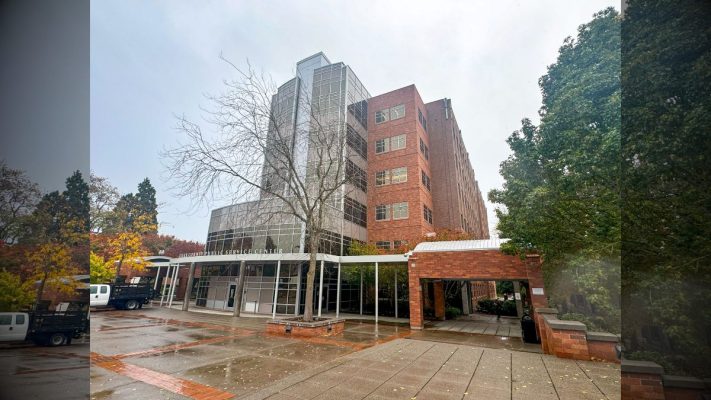
File photo
Councilor Michelle Belkot is against any increase to the sales tax, unless the increase is approved by a vote of the people, but it is possible that the five-member Clark County Council will decide this issue
Paul Valencia
Clark County Today
Is the recent proposal to raise the sales tax in Clark County a crushing blow to taxpayers?
Probably not.
It is, after all, one-tenth of a percentage point, with the new funds to go toward affordable housing projects.
But every time a politician says a tax increase for “this” is just a little bit or only a tiny fraction for “that” item, well, it seems as if the politician is trying to justify a tax hike.
Sooner or later, the “this” and “that” add up, and it is the taxpayer who takes the hit.
That is why Clark County Councilor Michelle Belkot has come out against Clark County raising the current sales tax. Or at the very least, allow the voters to decide if they want to increase sales tax for this effort.
The proposed tax would raise an estimated $6.4 million a year that would go toward building or acquiring affordable housing that vulnerable segments of the population would use.
Belkot, though, wondered about the people who are at the precipice of falling into a financial crisis.
“If we continue to tax these people, we are going to put them into our vulnerable population. I hope people realize that,” Belkot said.
Sue Marshall, the chair of the Clark County Council, countered: “I’ve been hearing mostly from my constituents about the need for affordable housing.”
“I have, too,” Councilor Wil Fuentes said. “That’s what I ran my campaign on.”
This proposal is for unincorporated Clark County and the small cities in the county that have not already started taxing for an affordable housing fund. The city of Vancouver already is taxing its citizens for affordable housing.
Before a decision is made, Councilor Glen Yung suggested having an outside expert evaluate this new tax.
“I’m very open to this but my support hinges on having a solid understanding and a direction of how the funds will be used,” Yung said.
At least 60 percent of the new funds would go to construction or acquisition of affordable housing, or behavioral health-related facilities, and the operations and maintenance costs of facilities, according to a document shown to the Clark County Council at a meeting on Wednesday.
Jordan Boege, senior policy analyst for the county, presented the proposal to the Clark County Council. The funds raised by this sales tax increase will be used for facilities to be used by people who make no more than 60 percent of the Area Median Income. They would also be designated for people with behavioral health disabilities, veterans, senior citizens, homeless or at-risk for homeless, unaccompanied homeless youth or young adults, persons with disabilities, and domestic violence survivors.
Boege noted that in order for Clark County to start collecting this tax by the second quarter of 2026, a decision must be made by Jan. 16, 2026. He said that it is his belief that the council can make the decision or it could be sent to the ballot for a vote of the people. If put on a ballot, collections would not start until after that election and only if the voters pass the proposal.
Yung also asked the council to look at other jurisdictions that already have a housing fund tax to see how they are using their funds.
Fuentes suggested asking Vancouver. The city of Vancouver has had an Affordable Housing Fund since 2017 after voters OK’d it in late 2016.
Belkot is not so sure Vancouver is the example, looking at all the homeless problems in the city.
“We don’t want to be the city. We don’t want to be like the city of Vancouver,” Belkot told Clark County Today after the meeting.
“I’m having a really hard time with another imposed tax, especially when we have a lot of families struggling in the county,” Belkot said during the meeting.
Belkot also pointed out that the state legislative session earlier this year already passed record-breaking tax increases for the citizens. Clark County would just be adding to that burden if this increase is approved.
“It’s one tax after another,” Belkot said. “Putting one more tax on our people … it’s a lot. I wouldn’t support this.”
Yung noted it will be more expensive dealing with the homeless in the future than to make sure people are housed today. In other words, this is a proactive approach.
Fuentes agreed. He also called this proposal “a drop in the bucket,” noting that the new tax would only cost 5 cents on a $50 dinner bill.
“It’s difficult that we don’t have a lot of options in terms of raising funds to meet critical needs,” Marshall said. “This is a nominal amount that can help produce some real results. … I would like to move this forward.”
There also was a brief discussion on the potential of asking the voters to decide this issue instead of the five-member council.
“It’s pretty expensive to put something on the ballot,” Marshall said.
“It’s pretty expensive to pay taxes,” Belkot replied.
The council did opt for a public hearing on the subject, likely to be held in early January. That would allow the council, if it does approve this proposal, to meet the Jan. 16 deadline.
“This is important enough to have a public hearing and hear what the public has to say, one way or the other,” Marshall said.
 wpDiscuz