



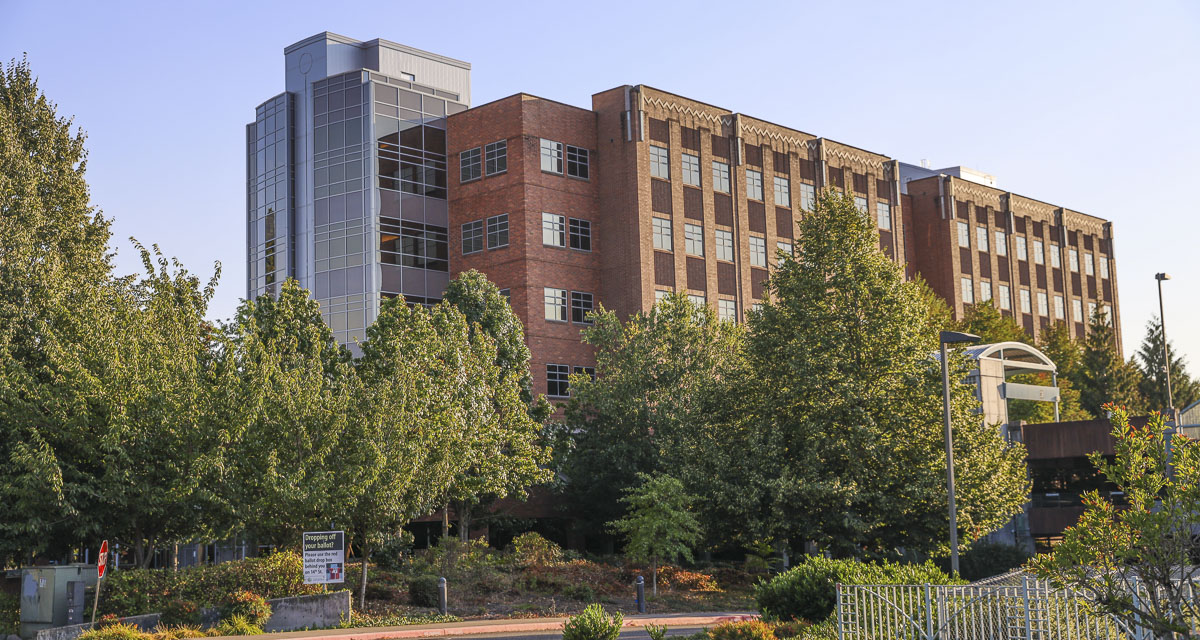
Councilor Wil Fuentes wonders if ICE will run him over one day, while other councilors wonder what exactly is accomplished with a statement
Paul Valencia
Clark County Today
 See Grok’s analysis of this story
A week after the city of Vancouver turned up the heat with inflammatory comments in a public declaration regarding federal immigration efforts, the Clark County Council discussed passing its own language on Wednesday.
At least one council member poured more fuel into the figurative fire, claiming Immigration and Customs Enforcement (ICE) is “hurting and killing our community members.”
It is unsure if Councilor Wil Fuentes was conflating stories from others part of the nation and less-than-lethal measures that have been reported in Southwest Washington, but his rhetoric was certainly directed to the more than two dozen people who showed up to Council Time to implore the council to denounce ICE.
(Clark County Today is not aware of any reports of recent ICE activities in the region that have led to fatalities.)
Fuentes also said he is afraid that he will be run over by an ICE vehicle.
“I want to thank everybody that showed up to testify about their opposition of ICE terrorizing our community members in the city of Vancouver and across the county,” he told a large crowd who showed up for public comment.
“As a brown person, I feel it every day. Every single day I leave my house, I am scared. I am terrified. I’m a U.S. citizen, but that’s not gonna stop ICE from profiling me and stopping me and questioning me and potentially running me over with their vehicle. These are the things I think about every day.”
A few conservative voices also spoke out, in defense of immigration enforcement, and asking the council to hold off making a statement against law enforcement officials.
Rob Anderson of Reform Clark County mentioned agitators interfering in federal operations led to fatal outcomes in Minnesota. Many of those agitators, Anderson said, might have been encouraged by elected officials.
“So your resolutions and words matter and can have tragic consequences,” Anderson said.
Furthermore, when local agencies do not cooperate with federal law enforcement, more conflicts happen, not less.
“Before putting all the blame on federal policies, you must look in the mirror and see that your blanket non-cooperation or sanctuary policies don’t eliminate enforcement. They displace it. From controlled settings, like jails, to the neighborhoods. In increasing instability and harm, you and state policies are enabling the conflict. Maybe that’s what some of you want.”
Many of the supporters of a declaration against ICE spoke after receiving some coaching on what to say by a person who was standing outside the doors as people walked into the council area. Many of them started with the exact same language as printed on a flyer that was handed out to them.
While surely there were some heartfelt messages, there also were the familiar phrases that protesters know how to use to get attention:
White privilege.
Fear.
Fascists.
ICE invasion
Terrorists.
Thugs.
That group also booed or laughed at the few people who spoke on behalf of law enforcement.
Public comment lasted for close to 90 minutes.
Later, the council discussed the possibility of making a statement.
Councilor Michelle Belkot did not care for the idea, noting that after the city of Vancouver’s declaration last week, the Vancouver Police Chief posted a video noting that his officers were being called out, some of them being mistaken for ICE agents.
“That is my main concern is we would make things worse for local law enforcement to do their jobs,” Belkot said.
“I am all for making a statement and acknowledging the legitimate fear that people are experiencing in our community,” Councilor Glen Yung said.
Councilor Matt Little is also worried that a statement could only make things worse.
“We are not in charge of the sheriff’s office. We don’t tell them how to do law enforcement. We certainly have no jurisdiction over immigration or federal agencies.”
Little also noted that this body does not use resolutions to call out state agencies, our representative in congress, the governor, and not even the president.
“I worry not only about the negative impact of a statement, but what would we practically be accomplishing with one?” Little asked.
“It’s not something that would be helpful.”
Little and Yung also noted that there was not much the county council could do to stop ICE from working in Clark County.
Fuentes understood what Little and Yung were saying, but still disagreed.
“I don’t know how we can stop ICE from coming into our communities. We don’t have the power to do that. We have the power to condemn it. We have the power to encourage our local law enforcement agencies to protect our community members. We have the power to report, to record, to share on social media what’s happening.”
He also said the county can ensure that ICE and any of its partners are not allowed to use county property.
“I think that’s the least that we could include in this statement and absolutely we can condemn the actions of ICE in our community. They are hurting and killing our community members.
“I think we can call these agencies out for the sh– they are doing.”
County Chair Sue Marshall is in favor of a statement. She also wants to include public health in the statement, noting that being in constant fear is bad for one’s health.
The councilors also are open to the idea of a joint statement with the Clark County Sheriff’s Office.
Nothing was voted on Wednesday. County staff was directed to take Wednesday’s input to present a draft of a potential statement for the councilors to discuss again next week.

This independent analysis was created with Grok, an AI model from xAI. It is not written or edited by ClarkCountyToday.com and is provided to help readers evaluate the article’s sourcing and context.
Quick summary
The Clark County Council discussed whether to draft a statement condemning ICE actions during Council Time on Jan. 22, 2026. Councilor Wil Fuentes described personal fears about profiling and potential violence, while Councilors Michelle Belkot, Glen Yung, and Matt Little raised concerns that a county statement could have limited practical effect and could create unintended consequences for local law enforcement.
What Grok notices
- Uses direct quotes from multiple councilors to show the range of views, including Fuentes’ emotional and personal framing and Belkot’s emphasis on possible spillover impacts for local police.
- Highlights concerns raised by Yung and Little about whether a statement would materially change federal enforcement activity or instead function primarily as a symbolic message.
- Provides context by referencing a recent Vancouver City Council declaration and describing public-comment dynamics, including coordinated testimony and opposition voices.
- Notes discussion about possibly issuing a joint statement with the Clark County Sheriff’s Office, suggesting the council is considering how to address community concerns without undermining local law enforcement relationships.
- Points to next steps—watching for an agenda item, reviewing any draft language, and tracking whether the council moves from discussion to a formal vote.
Questions worth asking
- If adopted, how might a county statement on federal immigration enforcement affect working relationships between local law enforcement agencies and ICE?
- How could public expressions of fear by elected officials influence community trust—both in local police and in federal authorities—and what communication approaches reduce escalation?
- Beyond statements, what practical steps (if any) are within county authority to address concerns raised during public comment?
- Historically, how do local government statements impact ongoing federal operations such as ICE arrests—if at all?
- What balance should officials strike between acknowledging resident fears and avoiding actions that could be perceived as interference in federal jurisdiction?
Research this topic more
- Clark County Council – agendas, minutes, and video archives
- U.S. Immigration and Customs Enforcement – policies and information on operations
- Washington State Patrol – information related to interagency guidelines and coordination
- Clark County Sheriff’s Office – statements and updates
- National Conference of State Legislatures – resources on local authority and federal immigration policy

Also read:
- ‘Our new normal’: WA confronts another year of drought
 Casey Sixkiller says every watershed in Washington has dropped below 75% of normal water supply.
 - Schools expect minimal impact with Title IX pacts rescinded
 Federal officials rescinded agreements with six school districts, saying previous administrations misapplied Title IX protections.
 - Former WA Supreme Court justice joins legal effort against income tax
 Phil Talmadge and Rob McKenna have joined forces with the Citizens Action Defense Fund to oppose Washington’s new tax on high-income earners, raising legal and constitutional questions.
 - Makeover in store for Congress with flood of lawmakers headed for the exits
 A wave of exits from Congress—over 65 lawmakers—will usher in unfamiliar faces and decrease veteran expertise, shifting the political landscape in Washington.
 - Opinion: Sheriffs fight back
 Four county sheriffs are suing to block a new law giving a governor-appointed board power to decertify and remove sheriffs, bypassing voter oversight in Washington.
 wpDiscuz
