


The address highlighted key achievements across the college and reinforced Clark’s commitment to student success
VANCOUVER – Clark College presented its annual State of the College address in a new video format featuring Clark College President Dr. Karin Edwards alongside executive cabinet and student council representatives. The address highlighted key achievements across the college and reinforced Clark’s commitment to student success. Watch the full video here (https://www.clark.edu/about/arts-events/stateofthecollege/)
Clark College reported enrollment and financial health have exceeded expectations, reflecting the college’s resilience and growing impact. The update also showcased progress of strategic priorities, including development of new programs in high-demand fields, ongoing equity efforts, plans for the new Ridgefield location, and major technology upgrades.
As Clark College looks ahead, it remains steadfast in its mission to advance education and equity while nurturing student success and driving economic growth in Southwest Washington. “In light of the current challenges facing higher education, we must remain true to our mission, values, students and the community we serve,” said President Edwards.
Enrollment increased by another 1,000 students in 2024, exceeding the goal of increasing enrollment by 5% over the past three years, totaling 9,451 for the fall term. Over 90% of students are from Clark County and 23% are from the Running Start program. More than 55% of Clark students are planning to transfer to a 4-year college with a majority heading to Washington State University.
- Bachelor of Applied Science programs in particular have greatly exceeded predicted enrollment.
- Bachelor of Applied Science in Teacher Education (BASTE) program celebrated the graduation of their first cohort. Read more about BASTE here.
- Medical Assisting program earned accreditation in 2024.
On-campus student activities also signaled the rebound of a vibrant student life. The Associated Students of Clark College (ASCC) reported that 271 club meetings and events were hosted with student attendance totaling over 23,000, a 54% increase from 2023. More about ASCC here.
Clark College is committed to not only providing access to higher education but also supporting student success through essential programs and wraparound services. About 35% of Clark students are from low-income backgrounds, and 47% are the first in their families to attend college. To further support these students, Clark launched a new Basic Needs Hub in 2024, complementing the Penguin Pantry which distributed over 54,000 pounds of food to 800 families last year. Read more about basic needs here.
New academic and workforce program developments included new Bachelor programs, healthcare pathways, and technology skills development focused on in-demand fields. Clark has worked extensively with community employers and listened to the student feedback to develop programs that are key for the growth and economic vitality of Southwest Washington.
The following programs are getting ready to launch this fall:
- Surgical Technology — students can start with taking foundational classes in Spring and Summer terms. Read more about Surgical Technology here.
- Bachelor of Computer Science — first Bachelor of Science degree at Clark.
- Advanced Manufacturing program — will be housed in the brand-new Advanced Manufacturing Center in Ridgefield; is in development and currently going through the final approval process.
The new Advanced Manufacturing Center (AMC) at the Boschma Farms campus in Ridgefield, Wash., finished construction. A soft launch will begin this Spring term on April 7 with an official opening targeted for the 2025 Fall term in late September. Learn more about AMC here.
Investments in improvements in technology provided data-driven decision-making and included a new, automated solution for identifying fraud, and the completion of a multi-year project for evaluating software accessibility.
Student financial aid support was a major focus this winter. Clark’s Financial Aid office was able to successfully distribute over $31 million in federal aid to Clark students despite federal delays related to the FAFSA last year.
College finances remain stable, and in 2024 Clark earned more revenue and spent less than expected, contributing to an increase of $1.8 million dollars in the available fund balance which allowed for funding 6 new positions, increasing the instructional adjunct budget and adding funding for tutoring and security improvements.
The Clark College Foundation celebrated 50 years of supporting Clark’s success, contributing to over $90 million to Clark initiatives since inception. They announced two new funds to support student success and college innovation. Learn more about CCF here.
An accreditation renewal for Clark College is scheduled this fall. Accreditation is more than a requirement for federal financial aid. It is a rigorous evaluation of quality and continuous improvement, ensuring that our college fulfills its mission and meets the highest standards to deliver exceptional educational opportunities to our students.
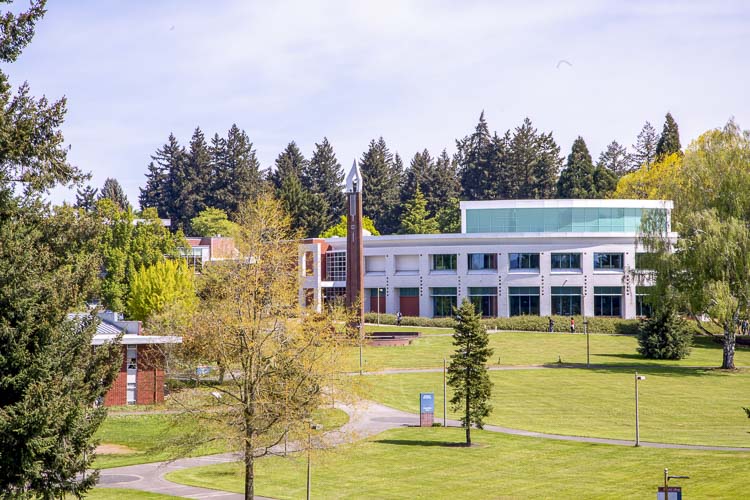
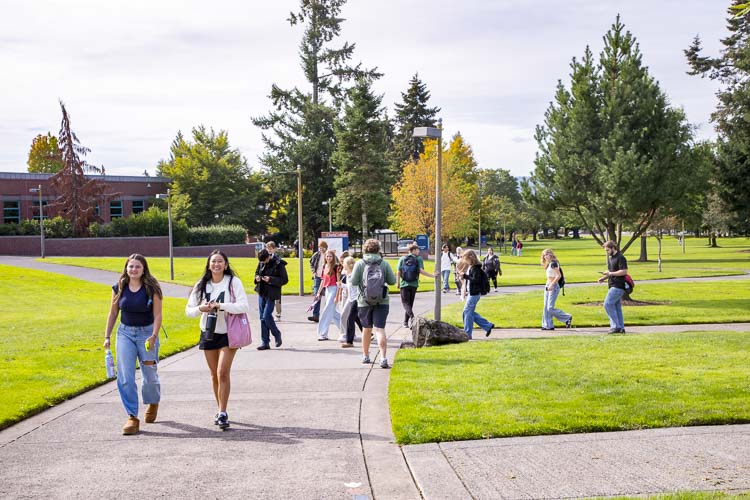
President Edwards also invited the community to visit the beautiful campus with its wildflowers in the bee gardens, cherry trees in the Japanese Friendship Garden, and the many arts, theater, and community events happening year-round. See more about events here.
On behalf of Clark College, President Edwards expressed gratitude to trustees, students, faculty, staff, community partners, and legislative representatives for their contributions to the college’s mission to ensure that education remains equitable and accessible to all who seek to learn and grow. Through education, empowerment, and opportunity, Clark College continues to elevate individuals in achieving their personal and professional goals.
About Clark College
Founded in 1933, Clark College provides residents of Southwest Washington with affordable, high-quality academic and technical education. It is a public community college offering more than 100 degree and certificate programs, including bachelor’s and associate degrees; professional certificates; high school diplomas and GED preparation; and non-credit community and continuing education. Clark serves a wide range of students including high school students, displaced workers, veterans, parents, non-native English speakers, and mature learners. Approximately three-quarters of its students are in the first generation of their families to attend college.
Information provided by Clark College Communications.
Also read:
- Opinion: Were Republican voters just sleeping during the August primary election?
 CCRP Chairman Matt Bumala says 60% of primary no-shows in the 17th and 18th districts were Republicans.
 - High school football: New coach prepares for long-term success at Prairie High School
 James Young-Lewis, a Clark County native who graduated from Evergreen in 2009, became Prairie’s head coach in May after working as an assistant coach across various programs since 2015, joining Prairie’s staff in 2024.
 - Cost to battle 20 wildfires in WA has topped $200M
 Twenty wildfires have cost Washington $207M in one month, more than two-thirds of what DNR spent all last fiscal year.
 - Opinion: WA Cares’ launch showcased care WA Cares did not provide
 Gov. Ferguson showcased a caregiving arrangement at the WA Cares launch that the program had not paid for a single day of.
 - Former State Rep. Liz Pike provides update on husband Neil Cahoon
 Neil Cahoon, a Camas resident, has undergone multiple surgeries including five on Aug. 15 after the Aug. 10 crash near La Center’s Daybreak Airport.
 - Opinion: Portland’s War on Cars Part 4 – A smarter automobile strategy to end gridlock
 O’Toole argues fuel wasted in Portland-area congestion has sextupled since 1982, generating 250,000 tons of extra greenhouse gases annually.
 - $1,000 first prize for Camas Plein Air Art Event honoring Marquita Call on Sept. 26
 Plein air artists compete Sept. 26 in Camas for $1,000 first prize honoring gallery founder Marquita Call.