


The case could be appealed and go all the way to the U.S. Supreme Court
Casey Harper
The Center Square
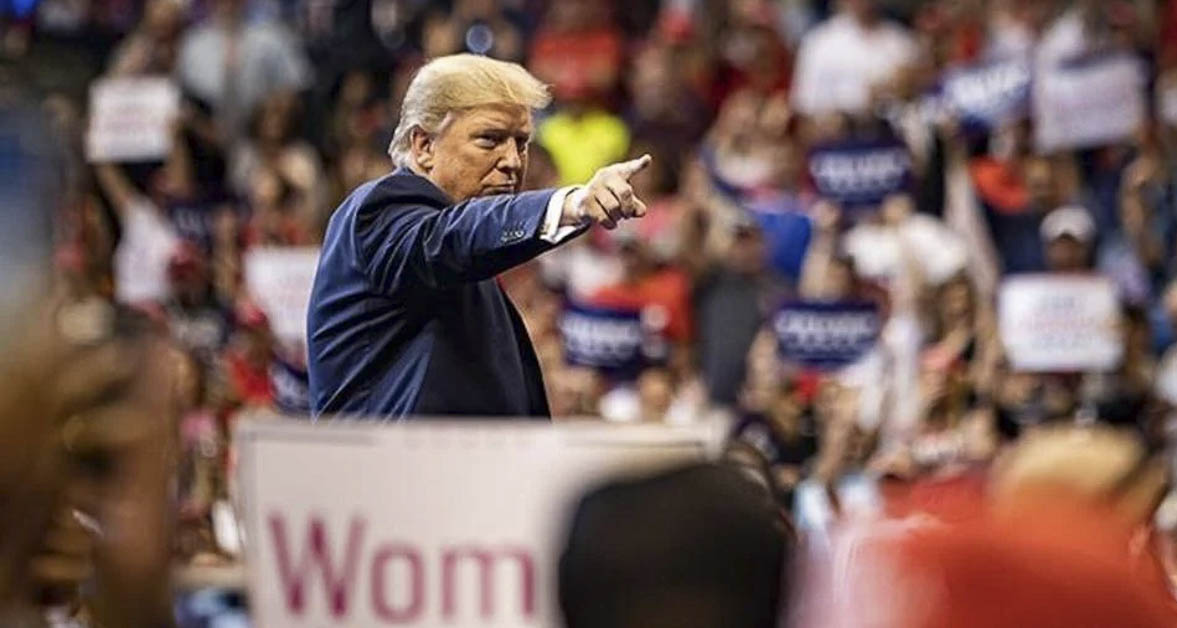
A federal judge in Florida dismissed the classified documents-related criminal case against former President Donald Trump on Monday, saying the appointment of Special Counsel Jack Smith violated the Constitution.
The case could be appealed and go all the way to the U.S. Supreme Court. Many legal experts considered the classified documents case to be Trump’s most difficult legal hurdle, and its removal comes on the first day of the Republican National Convention in Milwaukee and two days after the former president survived an assassination attempt in Butler, Pa.
“As we move forward in Uniting our Nation after the horrific events on Saturday, this dismissal of the Lawless Indictment in Florida should be just the first step, followed quickly by the dismissal of ALL the Witch Hunts — The January 6th Hoax in Washington, D.C., the Manhattan D.A.’s Zombie Case, the New York A.G. Scam, Fake Claims about a woman I never met (a decades old photo in a line with her then husband does not count), and the Georgia ‘Perfect’ Phone Call charges,” Trump wrote on Truth Social Monday morning. “The Democrat Justice Department coordinated ALL of these Political Attacks, which are an Election Interference conspiracy against Joe Biden’s Political Opponent, ME. Let us come together to END all Weaponization of our Justice System, and Make America Great Again!”
Judge Aileen Cannon dismissed the case in question, saying that Smith’s appointment violated the Appointments Clause of the Constitution, in particular because the Biden administration funded the prosecution without authorization from Congress, which retains the power of the purse.
Cannon said that Smith was operating with the power normally reserved for an attorney general but that unlike an attorney general, Smith was not given express permission by Congress to do so.
“Both the Appointments and Appropriations challenges as framed in the Motion raise the following threshold question: is there a statute in the United States Code that authorizes the appointment of Special Counsel Smith to conduct this prosecution?” the ruling said.
“After careful study of this seminal issue, the answer is no. None of the statutes cited as legal authority for the appointment … gives the Attorney General broad inferior-officer appointing power or bestows upon him the right to appoint a federal officer with the kind of prosecutorial power wielded by Special Counsel Smith,” the ruling continued.
Cannon said the process for prosecuting Trump violated the separation of powers by kicking Congress out of the equation.
“The bottom line is this: The Appointments Clause is a critical constitutional restriction stemming from the separation of powers, and it gives to Congress a considered role in determining the propriety of vesting appointment power for inferior officers,” the ruling said. “The Special Counsel’s position effectively usurps that important legislative authority, transferring it to a Head of Department, and in the process threatening the structural liberty inherent in the separation of powers.”
The ruling suggests that Trump could still be prosecuted, but this delay will almost certainly push the case beyond the election and may kill it altogether.
“If the political branches wish to grant the Attorney General power to appoint Special Counsel Smith to investigate and prosecute this action with the full powers of a United States Attorney, there is a valid means by which to do so,” the ruling said. “He can be appointed and confirmed through the default method prescribed in the Appointments Clause, as Congress has directed for United States Attorneys throughout American history … or Congress can authorize his appointment through enactment of positive statutory law consistent with the Appointments Clause.”
While appointing special counsels has become more common, Cannon argues the practice does not have solid legal footing.
“In the end, it seems the Executive’s growing comfort in appointing ‘regulatory’ special counsels in the more recent era has followed an ad hoc pattern with little judicial scrutiny,” the ruling said.
This report was first published by The Center Square.
Also read:
- Opinion: ‘It may be time for McCleary 2.0’
 Dick Rylander examines the Battle Ground School District’s proposed $116,830,000 three-year EP&O levy heading to the November 2026 ballot.
 - Washington Policy Center tax expert warns that new income tax will affect everyone
 Ryan Frost argues Washington’s new 9.9% income tax has a $1M deduction that a simple legislative majority could remove.
 - Opinion: Were Republican voters just sleeping during the August primary election?
 CCRP Chairman Matt Bumala says 60% of primary no-shows in the 17th and 18th districts were Republicans.
 - High school football: New coach prepares for long-term success at Prairie High School
 James Young-Lewis, a Clark County native who graduated from Evergreen in 2009, became Prairie’s head coach in May after working as an assistant coach across various programs since 2015, joining Prairie’s staff in 2024.
 - Cost to battle 20 wildfires in WA has topped $200M
 Twenty wildfires have cost Washington $207M in one month, more than two-thirds of what DNR spent all last fiscal year.
 - Opinion: WA Cares’ launch showcased care WA Cares did not provide
 Gov. Ferguson showcased a caregiving arrangement at the WA Cares launch that the program had not paid for a single day of.
 - Former State Rep. Liz Pike provides update on husband Neil Cahoon
 Neil Cahoon, a Camas resident, has undergone multiple surgeries including five on Aug. 15 after the Aug. 10 crash near La Center’s Daybreak Airport.