



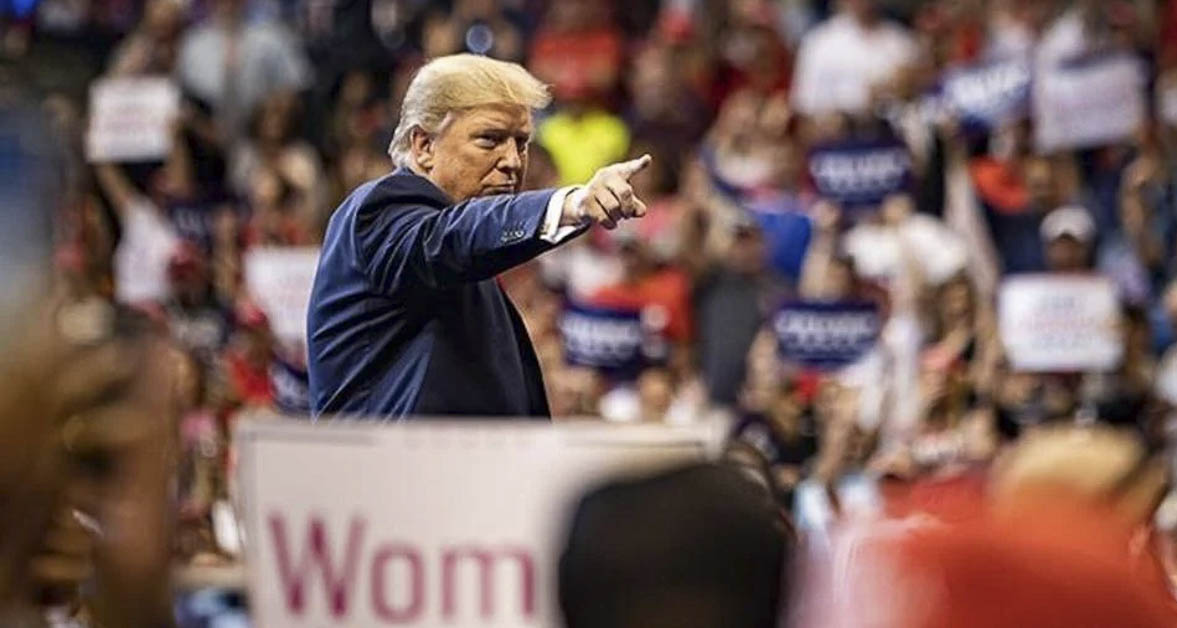
The case could be appealed and go all the way to the U.S. Supreme Court
Casey Harper
The Center Square
A federal judge in Florida dismissed the classified documents-related criminal case against former President Donald Trump on Monday, saying the appointment of Special Counsel Jack Smith violated the Constitution.
The case could be appealed and go all the way to the U.S. Supreme Court. Many legal experts considered the classified documents case to be Trump’s most difficult legal hurdle, and its removal comes on the first day of the Republican National Convention in Milwaukee and two days after the former president survived an assassination attempt in Butler, Pa.
“As we move forward in Uniting our Nation after the horrific events on Saturday, this dismissal of the Lawless Indictment in Florida should be just the first step, followed quickly by the dismissal of ALL the Witch Hunts — The January 6th Hoax in Washington, D.C., the Manhattan D.A.’s Zombie Case, the New York A.G. Scam, Fake Claims about a woman I never met (a decades old photo in a line with her then husband does not count), and the Georgia ‘Perfect’ Phone Call charges,” Trump wrote on Truth Social Monday morning. “The Democrat Justice Department coordinated ALL of these Political Attacks, which are an Election Interference conspiracy against Joe Biden’s Political Opponent, ME. Let us come together to END all Weaponization of our Justice System, and Make America Great Again!”
Judge Aileen Cannon dismissed the case in question, saying that Smith’s appointment violated the Appointments Clause of the Constitution, in particular because the Biden administration funded the prosecution without authorization from Congress, which retains the power of the purse.
Cannon said that Smith was operating with the power normally reserved for an attorney general but that unlike an attorney general, Smith was not given express permission by Congress to do so.
“Both the Appointments and Appropriations challenges as framed in the Motion raise the following threshold question: is there a statute in the United States Code that authorizes the appointment of Special Counsel Smith to conduct this prosecution?” the ruling said.
“After careful study of this seminal issue, the answer is no. None of the statutes cited as legal authority for the appointment … gives the Attorney General broad inferior-officer appointing power or bestows upon him the right to appoint a federal officer with the kind of prosecutorial power wielded by Special Counsel Smith,” the ruling continued.
Cannon said the process for prosecuting Trump violated the separation of powers by kicking Congress out of the equation.
“The bottom line is this: The Appointments Clause is a critical constitutional restriction stemming from the separation of powers, and it gives to Congress a considered role in determining the propriety of vesting appointment power for inferior officers,” the ruling said. “The Special Counsel’s position effectively usurps that important legislative authority, transferring it to a Head of Department, and in the process threatening the structural liberty inherent in the separation of powers.”
The ruling suggests that Trump could still be prosecuted, but this delay will almost certainly push the case beyond the election and may kill it altogether.
“If the political branches wish to grant the Attorney General power to appoint Special Counsel Smith to investigate and prosecute this action with the full powers of a United States Attorney, there is a valid means by which to do so,” the ruling said. “He can be appointed and confirmed through the default method prescribed in the Appointments Clause, as Congress has directed for United States Attorneys throughout American history … or Congress can authorize his appointment through enactment of positive statutory law consistent with the Appointments Clause.”
While appointing special counsels has become more common, Cannon argues the practice does not have solid legal footing.
“In the end, it seems the Executive’s growing comfort in appointing ‘regulatory’ special counsels in the more recent era has followed an ad hoc pattern with little judicial scrutiny,” the ruling said.
This report was first published by The Center Square.
Also read:
- Plenty of NBA connections expected in town Sunday for Vancouver Bears game
 Former NBA stars Gary Payton and Robert Pack will coach opposite each other when the SuperHawks visit the undefeated Vancouver Bears in a marquee USBL matchup.
 - 18th District lawmakers to host town hall meeting on Saturday, March 28, in Battle Ground
 Stephanie McClintock and John Ley will meet with Battle Ground constituents to answer questions, review the new income tax, and discuss the effects of the $80 billion budget.
 - State’s umpire-in-chief goes on recruiting trip in his final season as a baseball umpire
 Tim Stevens is spending his last season traveling to every Washington umpire association, working to address the shortage of officials and encourage young people to join the ranks.
 - POLL: After hearing state leaders describe the I-5 Bridge as vulnerable in an earthquake, what is your reaction?
 State and local leaders describe the I-5 Bridge as structurally at risk but recommend drivers continue crossing it while complex replacement plans unfold.
 - Opinion: Historical state income tax and another massive operating budget highlight the end of the 2026 legislative session
 Rep. John Ley details the passage of a state income tax, an expanding $80 billion budget, and new Clark County infrastructure funding following the 2026 legislative session.
 - VIDEO: Legal challenges certain as Gov. Ferguson prepares to sign new income tax
 Senate Minority Leader John Braun and other legislators expect legal challenges and initiative efforts to follow Gov. Ferguson’s signature on Washington’s new income tax law affecting high earners and businesses.
 - Vancouver Fire Department honors firefighters, community members at annual awards ceremony
 Acts of bravery, including river rescues and life-saving interventions by both residents and first responders, were recognized at the Vancouver Fire Department’s annual awards ceremony.
