




The Current is coming to Battle Ground, safety barriers are being installed in buses, and several routes will see some changes in the fall
Paul Valencia
Clark County Today
Last week’s C-TRAN Board of Directors meeting produced a number of headlines.
There was an update to the board from the Interstate Bridge Replacement Program. That plan — which would become the largest construction project in Southwest Washington history — has a huge following, from those who support it and those who do not.
There was also a vote from the board to go ahead with a construction contract for the next bus rapid transit line. The Vine will be going north-south, from downtown Vancouver to Washington State University Vancouver. Also, the current Vine route on Fourth Plain Boulevard will be expanding east.
Not to be lost in the news, though, the board also approved recommended proposals for service changes, with new stops, a new route, and The Current is coming to Battle Ground.
The board also heard a proposal to raise fares for C-TRAN customers starting in 2026.
Also, safety barriers have been approved for all buses, to be installed in the next year.
As far as the new service changes, they take effect Sept. 14.
The Current is an on-demand rideshare service that provides Point A to Point Be service for the cost of a bus ride. Customers can call for a pick-up at their home to go to a doctor’s appointment, or a grocery store, for example, or for any point-to-point service within the district of The Current.
There are five Current districts right now. Battle Ground will become the sixth.
The rideshare program does not carry customers beyond the districts — WSU Vancouver/Salmon Creek, Rose Village, Camas/Washougal, Port of Vancouver, and Ridgefield/La Center — but would take customers to a transit center if customers want to go beyond those districts.
Battle Ground’s district boundary will mirror Battle Ground city limits.
A new route on the bus line is coming to east Vancouver. Route 12 will go from the Vancouver Mall Transit Center to the Fisher’s Landing Transit Center, going along Fourth Plain Boulevard, then Gher Road, 112th Avenue, before turning toward 164th Avenue along SE 10th Street and McGillivray Boulevard.
Route 19 in Salmon Creek will be changed, but no current stops will be removed.
Route 92 from Camas will realign with the Fisher’s Landing Transit Center rather than going to Mill Plain Boulevard.
Additional stops and/or trips will be added and/or hours expanded for Routes 7, 25, 65, 71, 72, 74, 78, and 80.
For a full list of service changes and details, go to: https://www.c-tran.com/media/uploads/board/2025/06102025_Staff_Report_25-032_Fall_Service_Change_Board_Meeting.pdf
Noting a national rise in assaults on bus operators, transit systems across the country have been looking into ways to enhance operator safety.
C-TRAN already had a pilot program in the works, asking bus drivers to give their opinions on the best barriers to be installed. The operators voted for what is called a Wabtec barrier. The low bidder was Complete Coach Works, based out of Riverside, Calif.
The board approved a 1-year contract with Complete Coach Works to purchase and install the barriers. The contract is not to exceed $1,825,865.
Later in the board meeting, C-TRAN staff started a 2026 Fare Proposal Discussion.
The proposal is to raise the cost of local bus fare from $1.25 to $1.50. For regional fare – rides to Oregon – the fare would go from $2.50 to $2.80. For the express but from Clark County to downtown Vancouver, the fare would go from $3 to $3.25.
The Honored and Youth fares would increase, as well, to .75 for local, $1.60 for regional.
There will be two in-person open house meetings to discuss the proposed increases – at 4:30 p.m. June 23 at the Vancouver Community Library, and at 11 a.m. July 10 at the Vancouver Mall Transit Center.
A public hearing and request for action will come at the Sept. 9 C-TRAN Board of Directors meeting.
Also read:
- Expect delays on SR 14 in Vancouver for guardrail repairs Wednesday
 State Route 14 travelers in Vancouver should plan for morning delays as WSDOT will close two eastbound lanes for guardrail repairs, affecting mileposts 6.0 to 7.0.
 - Overnight closure planned on westbound SR 14 Camas Slough Bridge Tuesday
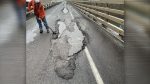 WSDOT crews will close westbound SR 14 at Exit 14 in Camas to collect bridge deck samples and plan future repairs; detours will be in effect.
 - Opinion: Stay in your lane – seriously, it’s the law
 Drivers must choose the nearest lane when turning in Washington, and left turns bring added risk. Even with signals, every driver must help prevent crashes by following law.
 - POLL: After hearing state leaders describe the I-5 Bridge as vulnerable in an earthquake, what is your reaction?
 State and local leaders describe the I-5 Bridge as structurally at risk but recommend drivers continue crossing it while complex replacement plans unfold.
 - WA and OR scale back I-5 Bridge ambitions as cost balloons
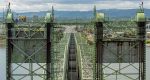 A $14.4 billion price tag prompts Washington and Oregon leaders to delay portions of the I-5 bridge project and prioritize just the main spans.
 wpDiscuz
