



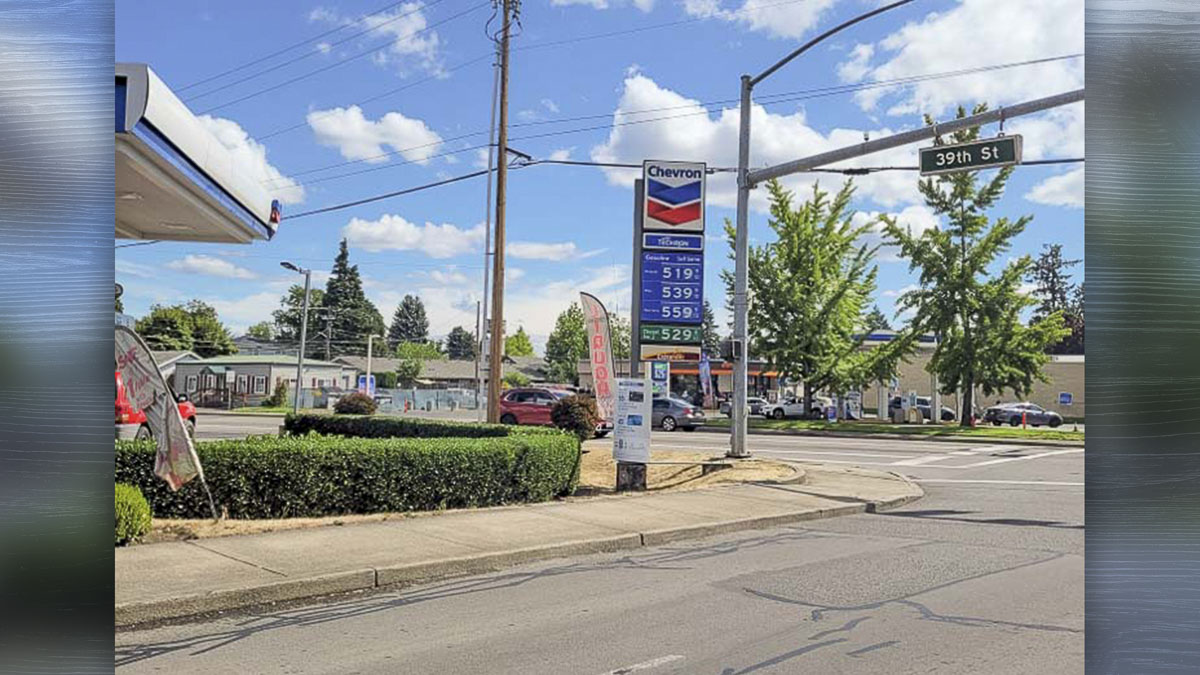
The tax would also rise in the future to account for inflation. It’s part of a plan to raise $3.2 billion in new revenue over the next six years
Jake Goldstein-Street
Washington State Standard
Transportation budget writers in the Washington Legislature are settling on a revenue package that would hike the state’s gasoline tax 6 cents a gallon beginning July 1.
The potential gas tax increase, the first in the state since 2016, raises nearly half of the estimated $3.2 billion the new package is expected to bring in over six years. It would up the state’s levy from 49.4 cents per gallon to 55.4 cents, then lift it by 2% each year.
The proposal is the product of bipartisan negotiations between legislators in the House and Senate seeking a solution to soaring project costs and flagging gas tax collections as drivers transition to more efficient vehicles.
“We’re close,” said House Transportation Committee Chair Jake Fey, D-Tacoma.
The new proposition in Senate Bill 5801 makes a sizable dent in what’s estimated to be a $1 billion shortfall over the next two years and $8 billion over the next six years. Lawmakers say more money is needed to fund highway megaprojects, the Washington State Patrol, state ferries and the removal of culverts and other barriers blocking fish migration.
Meanwhile, the two chambers are negotiating over what the new revenue will pay for as they hash out a two-year transportation plan in the $15 billion to $16 billion range.
Initial revenue packages released last month totaled $4.4 billion in the House and $3 billion in the Senate.
The revised gas tax proposal hews closer to what the Senate previously unveiled. The House had teased raising the tax 9 cents, then indexing it to inflation.
The Senate’s original plan received some Republican backing, passing 31-18 in March with three Democrats opposed and four Republicans in support.
Washington’s gas tax is already one of the highest in the country, before accounting for the 18.4-cent federal rate.
On top of the gas tax hike, the latest framework includes hikes for the diesel fuel tax — 3 cents a gallon in both fiscal years 2026 and 2028, then those increases indexed to rise 2% annually for inflation.
There are also added taxes on vehicle sales, rental cars, luxury vehicles, private jets and a $1 per attendee fee on operators of stadiums and other venues with a capacity of 17,000 or more.
One of the bigger-ticket items is $317 million from a $30-per-ton weight fee on heavy-duty trucks that would also rise with inflation in future years. Lawmakers also pencil in $138 million from violations of the state’s new speed cameras in work zones.
The tax cornucopia also drops some controversial ideas in the earlier House and Senate proposals.
There’s no increased fee on electric vehicle registrations. There’s no new 10% surcharge on e-bike purchases. There’s no vehicle registration fee for transit operators. And there’s no ferry fare increase.
Most notable may be the absence of a new highway use fee the House had floated.
The creative fee, patterned after a similar approach in Virginia, would have charged drivers based on their car’s fuel economy, with more efficient vehicles paying more. Fey and other Democrats have toyed with such a road usage charge for over a decade. He was disappointed to see it not included in Tuesday’s revenue proposal.
Senate Transportation Committee Chair Marko Liias, D-Edmonds, said negotiators dropped the charge because of how late in the process it came and the resulting lack of time “to understand the impacts.”
The plan includes other policy changes, including tolling on the entire State Route 520 corridor, not just the floating bridge, mandating biodiesel fuel for state ferries and providing a sales tax exemption for zero-emission buses.
But it doesn’t include added uses for Tacoma Narrows Bridge toll proceeds or increased enforcement for expired vehicle registration tabs, as the Senate had proposed.
The proposal, heard in the House Transportation Committee on Tuesday, is set for a vote from the panel Wednesday morning.
The legislative session is scheduled to end Sunday.
This report was first published by the Washington State Standard.

Also read:
- White House govt. Funding request for 2027 cuts $73 billion
 President Trump’s budget seeks to boost defense funding while cutting $73 billion from agencies like the EPA, NASA, and Agriculture, prompting sharp criticism from Democratic leaders.
 - Heywood asks WA Supreme Court to allow referendum effort on income tax
 Brian Heywood is petitioning the state Supreme Court after the Secretary of State rejected a referendum to repeal Washington’s new 9.9% tax on income over $1 million.
 - VIDEO: Families at center of WA transgender sports debate face-to-face with OSPI
 Two Washington high school students and their parents met with Superintendent Chris Reykdal to discuss concerns about sports policies after one student faced an investigation for harassment.
 - As Washington lawmakers punt on school cellphone ban, some want more action
 At Robert Eagle Staff Middle School, all-day phone removal led to fewer conflicts and more student engagement, but some parents and lawmakers argue a ban should not be imposed statewide.
 - POLL: Do you agree with giving a state commission the power to remove an elected sheriff?
 A new poll asks if a state commission—not voters—should have the power to remove an elected sheriff, following concerns raised by Clark County Sheriff John Horch.
