



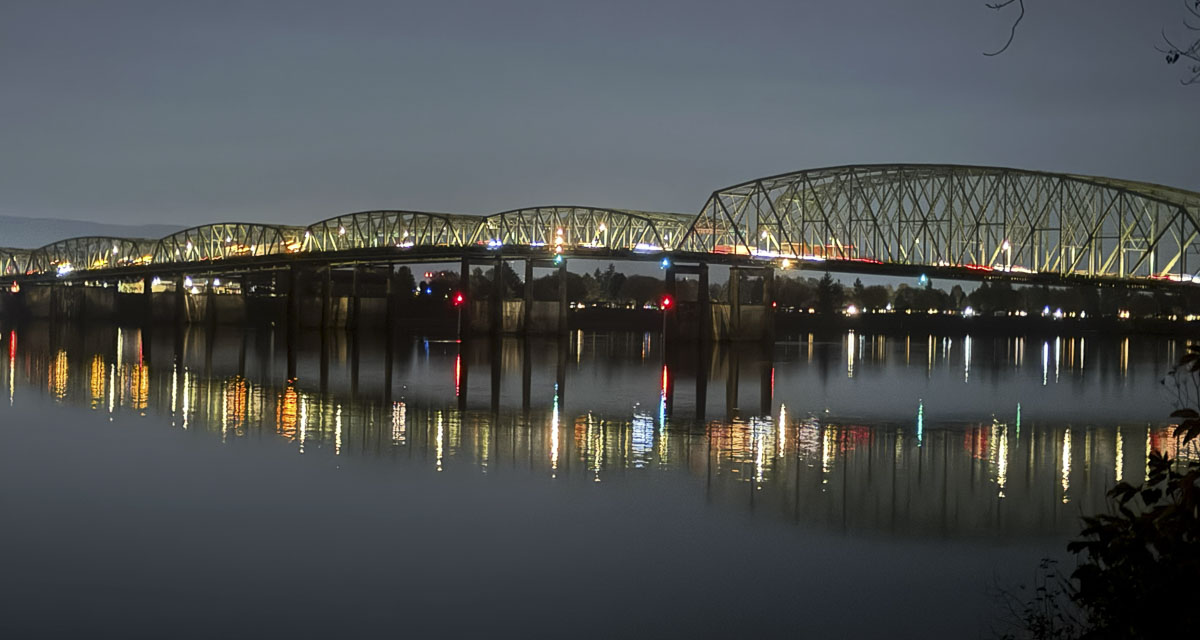
Washington legislators offer an assessment of the current status of the I-5 Bridge replacement project
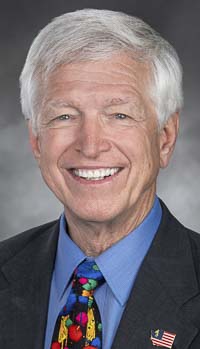
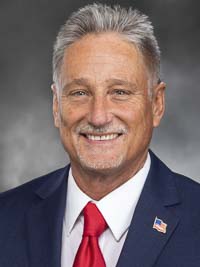
Rep. John Ley, Rep. Ed Orcutt, and Sen. Jeff Wilson
The Interstate Bridge Replacement (IBR) program is facing a crisis of its own making: a staggering $10 billion funding hole that WILL sink the project.
Recent public records disclosures reveal the project’s estimated cost has increased to between $12.2 billion and $17.7 billion, a significant jump from the original $3.2 billion to $4.8 billion. This represents a 380% escalation, driven by a 20-year construction timeline and unnecessary add-ons.
Oregon Transportation Commissioner Lee Beyer delivered a blunt assessment: “If those numbers are correct, we can’t build this project. There’s no way you’re going to get the money to do it at this point.” His words echo growing bipartisan frustration that the project has morphed from a necessary seismic retrofit and congestion reliever into an unaffordable project.
Rep. Ed Orcutt put it plainly: “The problem is the bridge has just gotten too darned expensive.” He pointed directly to light rail as the prime candidate for trimming. Why invest in transit when the core bridge itself is unaffordable?
MAX originating ridership remains 43% below peak 2012 levels. TriMet should be in bankruptcy, with $850 million in operating losses last year and operations burning through $6 billion in negative cash flow over the last decade.

Washington state grapples with an $8 billion unfunded liability for deferred highway and bridge maintenance. The 2022 Move Ahead Washington plan proposed to spend nearly $17 billion for statewide transportation projects – yet IBR proponents want a greater sum for a single project.
Meanwhile, urgent transportation needs go unmet. The Camas Slough Bridge in Clark County, the Carbon River Bridge on SR-165, and the US 2 Bridge in northern Washington all require replacement or major repairs. Prioritizing one high-cost project over statewide necessities risks neglecting the basics that keep everyday drivers safe and moving.
Comparisons with other Columbia River crossings highlight the IBR’s mismanaged and overpriced operations. The Hood River–White Salmon bridge replacement, roughly 4,400 feet long, carries a price tag of $1.12 billion — far less than the IBR’s projected costs for a bridge that’s only about 3,500 feet. That’s more than 15 times the cost for 20% less length, raising serious questions about value.
Going back further, in 2014, Figg Engineering proposed an $860 million fixed-price bridge east of I-205. That price tag included no risk of cost overruns for a bridge 10,995 feet long. Even assuming a doubling of modern costs and inflation, that would come to approximately $1.72 billion—about one-tenth of the IBR plan.
The current proposal is bloated with extras that inflate the tab without clear justification. $2 billion for light rail (with $970 million in related construction contracts slated for 2026, before federal transit funding applications even begin in 2027). Why $190 million for 1,270 park-and-ride spaces and 15,000 square feet of retail space? Why $320 million for TriMet’s Gresham facility?
Giving 54% of the bridge surface to transit, bikes, and pedestrians ignores freight haulers and daily commuters. The IBR projects morning commute times from North Vancouver to the Fremont Bridge will double to 60 minutes by 2045.
Citizens across Washington state are vocal about affordability—housing, groceries, utilities, and taxes that are squeezing families. They demand prioritization, not perpetual tax and toll hikes for Portland’s light rail. We need a reasonably priced, functional bridge that reliably reduces congestion and saves time—not a West Coast version of Boston’s Big Dig or California’s high-speed rail fiasco, where costs spiral, and benefits evaporate. It’s time for lawmakers to demand transparency, eliminate excesses, and refocus on a simpler, more affordable crossing that reduces traffic congestion. Anything less risks wasting billions while more pressing infrastructure crumbles elsewhere. The I-5 corridor and taxpayers deserve better than this runaway train.
Rep. John Ley, R-Vancouver, represents Washington’s 18th Legislative District.
Rep. Ed Orcutt, R-Kalama, represents Washington’s 20th Legislative District.
Sen. Jeff Wilson, R-Longview, represents Washington’s 19th Legislative District.
Also read:
- Unnecessary, unaffordable add-ons likely to spell doom for the I-5 Bridge replacement project
 Three Southwest Washington legislators argue the Interstate Bridge Replacement’s rising costs and added features threaten its viability.
 - Opinion: A-pillars – The safety feature that increases crashes
 Doug Dahl explains how wider A-pillars designed to protect occupants in rollovers may also reduce visibility and increase crash risk for other road users.
 - Opinion: Interstate Bridge replacement – the forever project
 Joe Cortright argues the Interstate Bridge Replacement Project could bring tolling and traffic disruptions on I-5 through the mid-2040s.
 - Opinion: Oversized tires and the frequency illusion
 Doug Dahl explains why tires that extend beyond fenders are illegal and how frequency illusion shapes perceptions about traffic safety.
 - Opinion: IBR’s systematic disinformation campaign, its demise
 Neighbors for a Better Crossing challenges IBR’s seismic claims and promotes a reuse-and-tunnel alternative they say would save billions at the I-5 crossing.
