



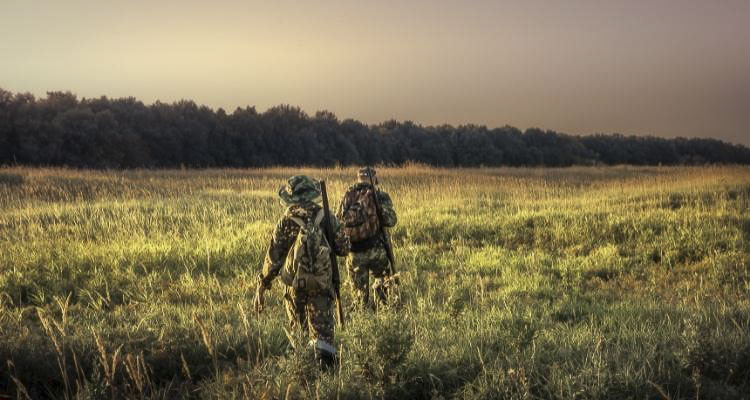
WDFW offers both traditional and online options to complete the hunter education requirement
OLYMPIA — Washington Department of Fish and Wildlife (WDFW) hunter education classes are available now.
WDFW schedules classes statewide, but due to instructor and facility availability, challenges may arise in locating a class.
“Summer is a great time to enroll in hunter education class because as fall hunting seasons draw near, seats in these courses fill quickly,” said David Whipple, WDFW hunter education section manager. “Beat the fall rush and sign up today, especially before school and related activities begin.”
WDFW offers both traditional and online options to complete the hunter education requirement. The traditional classroom experience includes direct person-to-person instruction from certified volunteer instructors. This format is especially beneficial to younger students, as well as those seeking more time with our highly qualified and passionate instructors.
The online course offers the same content and can be completed according to the student’s schedule. Students aged 17 and younger who take the online course are required to complete an in-person field skills evaluation led by certified instructors. As hunting season approaches, field skills evaluation classes can fill very quickly. Currently, students 18 years and older can complete the online course, which includes a virtual field day, to become certified.
However, those students 18 years and older who complete the online course will almost always benefit from attending an in-person field skills evaluation with certified instructors.
To learn about hunter education requirements or find a course, new hunters should visit the WDFW hunter education webpage.
Hunters born after Jan. 1, 1972 must show proof of completion of hunter education before buying their first Washington hunting license. Washington honors all 50 states hunter education certifications. Those who are unable to complete a hunter education course before the fall hunting seasons may qualify for a hunter education deferral. For more information on the deferral, visit wdfw.wa.gov/hunting/requirements/education/deferral-program.
The Washington Department of Fish and Wildlife works to preserve, protect, and perpetuate fish, wildlife and ecosystems while providing sustainable fish and wildlife recreational and commercial opportunities.
Information provided by Washington Department of Fish and Wildlife.
Also read:
- High school girls basketball: Union Titans give Brooklynn Haywood a homecoming in Alaska
 Union traveled to Anchorage for two games that allowed Brooklynn Haywood to play in front of her hometown crowd while the Titans bonded through travel, cold weather, and on-court adversity.
 - WATCH – Detransitioner to providers: ‘Please just stop’ gender surgeries on minors
 Detransitioner Soren Aldaco shared her experience and urged providers to stop encouraging gender surgeries on minors as HHS moves to restrict federal funding for such procedures.
 - Without pennies, should retailers round up or down?
 As the penny disappears from circulation, states and retailers are grappling with how cash purchases should be rounded and who should benefit from those decisions.
 - Opinion: IBR promotes ‘giving away’ historic interstate bridges while withholding cost estimate for replacement
 Neighbors for a Better Crossing argues the IBR program is promoting demolition of the historic Interstate Bridges without releasing updated cost estimates or current seismic data to justify replacement.
 - Opinion: Solving Washington’s deficit without tax increases
 Ryan Frost argues Washington’s budget shortfall is driven by rapid spending growth rather than insufficient tax revenue, calling for slower spending and program reductions instead of new taxes.
 - Washington State Patrol loses 34th trooper in the line of duty
 Washington State Patrol Trooper Tara-Marysa Guting was killed while investigating a crash on State Route 509 in Tacoma, marking the 34th line-of-duty death in the agency’s history.
 - Opinion: Bikes in crosswalks
 Doug Dahl explains how Washington law treats bicycles as both vehicles and pedestrians, depending on where and how they are being ridden.
