


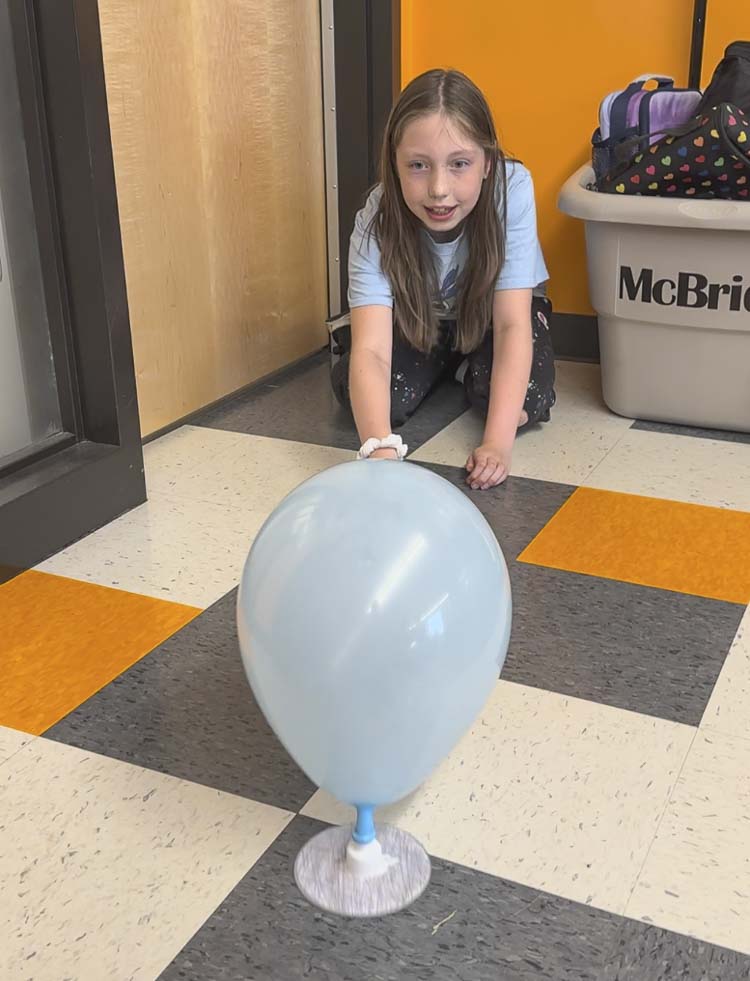
Students created the hovercrafts from CDs, balloons, and the cap from a bottle
Students in Khrista McBride and Samantha Howards’ fourth grade classrooms at Columbia River Gorge Elementary School applied science and engineering concepts as they built, tested, and measured the results of balloon-powered hovercraft races.
Students created the hovercrafts from CDs, balloons, and the cap from a bottle. The balloons were connected to the cap, which was glued onto the CD, creating a small gap for air to flow out, resulting in a small amount of lift to let the hovercrafts glide on hard surfaces.
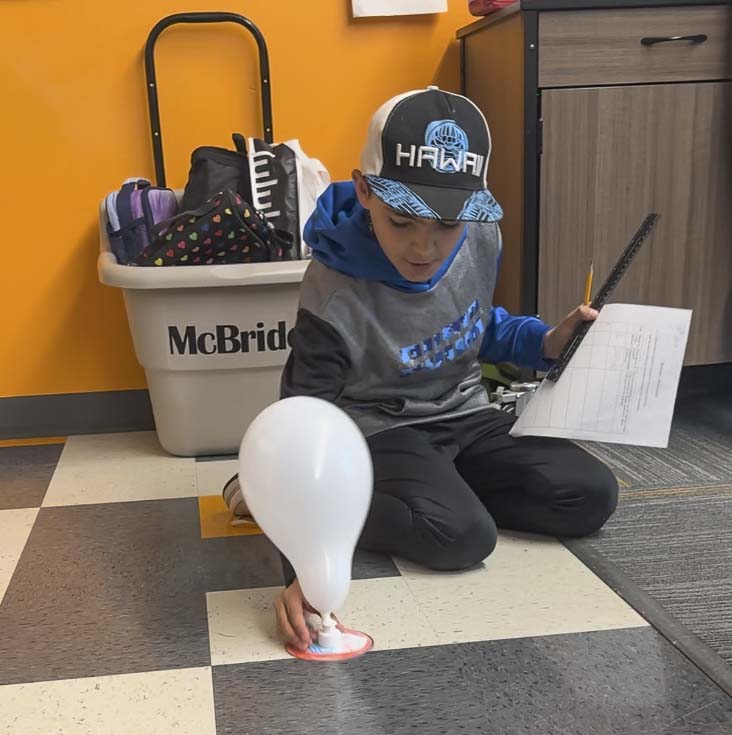
Each student tested their hovercraft in several settings, and with different sizes of balloons, and measured the distance traveled, so they could analyze the resulting data and draw conclusions about what makes a successful hovercraft. Howard said, “Students exploring is the most natural way to learn.”
McBride said that, “After the lesson, students reflected on the notes they gathered, and were surprised by the smaller balloons working better than larger balloons.” She described students discovering that, “The smaller size allowed their hovercraft to move further and faster due to the continuous volume of air flow.”
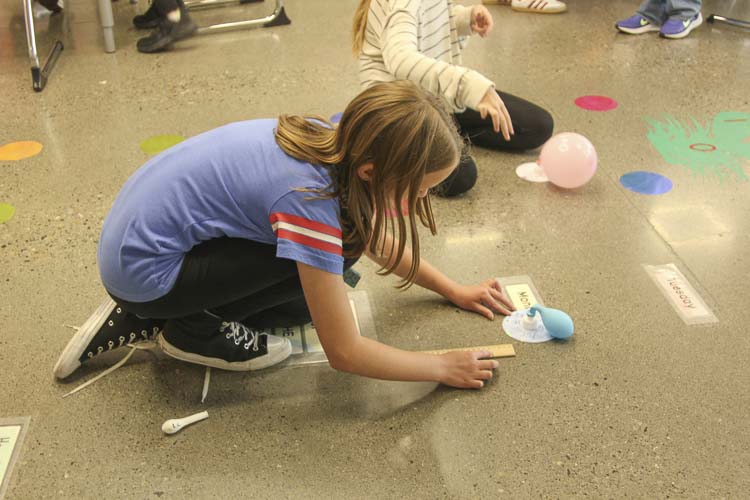
Students also found that designing the hovercraft with the shiny side of the CD facing down worked better than the label side. Students found this through “their comparisons and discussion which led them to decide that the smooth side was the better one facing down. They learned that reducing friction made a difference.” Students also noticed differences between distance traveled due to the flooring, including that the hovercraft traveled less distance on the rug than hard materials.
By combining science and engineering processes together, students learned the practical application of a number of science concepts, and how things like friction and weight can influence the outcome of an experiment.
Information provided by the Washougal School District.
Also read:
- High school football: New coach prepares for long-term success at Prairie High School
 James Young-Lewis, a Clark County native who graduated from Evergreen in 2009, became Prairie’s head coach in May after working as an assistant coach across various programs since 2015, joining Prairie’s staff in 2024.
 - Opinion: The Tooth Fairy’s secrets to making brushing & flossing magical
 Delta Dental of Washington’s Tooth Fairy Experience offers free resources to help children build lifelong brushing and flossing habits.
 - Boys & Girls Clubs of Southwest Washington opens first-ever Dedicated Outreach Space in Evergreen Public Schools
 Boys & Girls Clubs of SW Washington opens its first dedicated Outreach space at Evergreen High School, funded through OSPI.
 - Vancouver teen named Southwest Washington Lemonade Day Entrepreneur of the Year
 Emma Turner, 16, beat nearly 300 businesses at the Junior Market to claim the 2026 Lemonade Day Entrepreneur of the Year title.
 - Here’s what’s happening at the Clark County Fair on Thursday, Aug. 13
 Thursday is Kids Day at the Clark County Fair, with Monster Truck shows at 2 p.m. and 7 p.m. featuring Megasaurus, a fire-breathing robotic T-Rex.