



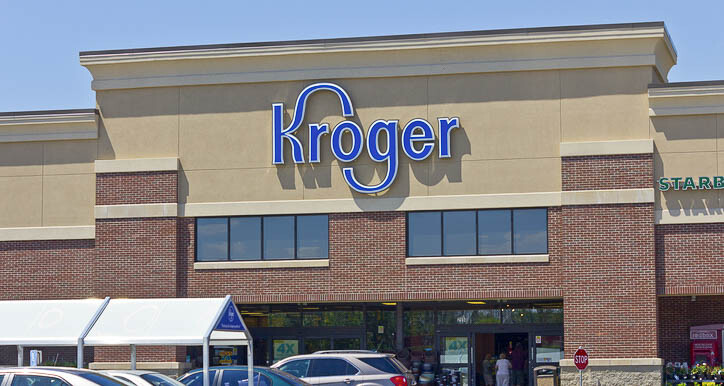
Mark Harmsworth believes that the Kroger Albertsons merger may be the final chance to level the playing field to improve competition, create more choice and provide local jobs in the community
Mark Harmsworth
Washington Policy Center
Two grocery chains, Kroger and Albertsons, are planning on a $25 billion merger of their operations next year. Given the size of the deal, the merger is understandably under review from the Federal Trade Commission (FTC) for potential antitrust issues.

Proponents of the merger say it’s necessary due to changes in the grocery marketplace driven by a shift to online shopping and competition from companies like Walmart and Amazon. Concerns from opposing groups say the merger will decrease consumer choice and result in a loss of jobs for the frontline workers.
Mergers happen all the time, so why is this one drawing so much attention?
Previous grocery chain mergers have been met with resistance from workers’ unions consumers and the Kroger-Albertsons deal is no different. Employees get nervous about their jobs and consumers wonder if product choice will go down and prices will go up.
To address some of the potential anti-trust issues and workers concerns, Kroger and Albertsons are selling 413 stores to C&S Wholesale Grocers (a competitor) who, as part of the deal, plans on continuing operations under the existing collective bargaining agreements working to ensure no store closures.
The sale shows Kroger and Albertsons are aware of the scrutiny the deal will draw from the FTC and are taking proactive steps to address any concerns.
Additionally, the sale of the 413 stores ensures local competition between C&S and the newly merged Kroger and Albertsons.
The driving force behind the merger is the change in the grocery marketplace in the last few years with the growth of online and warehouse stores.
According to a statement from Burt Flickinger, managing director of consulting firm Strategic Resource Group, the grocery business is going through a “revolution,” and Walmart is “unstoppable.” Add Amazon and Costco to that list and it’s obvious the challenges that the traditional brick and mortar stores are up against. Post merger, Kroger will still only represent 14% of the grocery market, dwarfed by Walmart alone at 22%.
From a free market perspective, Kroger and Albertsons are doing what needs to be done to compete in a competitive marketplace while considering the importance of retaining jobs and maintaining customer choice.
Will the merger help consumer choice? It should. The new organization will be able to compete more effectively with the onslaught of online and warehouse competition. With C&S competing, prices and product selection should improve.
The Kroger Albertsons merger may be the final chance to level the playing field to improve competition, create more choice and provide local jobs in the community.
A decision from the FTC is expected by early 2024 on if the merger meets antitrust rules.
Mark Harmsworth is the director of the Small Business Center at the Washington Policy Center.

Also read:
- Letter: Has $450 million been wasted on a bridge that’s too low for the Coast Guard with a foundation too costly to build?
 A Seattle engineer questions whether hundreds of millions of dollars have been spent on a bridge design he argues is unnecessarily risky and costly compared to an immersed tunnel alternative.
 - Opinion: Fix Washington – House Republicans lead the charge against liberal chaos
 Nancy Churchill argues that one-party Democratic control has driven up costs, weakened public safety, and harmed schools, and says House Republicans are offering a path forward through their Fix Washington agenda.
 - Opinion: Biden agreed with Trump on Maduro, so why aren’t liberals celebrating?
 Lars Larson questions why American Democrats are reacting with outrage to the arrest of Venezuelan dictator Nicholas Maduro despite prior bipartisan agreement on prosecuting him.
 - Letter: If I were a politician
 A Yacolt resident offers a sharply critical, satirical take on how he believes modern politicians misuse public trust, taxpayer dollars, and government power.
 - Opinion: Transit agencies need accountability not increased state subsidy
 Charles Prestrud argues that Washington transit agencies face rising costs and declining ridership due to governance structures that lack public accountability.

I’ve been watching these mergers for decades now and you never used to see SO Many!
Mergers for food means they can squeeze in and “Control” more of our food supply! Better for them because it cuts down on additional costs, transport costs etc! BUT the various controls on our food, quality too, just gets to us FASTER!