



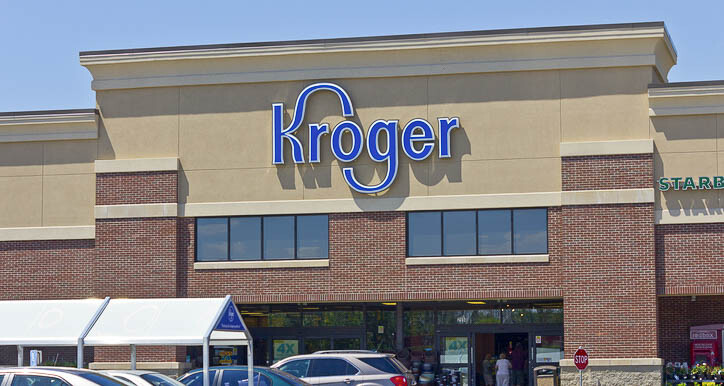
Mark Harmsworth believes that the Kroger Albertsons merger may be the final chance to level the playing field to improve competition, create more choice and provide local jobs in the community
Mark Harmsworth
Washington Policy Center
Two grocery chains, Kroger and Albertsons, are planning on a $25 billion merger of their operations next year. Given the size of the deal, the merger is understandably under review from the Federal Trade Commission (FTC) for potential antitrust issues.

Proponents of the merger say it’s necessary due to changes in the grocery marketplace driven by a shift to online shopping and competition from companies like Walmart and Amazon. Concerns from opposing groups say the merger will decrease consumer choice and result in a loss of jobs for the frontline workers.
Mergers happen all the time, so why is this one drawing so much attention?
Previous grocery chain mergers have been met with resistance from workers’ unions consumers and the Kroger-Albertsons deal is no different. Employees get nervous about their jobs and consumers wonder if product choice will go down and prices will go up.
To address some of the potential anti-trust issues and workers concerns, Kroger and Albertsons are selling 413 stores to C&S Wholesale Grocers (a competitor) who, as part of the deal, plans on continuing operations under the existing collective bargaining agreements working to ensure no store closures.
The sale shows Kroger and Albertsons are aware of the scrutiny the deal will draw from the FTC and are taking proactive steps to address any concerns.
Additionally, the sale of the 413 stores ensures local competition between C&S and the newly merged Kroger and Albertsons.
The driving force behind the merger is the change in the grocery marketplace in the last few years with the growth of online and warehouse stores.
According to a statement from Burt Flickinger, managing director of consulting firm Strategic Resource Group, the grocery business is going through a “revolution,” and Walmart is “unstoppable.” Add Amazon and Costco to that list and it’s obvious the challenges that the traditional brick and mortar stores are up against. Post merger, Kroger will still only represent 14% of the grocery market, dwarfed by Walmart alone at 22%.
From a free market perspective, Kroger and Albertsons are doing what needs to be done to compete in a competitive marketplace while considering the importance of retaining jobs and maintaining customer choice.
Will the merger help consumer choice? It should. The new organization will be able to compete more effectively with the onslaught of online and warehouse competition. With C&S competing, prices and product selection should improve.
The Kroger Albertsons merger may be the final chance to level the playing field to improve competition, create more choice and provide local jobs in the community.
A decision from the FTC is expected by early 2024 on if the merger meets antitrust rules.
Mark Harmsworth is the director of the Small Business Center at the Washington Policy Center.

Also read:
- Opinion: Half the road, full stop – Understanding pedestrian right-of-way
 Doug Dahl explains how Washington’s law requires drivers to stop when a pedestrian is within one lane of their half of the road, not just when directly in front.
 - Opinion: The state’s RFK-proofing bill comes with a cost
 Mandates like HB 2242 can lead to higher premiums as insurance companies absorb costs for new preventive services, affecting affordability statewide.
 - Opinion: What is the cost of a bridge?
 John Ley argues the I-5 Bridge replacement’s soaring cost stems from costly extras like light rail, noting other states deliver larger, toll-free bridges for much less.
 - POLL: Do you agree with giving a state commission the power to remove an elected sheriff?
 A new poll asks if a state commission—not voters—should have the power to remove an elected sheriff, following concerns raised by Clark County Sheriff John Horch.
 - Opinion: Defending Democracy by denying it?
 Washington voters are blocked from weighing in on new income taxes as state lawmakers and officials bypass public input, drawing criticism from Northwest voices.
 wpDiscuz
