


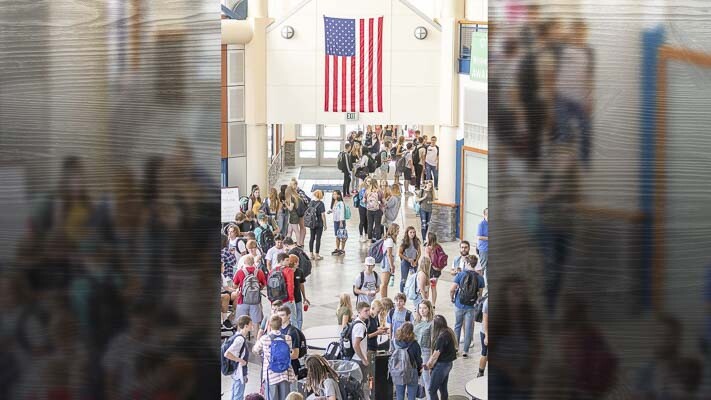
Liv Finne says school choice has one goal: to put the learning needs of children over the career desires of adults
Liv Finne
Washington Policy Center
Last week at WPC’s Gala Awards Dinner one of the nearly 1,000 attendees approached me and asked, “Liv, just what is school choice? Won’t it hurt public schools? Are other states using school choice?” These are reasonable questions. I will answer the first one first and tackle the other questions in future blog posts.
School choice is a policy idea for improving children’s access to education. It is entirely voluntary and provides parents with an alternative to a traditional government-run school.
The traditional system gives families little control and provides a “one-size-fits-all” model based on a child’s home address. Many parents like their local public school, but some communities are underserved.
Of course, school choice already exists for people who can afford it. It is called the real estate market. Wealthy families can buy homes in neighborhoods with good schools. Families unable to afford this often find their assigned public school fails to adequately educate students. School choice is the solution to this unfair situation. School choice gives parents their child’s education money directly, usually in the form of a regulated Education Saving Account (ESA), which allows the child access to an alternative school if parents think that is best.
These days, however, even parents in upscale neighborhoods are finding that school administrators often disrespect their religious beliefs and moral values. This creates tension between the political messages children hear at school and the character lessons parents are teaching at home.
School choice expands learning options by giving families control over their child’s public education dollars. Options make learning more inclusive. Educational choices can include private schools, homeschooling, online learning, individual tutors, and special needs services.
The courts have made it clear that because parents direct the spending, choosing a religious school is constitutional, in the same way that federal student aid now goes to religious-based colleges.
School choice programs vary in structure. Some programs give tax credits to organizations that fund scholarships to private schools. Some state programs provide vouchers or a tax-funded ESA.
In other states school choice programs typically provide families with between $4,300 and $8,400 per student per year. Special needs children receive additional public funding, up to $25,000. School choice programs are state-regulated, and all participating schools must be fully accredited.
School choice is popular. Already this year seven states have enacted universal school choice, allowing all students to participate. In all, thirty-two states, Puerto Rico and the District of Columbia offer some form of educational choice to parents.
Of course, there will always be those who are uncomfortable with change. The hardliners in the current system are particularly vocal, seeing parent choice as a threat to their budgets and careers. But the purpose of public education spending is to educate children, not to serve the financial desires of powerful interests.
School choice has one goal: to put the learning needs of children over the career desires of adults.
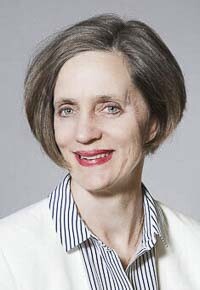
Liv Finne is the director of the Center for Education at the Washington Policy Center.

Also read:
- Opinion: Were Republican voters just sleeping during the August primary election?
 CCRP Chairman Matt Bumala says 60% of primary no-shows in the 17th and 18th districts were Republicans.
 - Opinion: WA Cares’ launch showcased care WA Cares did not provide
 Gov. Ferguson showcased a caregiving arrangement at the WA Cares launch that the program had not paid for a single day of.
 - Opinion: Portland’s War on Cars Part 4 – A smarter automobile strategy to end gridlock
 O’Toole argues fuel wasted in Portland-area congestion has sextupled since 1982, generating 250,000 tons of extra greenhouse gases annually.
 - Opinion: The Tooth Fairy’s secrets to making brushing & flossing magical
 Delta Dental of Washington’s Tooth Fairy Experience offers free resources to help children build lifelong brushing and flossing habits.
 - Opinion: Transit ridership trends are dismal but regional plans are oblivious
 Puget Sound transit passenger-miles fell 31% from 2015 to 2024 despite a half-million-resident population increase.