



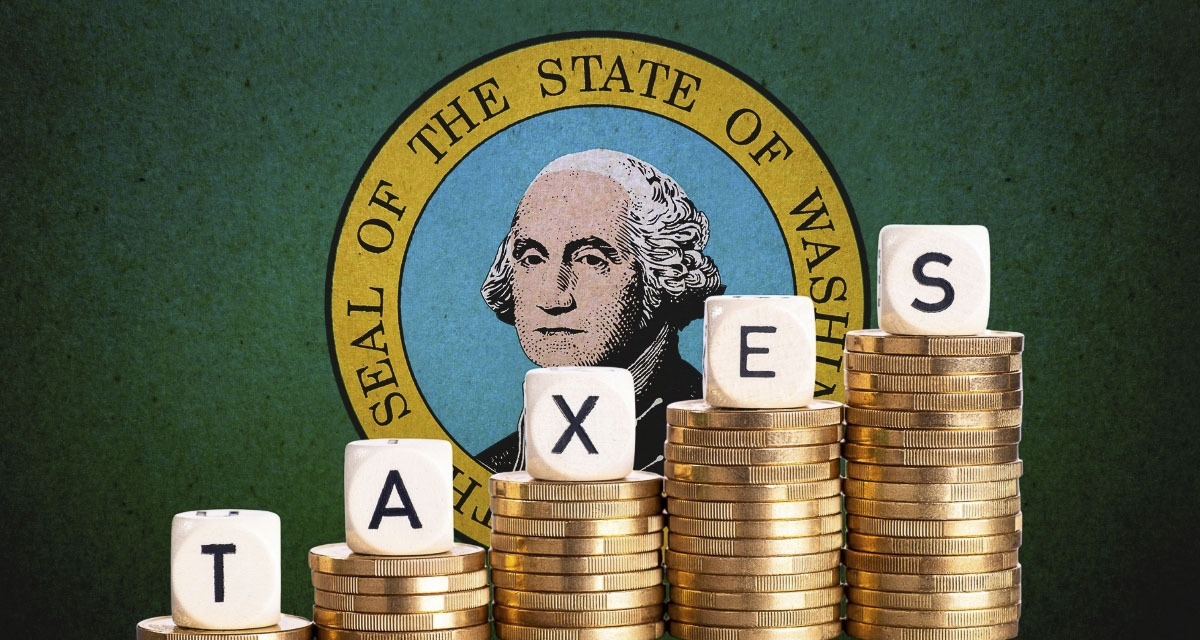
Mark Harmsworth says the income tax will destroy Washington’s economy and for those politicians that think this is just another faux analysis, it’s not
Mark Harmsworth
Washington Policy Center
 See Grok’s analysis of this story
Senate Bill 6346 (SB 6346 and HB 2724) is the latest draconian income tax legislative proposal which would impose a 9.9% tax on individuals with Washington taxable income above $1 million starting in January 2028. Framed as a way to fund K-12 education, health care, higher education, human services, and the working families’ tax credit, while offsetting some sales/use and business & occupation (B&O) tax relief, the bill targets what proponents call the wealthiest 0.5% of households. It promises exemptions for family business sales and real property and includes credits for existing B&O, public utility taxes, capital gains taxes, and pass-through entity taxes.

And if you think it won’t touch you since you don’t make a million dollars a year, think again. According to Larry Springer (D), within a few years, it will be on everyone.
This measure represents a dangerous shift for a state that has long avoided a broad personal income tax. Washington’s current system relies on sales, B&O, and property taxes, making it attractive to entrepreneurs and businesses to do business here. Introducing the income tax and stacking with Seattle’s JumpStart payroll tax (up to 2.55%), WA Cares payroll tax (0.58%), and other levies, would push Seattle’s combined top rate on wage income with stock options to over 18%, the highest in the nation and far exceeding New York City’s.
This is not abstract policy. Washington residents making with salaries above the median and business owners are highly mobile. Data from IRS migration statistics show Washington already experiencing net losses of affluent households. A 2024 SmartAsset analysis of IRS data found Washington lost a net 222 high-earning millennial households (AGI >$200,000) in 2021-2022, ranking among the nation’s highest outflows. Subsequent reports highlight accelerating departures among wealthy Gen Z professionals, second only to Illinois in some metrics.
Amazon founder Jeff Bezos relocated to Miami in 2023, drawn to Florida’s zero-income-tax environment, Tesla and SpaceX’s Elon Musk moved operations and residence to Texas and tech executives from Microsoft and Amazon continue shifting to low-tax havens such as Las Vegas, Nevada and other lower tax states. These moves reflect broader patterns where high-tax states lose both people and associated tax income. Between 2021-2022, California lost $24 billion in personal income from high-earner households. New York saw similar outflow of personal incomes. Low-tax destinations like Florida (+125,551 net filers), Texas (+88,216), and North Carolina gained disproportionately from high-income migrants.
Nationally, states with high individual and corporate income taxes experience greater out-migration than those relying more on sales taxes. Heritage Foundation analysis of IRS data (2020-2023) shows approximately 2.8 million more Americans left high-tax states than entered them, with income tax burdens as a key driver. California (top rate 13.3%) and New York (up to 14.8% in NYC) consistently top out-migration lists, while Florida, Texas, and Tennessee attract businesses and talent. Companies like Charles Schwab, Oracle, Tesla, and Hewlett Packard have fled California for Texas in recent years; financial institutions have shifted from New York to Florida and North Carolina.
Washington’s proposal exacerbates risks for pass-through entities (partnerships, LLCs, S-corps), which dominate small and mid-sized businesses. These owners would face the full 9.9% hit on distributive shares after limited credits, incentivizing relocation of operations or residency to zero-income-tax states.
As an example, a $5 million dollar company, owned by a family member that made $2 million in profit in a year, could incur a almost $100,000 tax bill even if the family member only took a modest salary from the company. Any profits in the company that could be withdrawn, even if they are left in the company accounts for reinvestment and growth, would be subject to the tax.
The bill’s sourcing rules for nonresidents and apportionment for business income may deter new investment or prompt partial exits. Studies confirm high earners respond to tax differentials, particularly those with investment income or weaker local ties (e.g., recent divorcees or retirees), though overall migration elasticity remains modest (less than 0.1 in some analyses). Even small percentage losses among high income individuals can erode the tax base significantly when the revenue depends on a narrow slice of tax filers.
Proponents argue the tax effects are few and include offsets, preserving services. Yet history shows high progressive rates shrink the base faster than anticipated. California’s repeated high-earner exodus has contributed to chronic deficits despite record rates. New York faces similar shortfalls. Washington risks the same, reduced entrepreneurial activity, fewer headquarters, job losses in tech/finance, and higher consumer prices as businesses pass on costs or depart.
Microsoft President Brad Smith has warned of “lasting damage” to the state’s innovation economy.
Rather than chasing revenue from a shrinking pool of high earners, policymakers should prioritize growth: lower regulatory burdens, reduce B&O/sales taxes, and avoid new income levies that signal hostility to success. Washington’s no-income-tax status has been a competitive advantage. Abandoning the advantage invites the very exodus critics try to dismiss as myth.
Olympia – the canary is already screeching. The income tax will destroy Washington’s economy and for those politicians that think this is just another faux analysis, it’s not.
Business will not be as usual, just ask Detroit.
Mark Harmsworth is the director of the Small Business Center at the Washington Policy Center.

This independent analysis was created with Grok, an AI model from xAI. It is not written or edited by ClarkCountyToday.com and is provided to help readers evaluate the article’s sourcing and context.
Quick summary
In this opinion column, Washington Policy Center’s Mark Harmsworth opposes Senate Bill 6346 and House Bill 2724, which he says would create a 9.9% income tax on individuals with taxable income above $1 million beginning in 2028. He argues the proposals would push high earners and businesses to relocate, undermine Washington’s competitive no-income-tax reputation, and produce economic consequences he compares to outcomes in higher-tax states such as California and New York.
What Grok notices
- Describes the proposed structure of SB 6346/HB 2724 (a 9.9% rate above a $1 million threshold, with referenced exemptions/credits) and frames it as a major shift from Washington’s current tax model.
- Contrasts Washington’s no-income-tax status with what the column describes as potentially much higher combined burdens in certain localities (including a claim that rates could exceed 18% in Seattle, depending on layering and definitions).
- Cites IRS migration data and examples of high-profile moves or relocations referenced in the column to argue that tax policy can influence residency and investment decisions.
- Uses pass-through business examples to argue that taxes nominally aimed at “individuals” could still affect small and mid-sized employers whose income is reported on personal returns.
- Signals primary-source follow-ups—reading the full bill text and checking the most recent IRS migration tables—to evaluate how thresholds, definitions, and claimed outflow trends match the column’s assertions.
Questions worth asking
- How might a high-earner income tax influence decisions by small and mid-sized business owners—especially pass-through entities—about where to locate operations and establish residency?
- If Washington’s no-income-tax status changes, what other factors (regulation, housing costs, quality of life, labor market) would still affect the state’s ability to attract investment?
- What factors besides tax rates are reflected in IRS migration data—such as employment shifts, remote work, retirement moves, or housing affordability—and how large are those effects?
- How have revenue collections in high-income-tax states compared during economic downturns versus Washington’s sales and B&O-based model, and what does that imply about volatility?
- What alternative revenue strategies (spending controls, broad-base reforms, targeted fees) could address budget priorities without increasing incentives for relocation?
Research this topic more
- Washington State Legislature – SB 6346 / HB 2724 text, bill history, and status
- Washington Department of Revenue – tax structure and revenue reports
- IRS – state-to-state migration data
- Washington Policy Center – income tax proposal analysis and commentary
- Tax Foundation – state tax competitiveness and migration research

Also read:
- Washington governor talks potential return of SuperSonics with NBA commissioner
 Gov. Bob Ferguson spoke with NBA Commissioner Adam Silver about the possibility of bringing the Seattle SuperSonics back as the league weighs future expansion decisions.
 - Opinion: The income tax proposal has arrived
 Ryan Frost of the Washington Policy Center argues that a proposed Washington income tax creates a new revenue stream rather than delivering tax reform or relief.
 - Is it time to lower the legal limit for blood alcohol content to 0.05 in the state of Washington?
 Mothers Against Drunk Driving and families affected by impaired driving are urging Washington lawmakers to lower the legal BAC limit to 0.05, citing prevention data and personal testimony from Clark County residents.
 - Expert in homebuilding has several tips on how to make housing affordable
 Veteran homebuilder Tracy Doriot shares his perspective on why regulations, taxes, labor shortages, and permitting delays are driving housing costs higher in Clark County and across Washington.
 - POLL: If a sub-district is created, what area should it include?
 Clark County residents are asked where a potential C-TRAN sub-district should be drawn if voters are asked to fund light rail operations and maintenance costs.

This government in this state are taxing everyone out of it. We already have High rents because of all the taxes and regulations. With all the other taxes including gas of course and carbon that is a tax I don’t care what the government says. I didn’t think I would ever say this after living here my whole life, I think when my girlfriend retires from work we are selling and moving out of this state. But I know or some government don’t care cuz somebody else will buy it. I don’t know how we ever got by with the lower taxes we used to have and better living conditions. After anybody that’s going for a higher education the taxpayer should not help them pay for it as they will get paid back in the long run. Unless you make it that they have to work in this state, because most of them will get jobs in other states and be paying their taxes. I don’t know why the insurance commissioner made it so that your credit ratings don’t help with your car insurance since if you don’t have good credit you probably don’t have insurance anyway and the people that have good credit how’s worked hard to get it that way and keep it there so they can have some sort of Rewards. And don’t get me into property tax it’s just outrageous. To make more money in the state you should have your law enforcement agencies enforce the vehicle license tabs I bet 20% of the cars have expired tags not to mention out of state plates