



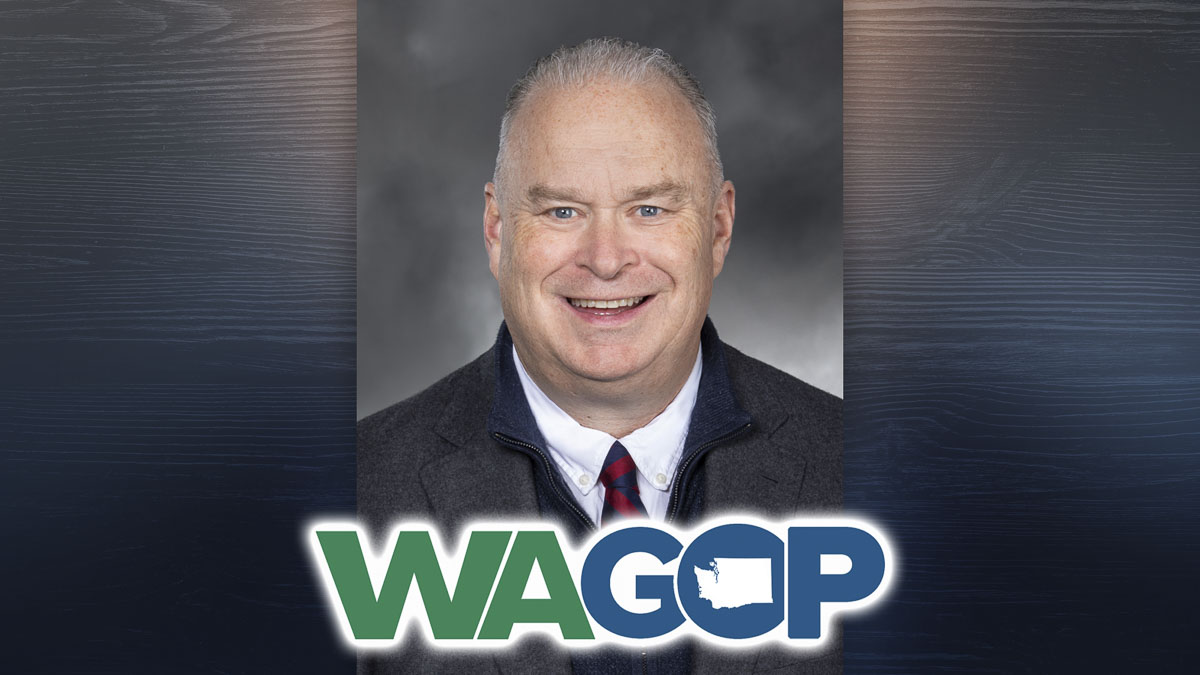
Chairman Jim Walsh says we may see more providers — including more medical specialists — returning to communities that are currently underserved
Jim Walsh, chairman
Washington State Republican Party
The questions I hear most often from people in Southwest Washington right now involve the state’s Medicaid program.
Is D.C. defunding it? Is Olympia destroying it? These questions are understandable. Local progressives use overwrought rhetoric to fearmonger and point fingers at D.C. And the White House administration back in D.C. is pointing fingers at local progressives here in this Washington.
These matters have been in the news for weeks. One left-wing group released a fictional “report” — cited in an article published by The Chronicle — that predicts specific hospitals in Washington will close if Medicaid is reformed. I called the executives at several of these hospitals: the “report” is baseless, and they aren’t closing.
To get to the truth of what’s actually going on with Medicaid, let’s step back and set the right context.
Medicaid is a hybrid federal and state health care benefit program. (So, it’s different than Medicare and Social Security — which are purely federal programs.) The federal government provides most of the money for Medicaid; the various states provide some money and operate the program locally.
Here in our Washington, we call the Medicaid program “Apple Health.” It’s managed by the Washington state Health Care Authority (HCA) — which is part of the executive branch of state government and overseen by the governor. To make things a little more confusing, Apple Health also administers some programs that are not strictly speaking Medicaid but are other health care benefit programs created under the Affordable Care Act (also known as ACA or “Obamacare”) or state law. Still, Medicaid is the biggest part of Apple Health, which gets about 70 percent of its money from the federal government.
Since the ACA was passed into law about 15 years ago, there’s been a steady change in how Apple Health operates. More people have been accepted into the system, and meanwhile the system has reduced the amounts of money it pays to doctors and hospitals for providing services to those people.
One of the most controversial steps Apple Health has taken: Extending Apple Health benefits to illegal aliens living in this state. This is explicitly prohibited by federal law, so Apple Health has to use only state tax dollars to pay for those benefits. There are enough state tax dollars in the Apple Health budget to do this, barely. But it does create significant financial stress on the program, which results in even lower payments to doctors and hospitals who see Apple Health patients.
While Apple Health doesn’t report directly how much state money it spends on illegal aliens, most estimates put the number above $500 million per budget cycle. And it could be significantly higher. In the legislative session that ended earlier this year, the state operating budget included a $150 million line item for Apple Health to cover higher-than-expected costs of extending benefits to illegal aliens. That’s not the entire cost — just the cost overrun.
So Apple Health was struggling because of state government choices long before the federal government’s latest budget reconsolidation bill, known as the “Big Beautiful Bill” or BBB, was passed into law.
The BBB is a 900-plus-page document that affects many parts of the federal government. It touches on tax rates, immigration policy, agency staffing and, yes, Medicaid funding. The stated purpose of the reforms to Medicaid funding in the BBB is to return the focus of the program to its original intended beneficiaries: disabled people, senior citizens and single parents of young children.
Able-bodied young people, added to Apple Health and other states’ programs by Obamacare or other legislation, will either have to pay for their health coverage or contribute in some other way to the cost of their benefits. The goal is to increase the payments Medicaid makes to doctors, hospitals and other medical care providers by narrowing the categories of people receiving Medicaid benefits.
If you ask doctors or administrators at hospitals that accept Medicaid patients, most will tell you that the expansion of people on the program is the main reason payments from the program have become so diluted. While they are hesitant to say this publicly, many health care providers in Southwest Washington have told me privately that the reform has long been needed — and increasingly Medicaid payments to something closer to the actual cost of providing services will be a good improvement. Although most will add some concern about near-term adjustments required by the reforms.
Of course, their concerns are a far cry from the hysterical exaggerations that left-wing politicians like Sen. Patty Murray and Gov. Bob Ferguson have been making. “Millions will die!” “An existential threat to rural hospitals!” and other balderdash. These hysterics are false and, frankly, embarrassing to normal Washingtonians.
Getting back to the point is the greatest impact to us, here in this Washington: The extension of Apple Health benefits to able-bodied young people and illegal aliens has stressed the program to the brink of insolvency. The Medicaid reforms in the BBB refocus Apple Health benefits back to the original groups they were intended to help. There may be some adjustment pains as the reforms take place but, in time, the reforms will make Medicaid payments to doctors and hospitals stronger and more sustainable.
We may see more providers — including more medical specialists — returning to communities that are currently underserved. The so-called “health care deserts.”
This is a good thing.

Also read:
- Letter: ‘This is the worst thing that ever happened to the region’
 A Hayden Island resident Sam Churchill is criticized in a letter calling the $14 billion Interstate Bridge Replacement project a “boondoggle” that destroys local businesses.
 - Opinion: Sheriffs fight back
 Four county sheriffs are suing to block a new law giving a governor-appointed board power to decertify and remove sheriffs, bypassing voter oversight in Washington.
 - Opinion: The growing gap between public voice and political power
 Todd Myers describes how large-scale protest and sign-ins often fail to sway state leaders, and argues authentic influence is most likely found through local action.
 - Opinion: Who is winning the race for affordable power?
 Hydroelectric power keeps Washington competitive, but new laws and carbon pricing are driving up electricity costs for residents each year.
 - Opinion: Half the road, full stop – Understanding pedestrian right-of-way
 Doug Dahl explains how Washington’s law requires drivers to stop when a pedestrian is within one lane of their half of the road, not just when directly in front.
