



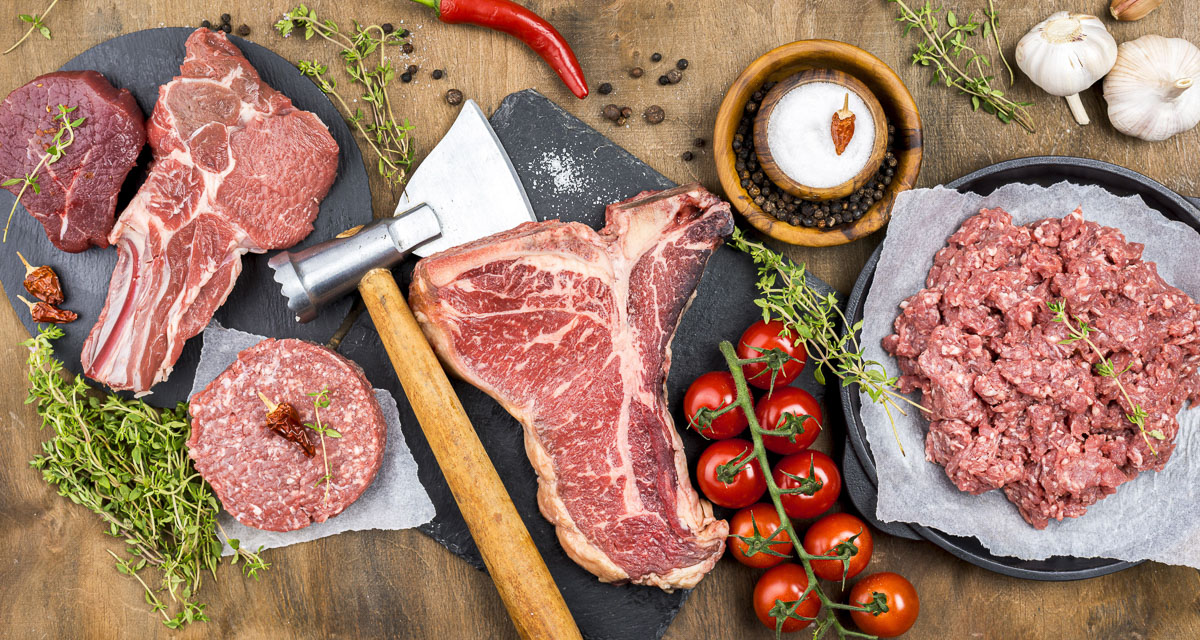
According to the U.S. Department of Labor, the cost of beef and veal rose nearly 14 percent year-over-year in August
Pam Lewison
Washington Policy Center
Trying to “fix” the cost of beef is anti-agriculture and anti-free market. The president recently suggested the United States would purchase beef from Argentina to flood the American market and drive the cost of U.S. beef down.
This plan is absurd.

The comments came over the weekend while the president was flying from Florida to Washington D.C., according to several reports. The plan to drive down the cost of American beef prices by purchasing Argentinian beef and dropping it into the American market has sparked outrage since the news broke.
According to the U.S. Department of Labor, the cost of beef and veal rose nearly 14 percent year-over-year in August. However, new research indicates the true cost of beef to consumers is not reflected in grocery store prices because it does not account for in-store discounts or weekly sales.
Additionally, it is worth noting American ranchers are a rare bright spot in the agricultural economy at the moment. Median farm income is forecast to increase from -$1,830 in 2024 to -$1,189 in 2025, thanks to an increase in take-home pay from off-farm income. Farm sector debt is also forecast to increase in 2025 to a total of $591.8 billion, between real estate and non-real estate debt combined.
Beef has maintained its value because the current national herd is the smallest it has been in more than 70 years because of increased demand and continued high prices. The stability of the beef market in recent times has made up for the volatility of the rest of the agricultural sector, where commodity prices are depressed by poor trade relations with our three biggest trade partners – China, Mexico, and Canada – and high yielding harvests, which have created a commodity surplus.
Finally, it is worth noting that beef is not the only protein available on the market. There are cuts of beef and recipes for virtually any budget. However, if beef simply seems out of reach based on per pound price, there are meats like pork and chicken which are readily available for less cost per pound.
There are no “quick fixes” to the cost of beef because there are no fixes needed. Flooding the U.S. market with lesser priced beef from another country under-cuts American producers and undermines free market principles. The free market espouses minimizing government interference and allowing supply and demand to dictate the cost of goods. The plan proposed by the president is in direct conflict with both the free market and American ranchers. The best plan in this instance is to let the market continue to run its course.
Pam Lewison is the director of the Center for Agriculture at the Washington Policy Center.

Also read:
- Opinion: Washington should stop shielding domestic abusers and sexual offenders from deportation
 Vancouver attorney Angus Lee argues Washington law improperly shields convicted domestic abusers, sexual offenders, and drunk drivers from deportation and urges lawmakers to change it.
 - Opinion: Who is leaving Washington and why the politicians need to care
 Mark Harmsworth argues Washington is losing higher-income taxpayers and business owners, warning that rising taxes and regulation threaten long-term economic stability.
 - Opinion: McCleary’s promise and Washington’s K–12 reality
 Dick Rylander examines how Washington’s post-McCleary school funding system has produced rising costs and growing financial instability despite record spending.
 - Opinion: Democrats in Olympia are backing Senate Bill 5974
 Sen. John Braun argues Senate Bill 5974 would undermine local control by allowing an unelected board to decertify elected county sheriffs across Washington.
 - Opinion: When the state orders discounts and sends you the bill
 Nancy Churchill argues that HB 2373 would raise electric rates by shifting the cost of mandated low-income utility discounts onto local ratepayers, particularly in rural Washington counties.

Thank you to Pam Lewison of the Washington Policy Center for her critique of President Trump’s recent suggestion that the U.S. purchase and import non-domestic beef to lower consumer prices here. This is one of the President’s well-intentioned but poorly thought-out proposals that should be eliminated. The best way to moderate prices here without harming our local industry is to increase domestic supply. Demand is already strong and needs more supply. To find solutions, the President should confer with domestic beef industry reps and identify the main economic drivers of tight supply here. They know their industry. Interference by the federal government will merely make matters worse. Let us hope this idea falls by the wayside.
Beef prices have subsided a but since the big spike earlier this year. If you know where to look, there are deals to be had….The Chef’s Store in Orchards is a great place for large cuts, if you know how to cut down a piece of meat. Last Spring I picked up a whole 17 lb Top Sirloin for just over $4.00/lb, carved it, vacuum bagged all of the cuts, and we’re still enjoying those steaks. FM has Petit Sirloins “on sale” for over $7….
American raised pork is a huge bargain, whole Boston Butt for $1.12/lb, as are whole frozen chickens (Costco, $.99/lb). We have a chest freezer we keep stocked with meat we get a lot cheaper than Fred Meyer sells.
I also recommend Butcher Boys in Orchards for a great number of excellent reasons. Several of the sausages and their smoked ham shanks are among our favorites….
Eat American….