



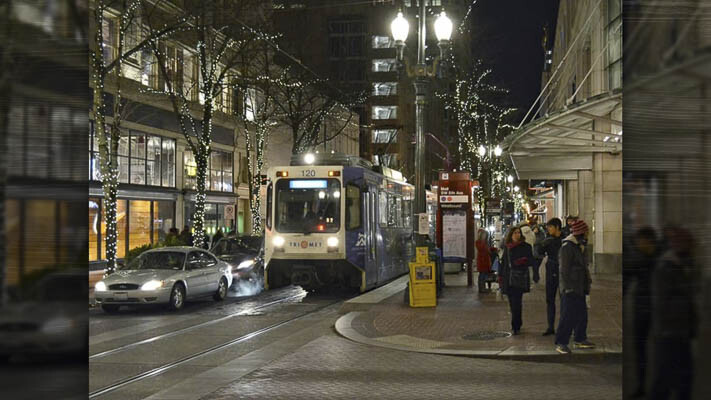
John A. Charles Jr. believes that recent evidence suggests that it’s time to reconsider the basic purpose of the agency
John A. Charles Jr.
Cascade Policy Institute
For those of us who came of age in the 1970s, the conventional wisdom was that cars were gas guzzlers and the environmentally correct way to travel was via transit.
That is no longer the case.
Last month the Federal Transit Agency (FTA) released its 2022 National Transit Database. According to Oregon economist Randal O’Toole, the results show that transit used more energy per passenger-mile than the average car or light truck in every urban area. Transit vehicles also emitted more greenhouse gasses than the average car or light truck in every urban area except New York.
Local planners seem to have missed this development. Metro’s proposed Regional Transportation Plan, which the agency will adopt in early December, recommends that we provide more funding for TriMet and take measures to increase ridership as a means of reducing greenhouse gas emissions. Obviously this strategy will fail, because transit itself is failing.
TriMet’s share of all regional trips today is about 4%, which means it’s irrelevant to most regional travelers. This suggests that it’s time to reconsider the basic purpose of the agency. Ridership peaked in 2012, and there is no evidence that it will ever come back. If there are few riders and transit vehicles are less efficient than cars, what is the point?
John A. Charles, Jr. is president and CEO of Cascade Policy Institute, Oregon’s free market public policy research organization.
Also read:
- VIDEO: WA diesel hits record $6.53, crushing truckers and school budgets
 With diesel nearing $6.53 per gallon in Washington, trucking businesses and school districts now confront sharply higher fuel expenses affecting budgets and workers.
 - Opinion: In plain sight – yielding to pedestrians
 Drivers often fail to see pedestrians due to inattentional blindness, which highlights the need for more focused awareness at intersections and stronger safety practices.
 - Expect delays on SR 14 in Vancouver for guardrail repairs Wednesday
 State Route 14 travelers in Vancouver should plan for morning delays as WSDOT will close two eastbound lanes for guardrail repairs, affecting mileposts 6.0 to 7.0.
 - Overnight closure planned on westbound SR 14 Camas Slough Bridge Tuesday
 WSDOT crews will close westbound SR 14 at Exit 14 in Camas to collect bridge deck samples and plan future repairs; detours will be in effect.
 - Opinion: Stay in your lane – seriously, it’s the law
 Drivers must choose the nearest lane when turning in Washington, and left turns bring added risk. Even with signals, every driver must help prevent crashes by following law.
