


Target Zero Manager Doug Dahl discusses tests for impaired drivers
Doug Dahl
The Wise Drive
Q: How can a police officer know if a driver is impaired by drugs? With alcohol there are roadside tests like walking a line, and a breath test. Are there similar tests for drug impairment? Alcohol has a .08 limit, and now cannabis has a limit, but are there limits for other drugs?
A: It’s time for a pop quiz: At what point has a driver had too much alcohol to legally drive? This isn’t exactly a trick question, but if your answer was a blood alcohol content (BAC) of .08, well, you’re wrong. Surprised? I’ll explain.
It’s true that the per se limit for alcohol-impaired driving in Washington is .08 BAC, commonly called the legal limit. But common terms can also be wrong. A driver can be arrested for DUI below a .08 BAC. Having a per se limit in the law sets the point at which a driver could get a DUI with no additional evidence. The blood alcohol level alone is enough.

Imagine this scenario: A driver weaves over the fog line, and then drifts across the centerline into the oncoming lane. An officer observes this and pulls the driver over. When the officer approaches the vehicle, the driver rolls down the window just enough to hear the officer. (And we’re going with “he” because of statistics. Over 75 percent of impaired driving fatalities involve male drivers.) The driver refuses to do any field sobriety tests (like walking the line, as you mentioned) or provide a breath sample, but the officer can smell alcohol coming out of the car, hears the driver’s slurred speech, and watches as he fumbles to slide his driver license through the barely open window.
Does the officer have enough evidence to arrest the driver for DUI? The law says, in part, that a person is guilty of impaired driving if they drive a vehicle “while the person is under the influence of or affected by intoxicating liquor, cannabis, or any drug.” The driver in this example was clearly impaired, in this case by alcohol. And even if the driver later decides to provide a breath sample and it comes in at .07 BAC, it’s still a DUI. The law doesn’t require that a driver reaches .08 to get a DUI, and plenty of people have been arrested with a lower alcohol level. The effects of alcohol begin long before reaching a .08 BAC.
As the law states, DUI includes impairment from other drugs, but recognizing it takes some additional expertise. When you read the above scenario, you probably spotted the driver’s behaviors as consistent with alcohol impairment. Alcohol is by far the most commonly used impairing substance (62 percent of adults drink alcohol; 19 percent of adults use cannabis, the next most frequently used drug), so plenty of us have witnessed the effects of alcohol. But could you list the common indicators for narcotics or hallucinogens?
Many officers have had additional training to recognize the effects of various drugs, and some have become drug recognition experts. These officers are able to identify when a driver is impaired by a specific category of drug. That’s important; we don’t want people getting arrested for DUI because of diabetic shock or other medical emergency, even if some of the symptoms are similar to impairment. And we don’t want officers allowing an impaired driver to stay on the road because they don’t notice the indicators of impairment for less common drugs.
The real threshold for violating our DUI law is the moment a person drives while affected or impaired by alcohol or any other drug.
The Wise Drive is hosted by Doug Dahl, a Target Zero manager for the Washington Traffic Safety Commission.

Also read:
- Opinion: Were Republican voters just sleeping during the August primary election?
 CCRP Chairman Matt Bumala says 60% of primary no-shows in the 17th and 18th districts were Republicans.
 - Opinion: WA Cares’ launch showcased care WA Cares did not provide
 Gov. Ferguson showcased a caregiving arrangement at the WA Cares launch that the program had not paid for a single day of.
 - Opinion: Portland’s War on Cars Part 4 – A smarter automobile strategy to end gridlock
 O’Toole argues fuel wasted in Portland-area congestion has sextupled since 1982, generating 250,000 tons of extra greenhouse gases annually.
 - Opinion: The Tooth Fairy’s secrets to making brushing & flossing magical
 Delta Dental of Washington’s Tooth Fairy Experience offers free resources to help children build lifelong brushing and flossing habits.
 - Opinion: Transit ridership trends are dismal but regional plans are oblivious
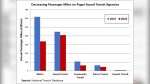 Puget Sound transit passenger-miles fell 31% from 2015 to 2024 despite a half-million-resident population increase.