



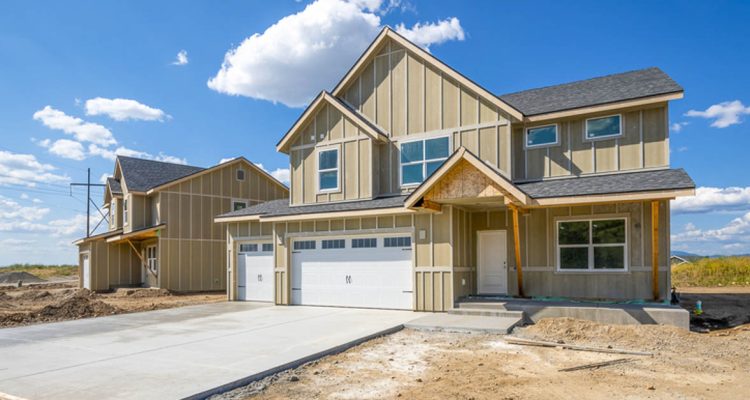
Mark Harmsworth of the Washington Policy Center explains that the housing crisis exists because of crushing government restrictions on allowing a healthy housing development market to function
Mark Harmsworth
Washington Policy Center
In 2024 the Washington state legislature nearly passed a bill to impose rent control statewide. The house passed HB 2114, but the companion bill, SB 5961, died in committee in the senate. The bills would have capped rent increases on existing rental properties at no more than 5% in a 12-month period with exemptions for rental units that are less than 10 years old. Both bills would have allowed rent increases without restriction for new tenants.

Calling the concept “rent stabilization” — based on allowing those uncapped increases for new tenants – was an attempt by the bill’s promoters to get around state legal prohibitions on rent control while also attempting to soften harsh reactions some might have to the concept of rent control.
Nevertheless, the core purpose of the bill was to impose statewide rent control and rent control in most other states includes such provisions exempting new buildings and new tenants and is still called rent control.
Now the Biden administration is considering a federal limit on annual rent increases. The plan caps annual rent increases at 5%.
Many advocates will claim this will help housing affordability, but we already have examples where the policy has failed before. California, one of the most rent restricted states in the nation, has seen rental housing availability decrease due to their restrictive rent control policies over the last few decades. The results should be a canary in the coal mine for government considering rent control policies.
The lack of affordable housing and the high homelessness rate in Washington are indisputable, but a 5% cap on rents fails to solve the root issues and violates the basic laws of demand and supply. More housing availability will result in lower costs, less availability will result in higher costs.
Both HB 2114 and the proposed Biden 5% rental cap will result in less rental housing availability and higher rent costs.
Why is rent control — a demonstrable failure in terms of improving housing affordability in every city where it has been employed being considered at all when a regulation-induced supply shortage is the main problem? Forces opposing a free market in housing development—including NIMBYism, central planning enthusiasts, and radical political movements—along with a poor understanding of economics among many lawmakers stand in the way of burying the foolhardiness of rent control once and for all.
The housing crisis exists because of crushing government restrictions on allowing a healthy housing development market to function. Rather than pursuing the nonsensical and failed idea of rent control, officials at all levels of government should focus on eliminating supply restrictions which have for decades suppressed the amount of housing stock required to meet the demand from a rapidly growing population.
Mark Harmsworth is the director of the Small Business Center at the Washington Policy Center.

Also read:
- Opinion: Lawsuit filed against the unconstitutional income tax in Washington state
 Former Attorney General Rob McKenna and Supreme Court Justice Phil Talmadge challenge the 9.9% income tax in Klickitat Superior Court.
 - Letter: ‘Oregon and Washington aren’t refusing to clean their rolls — they’re contesting federal jurisdiction and timing’
 Camas resident challenges Lars Larson’s fraud claims, explaining legal disputes over federal jurisdiction.
 - Opinion: ‘When are we going to get the full and complete details of the Interstate Bridge Replacement Program’s I-5 Bridge replacement project?’
 IBR team buried key details about light rail ending at waterfront with massive elevator system required.
 - POLL: Do you support extending light rail beyond the waterfront to connect with C-TRAN at Library Square?
 Readers can weigh in on Anne McEnerny-Ogle’s proposal to extend light rail beyond the waterfront to Library Square for improved C-TRAN connections.
 - Opinion: Passing a cyclist – Law, myth and a little patience
 Most drivers can’t legally pass cyclists in-lane due to vehicle width versus road measurements.
 wpDiscuz
